Biologicals Giving Science to the Skeptics
 February 23, 2026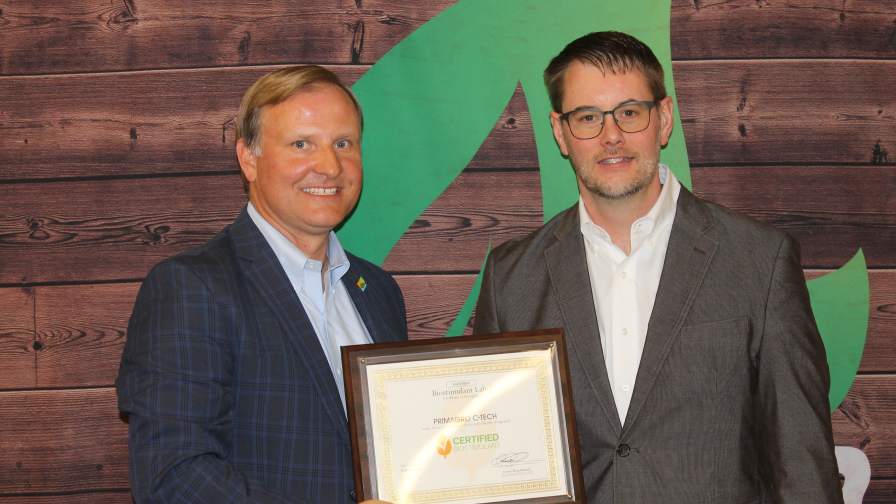
In April 2024, AgroLiquid became the first company to achieve this certification for its C-Tech biostimulant.
As the biologicals market expands with increased adoption, customers still need assurances for their investments in new biostimulants and biocontrol products.
On June 26, 2023, The Fertilizer Institute (TFI) officially announced that it was introducing the Certified Biostimulants Program. According to the trade association, biostimulants taking part in the program were to be certified based on guidelines from the U.S. Biostimulant Industry.
According to Corey Rosenbusch, President and CEO at TFI, biological products are still relatively new to the agricultural landscape — with plenty of unanswered questions for potential users.
“Agronomists have hundreds of products come across their desks every day, and they don’t have the bandwidth and resources to evaluate them all,” says Rosenbusch. “The Certified Biostimulant program was created to provide that standard because we want to get them into the hands of more growers, and we want both the ag retailers and growers to have confidence when choosing which product they use.”
In April 2024, AgroLiquid became the first company to achieve this certification for its C-Tech biostimulant. Since then, almost one dozen products have received the TFI Certified Biostimulant designation. This includes products from companies such as Redox Bio-Nutrients and Timac Agro.
Another such biologicals certification program comes from WinField United, which offers its BioVerified Designation. Like the TFI certification program, this one also began in 2024.
“The WinField United BioVerified designation helps retailers identify potential product recommendations by highlighting biological products we have thoroughly vetted based on four key criteria,” the company said in a statement announcing the program. “This designation was created to give you a clearer reference point when selecting and recommending biologicals.”
Four Criteria
For a biological product to obtain the BioVerified designation, WinField United evaluates four criteria — uniqueness, agronomics, operational compatibility, and economic return.
“It highlights products that have been tested and proven while also putting emphasis on understanding what agronomic issues products address, how they work and when, and where they should best be placed,” explains Jeff Carr, Biologicals Marketing Manager, WinField United.
Carr adds that WinField United tests any and all comers in its BioVerified program.
“The WinField United BioVerified designation is not limited to WinField United products,” he says. “Sure, we test proprietary products. But spotlighting our own products is not the focus. As a distributor, we’re looking across the market to be a transparent and trusted resource.”
Products approved through the WinField United BioVerified designation go on a list of approved biological products. Currently, the company says that there are more than one dozen products that have earned the verified designation.
According to Drew Harmon, Midwest Technical Agronomist, Valent BioSciences, these type evaluations for biologicals aren’t just a just a selling point for providers; they’re becoming a necessity.
“We are seeing a shift toward transparency and accountability in the segment; the newer certification programs bring standards that are being set to help growers cut through the noise and identify those products that are truly effective,” says Harmon.
Despite growing acceptance, there is still some skepticism from some growers, says Kuide Qin, Chief Science Officer at Verdesian Life Sciences. Historical overclaims, a lack of regulation and standardization, and inconsistent product performance have led some growers to second-guess the benefits of biologicals, and the only way to overcome that is by delivering on promises over time and doing so economically.
“We address these challenges by anchoring development in a rigorous stage-gate process, strong R&D, unbiased field trials, and clear product positioning around nutrient use efficiency,” Qin says.
As companies continue to ramp up the data, the certification processes only add to a growing case for growers to trust in biological efficacy.
Subscribe Today For
