Smart Tech
The Continuing Evolution of Spray Drones in Ag Retail

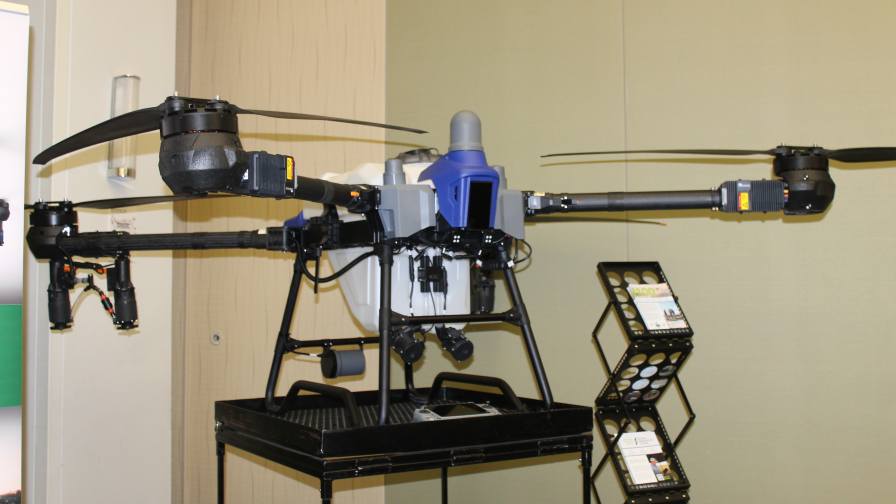
A post-event workshop at the 2025 Tech Hub LIVE show drove into the ever-changing world of spray drones — and what these might mean for ag retailers.

For anyone paying attention to Smart Tech developments over the past few years, spray drones have been an extremely active topic of conversation. As part of the 2025 Tech Hub LIVE, a drones workshop was held. This was sponsored by Agri Spray Drones and featured a handful of speakers looking at all aspects of the spray drones industry — from current developments to future proposals.
According to Taylor Moreland, Founder and CEO at Agri Spray Drones, one of the most important first considerations for any ag retailer looking to enter the spray drones market is realizing how the technology involved with these units operates.
“Operating a spray drone is not as simple as going out into the field and just pushing buttons,” said Moreland. “The biggest thing I tell operators in training to fly drones is to slow down. Drones are pretty dumb, technology wise, but they are very good at following instructions. So don’t be in a hurry.”
One of the biggest challenges to operating spray drones for ag retailers, said Agri Spray Drones’ Moreland, are the current changes happening in the regulatory landscape. In particular, he noted that Part 107 certification — needed to legally fly drones for commercial purposes — is being replaced by Part 108.
“For spray drones, the regulations are changing; they are challenging,” he said. “This is especially true if you are a large ag outfit. In many cases, FFA (Federal Aviation Administration) enforcement of some of these regulations is non-existent. And exemptions no longer require testing to be applied.”
Another key consideration for spray drones for ag retailers, said Moreland, was the need to document all operations when it comes to application work. However, drone crashes can be a different story.
“This is kind of a gray area right now,” he said. “According to the FAA, all drone crashes need to be reported, even ones where there is no property damage involved. But here’s the problem with that. There are probably thousands of drone crashes each year, but the majority of these involve failed propellers or flight controller failures. These are minor accidents, with no damage to anything other than the drone itself. If we as an industry report all of these every time they happen, it will likely cause of serious backlog of paperwork at the regulatory level. Instead, I would advise spray drone operators use their discretion if they report these minor incidents or not.”
The China Syndrome
Besides regulatory changes, said Moreland, another big upcoming change for spray drones could involve their country of origin. Up until now, approximately 98% of fully assembled drones and drone components operated in the U.S. market are manufactured in China.
“It’s really no mystery why this is the case,” he said. “Approximately 15 years ago, China was actively trying to replace backpack spraying for small farmers with small drones for application instead because of safety concerns. And the Chinese government started subsidizing this effort — through offering government payments to farmers making the switch at first to ultimately subsidizing the drone manufacturers themselves.”
Because of this, virtually all imagery and spray drones used in the U.S. for agriculture up until now were manufactured in China. However, said Moreland, with the current geopolitical climate in Washington, DC, turning against Chinese manufactured technologies, things are in flux.
“Most of these efforts have been at the local or state level, involving law enforcement no longer using Chinese made drones,” he said. “But now, there are now several pieces of legislation at the federal level, in both the House of Representatives and the Senate.”
He added that while the House bill probably wouldn’t pass, the Senate bill — S. 2168: The Drones for America Act — was likely to.
The ramifications of this would be transformative for the U.S. spray drones market.
“I believe that within five to seven years, there will not be any more Chinese drones coming into the U.S.,” said Moreland.

For more Smart Tech topics, click here.
Subscribe Today For
