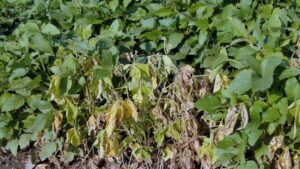
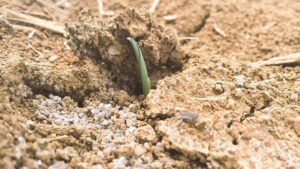
With excessive rain in many areas this year, Phytophthora root rot is a looming threat in soybeans. Here’s what you can do to manage it.
With these additions, the Xitavo soybean seed portfolio includes a total of 46 products covering relative maturities of 0.0 to 4.8.
American Soybean Association staff explores how farmers can potentially benefit from new biotechnology innovations.
Large Language Models (LLMs) aim to reduce research cycle time and bolster decision science to bring valued solutions to farmers.
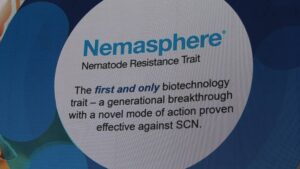
A new way to fight soybean cyst nematode (SCN) is in development from the crop protection/seed giant.
Winter wheat can be susceptible to various diseases that can reduce yields, quality and ultimately, profitability.
The rights expands the potential of CRISPR-based technologies through the collaborative innovation platform Shoots by Syngenta.
With so much variability in planting and emergence, there are tools that can help growers and retailers stay ahead of pests and diseases.
As growers and ag retailers are in fields this spring, evaluating corn stands early is crucial for making replant decisions.
Researchers interested in improving a given trait in plants can now identify the genes that regulate the trait’s expression without doing any experiments.
While there’s no silver bullet for fusarium, there are critical steps you can take to protect your corn crop, according to agronomists.
The family-owned business is embarking on a new venture beginning June 2024 that includes the introduction of a new seed brand across several states.
AI is optimizing operations and improving analytics across the food value chain while biologicals and biorationals gain traction with measurable results.
Research consistently demonstrates that the timing of soybean planting influences soybean yield.
Genetic and trait diversity are increasingly a priority when making seed choices.
First confirmed in Illinois in 2018, Red Crown Rot has grown into an emerging threat for Midwest soybean growers.
It seems like today’s crop protection suppliers are spending more time in the nation’s courtrooms than in customer fields.
The new website is dedicated to providing farmers with SCN sampling results from more than 4,000 collected samples across the U.S.
This cultivar was produced through genetic engineering to tolerate the herbicides dicamba, glufosinate, quizalofop, 2,4-D, and tissue-specific glyphosate.