Nematode Control in the Works
 November 5, 2025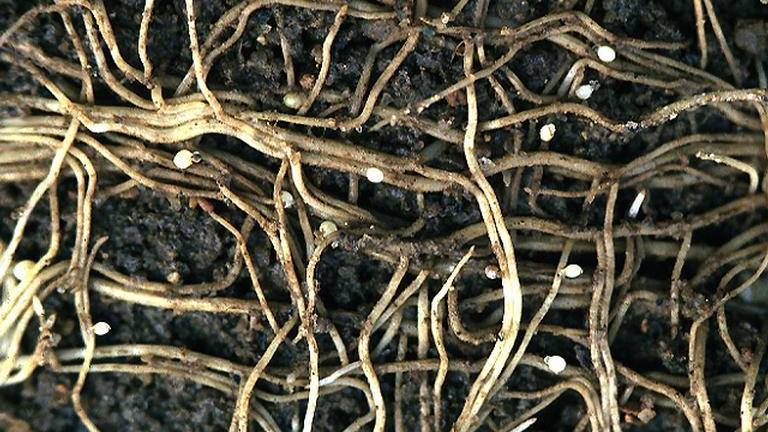
Soybean Cyst Nematode. Photo: Jonathan D. Eisenback, Virginia Polytechnic Institute and State University, Bugwood.org
In terms of field pests that cause the most amount of yield loss, nematodes rank high on the list. In fact, according to Scott Kay, Vice President, Agricultural Solutions for BASF, soybean cyst nematodes (SCN) are the nation’s No. 1 yield-robbing pest, costing growers an estimated $1.5 billion annually.
“SCN affects more than 200,000 farms each year and, according to a survey BASF conducted of growers, has been detected in 91% of sampled fields,” said Kay at a 2024 BASF press event in North Carolina.
Dr. Greg Tylka, Morrill Professor, Department of Plant Pathology and Microbiology at Iowa State University, agrees.
“SCN is the nation’s most damaging soybean pathogen,” said Tylka. “Soybean farmers in the U.S. and Canada lose many thousands of dollars in individual fields due to reduced yields from the nematode each year.
“The most sustainable management approach to minimize SCN yield loss is a multi-faceted plan that can include growing non-host crops in rotation with SCN-resistant soybean varieties and use of nematode-protectant seed treatments on the soybeans,” he continued. “Long-term management of SCN also requires a sustained effort in which success is monitored through periodic soil testing and adjustments in use of management tactics if soil test results indicate changes are warranted.”
Products to Help
Luckily for U.S. soybean growers, help is on the way — on both the seed treatment and seed trait fronts. First up is biotrinsic Nemora FP from Indigo Ag.
An EPA registered soybean bionematicide seed treatment, Nemora’s is engineered with an anti-hatch technology that helps manage nematode pressure while maintaining strong yield potential — without phytotoxicity or halo effects seen with some chemical standards.
“Nemora is designed to colonize soybean roots and shoots early and persist through the season,” said Dr. Jon Giebel, Vice President of North America Commercial-Biologicals at Indigo Ag. “In trials, it delivered improved plant health metrics and compelling yield potential while offering growers a biological option that can benefit soil health in the process.”
Nemora is a microbial seed treatment in flowable powder format for soybeans and is available for planter-box treatment or through Indigo’s CLIPS delivery system. It contains a naturally occurring Pseudomonas oryzihabitans bacterium that colonizes roots and shoots. After only a few weeks, the microbes coating each seed multiply into the millions around the roots and begin supporting the crop. These microbes also colonize SCN eggs, disrupting hatch conditions, and reducing the number of juveniles that hatch.
According to Indigo Ag, Nemora will be available for the 2026 spring planting season.
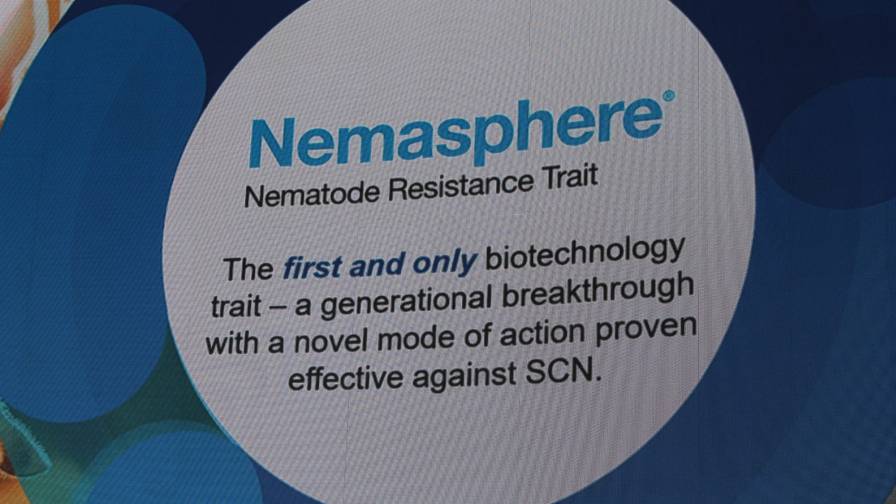 The other new SCN development is Nemasphere from BASF. This was introduced during the fall of 2024, with regulatory approval expected by 2028.
According to Bryan Perry, U.S. Head of Seeds and Traits for BASF, Nemasphere plants are engineered with the Cry14 protein. “When this is ingested by nematodes, it interferes with the nutrient uptake in the insect intestines,” said Perry. “This eventually leads to the nematode’s death.”
Nemasphere will be stacked with the Enlist E3 herbicide tolerance trait and available in a full range of soybean varieties. “It would then be available on a limited basis for that year’s growing season, probably around 50,000 acres,” he said. “We would then offer more widespread availability in time for the 2029 growing season.”
Subscribe Today For
