Blake Matthews: A Pioneer in Precision Farming
 April 2, 2025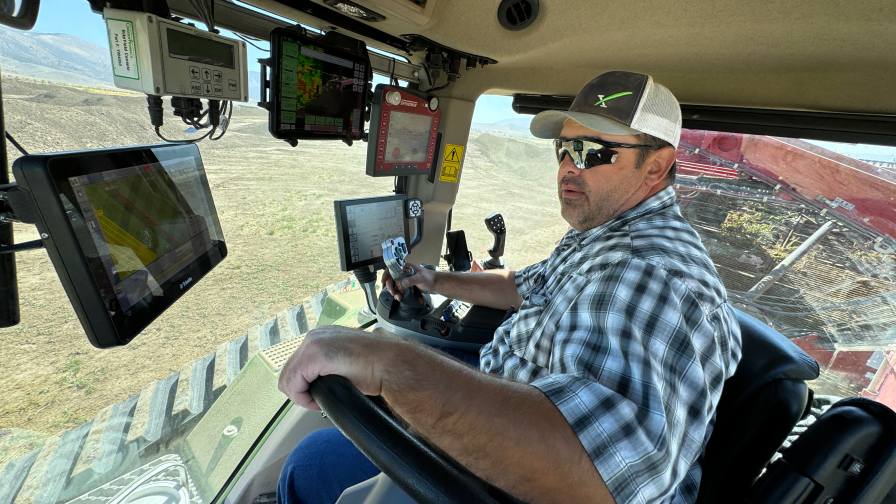
Blake Matthews on the family farm in Oakley, ID. Matthews was a 2024 winner of the CropLife Ag Tech Awards of Excellence in the Precision Farmer category.
Editor’s Note: The annual CropLife Ag Tech Awards of Excellence are presented each year during the Tech Hub LIVE Conference and Expo. Over the next several months, CropLife® will profile each of the 2024 winners to see what they are working on currently and how being recognized as a CropLife Ag Tech Awards of Excellence winner has benefitted them personally and professionally.
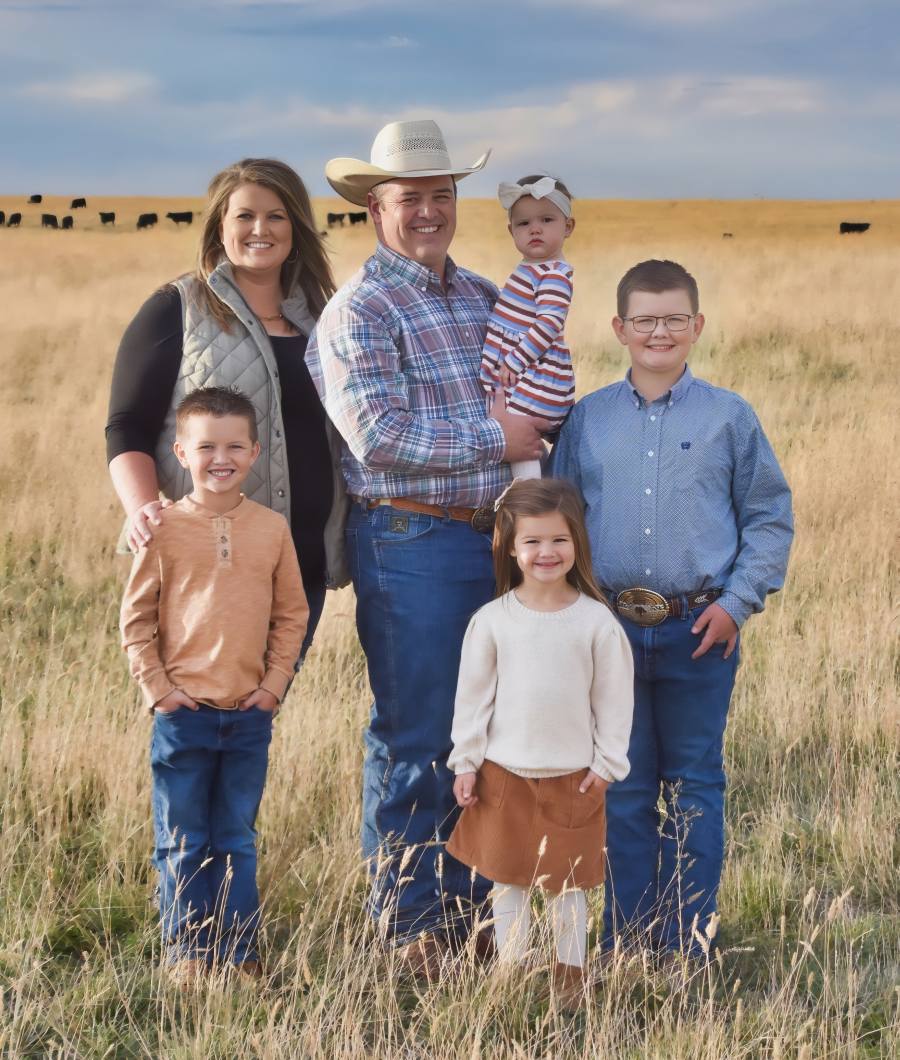
Blake Matthews enjoys time with his growing family.
Blake Matthews, CropLife‘s 2024 Ag Tech Awards of Excellence winner in the precision farmer category, is a fourth-generation farmer on both sides of his family. The story of his resiliency and dedication to farming is inspiring and provides the foundation for Matthews’ inclination for trying new things to make continual improvements in his farming operations. In the 1970s, his father’s family went through a difficult financial period that forced them to sell a significant portion of their land.
“They were down to the last 320 acres,” says Matthews.
His father struck a deal with the neighbors to sell the remaining land to them, provided they would agree to sell it back to him within five years at the same price if he could come up with the money. After working for the neighbors for five years, his father was able to buy back the land and start to rebuild his farm.
On his mom’s side of the family there were cattle and farming. After Matthews’ maternal grandfather passed, the farm stayed in the family and is now part of the current operation that Matthews runs with his father and brother, which consists primarily of barley, wheat, potatoes, sugar beets, grain corn, and cattle.
“We have a mother cow herd as well as a feed lot,” he says, which is supported by the crops grown on the farm. “The way we operate — cattle, crops — there are benefits to that kind of diversification. There’s been more than one year where this diversification saved us.”
At Matthews Land & Cattle LLC in Oakley, ID, Matthews oversees the farm and the shop, while his brother takes care of the cattle and feed lot.
A Problem Leads to a Solution
Matthews’ interest in precision farming got its first nudge about 15 years ago. This was shortly after Roundup Ready sugar beets came to the market. Matthews noticed a 10- to 14-day “lag” in the sugar beets once they were sprayed with the herbicide, so he consulted with a friend (and field man for a local fertilizer company) and the two hatched a plan to put together a micronutrient package with the Roundup to help the sugar beets.
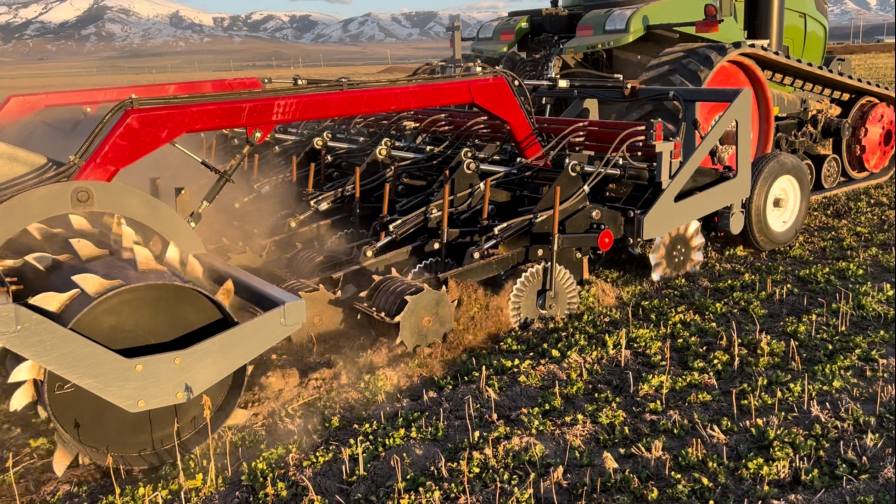
The custom-built strip till bar in action on Matthews’ farm.
“We saw great results,” says Matthews, which set him to thinking about another dilemma, namely the multiple in-season fungicide applications for potatoes that were the standard at that time.
“I was convinced that there had to be something better out there,” so the two started experimenting in search of an alternative and hit on another success.
“A lot of what we did back then has now been tested and validated,” he says, crediting his friendship and the shared curiosity to try new things in precision farming.
Drones, Soil Health Top of Mind in 2025
This year, Matthews and his family are taking a closer look at drone technology.
“We’re looking hard at drones. We’ve dabbled with them the last couple of years and have had some custom spraying done. We’ve also used them for imagery, but not to the full extent. That’s something that I would like to try and get into a little bit more,” he says, adding that working with quality imagery would help them conduct more spot treatments rather than broadcast application and be more cost effective.
Matthews is also focused on soil health and testing, which has helped optimize and balance the use of chemicals.
Each field on the farm is divided into zones based on NDVI data and other satellite imagery compiled by a company that Matthews has contracted with over the past few years. Each field on the farm has anywhere from five to eight zones depending on soil variance and other factors. Once the zones are determined, sample points are identified within each zone.
Soil samples are collected and sent off for analysis. Once the results are available: “We build our variable rate prescriptions based on what we discover from the soil tests,” he says. One of the inputs that is variable rated on the farm is compost that is sourced from their own feedlot, as well as neighboring dairies.
Primarily, Matthews uses the saturation paste soil test, while the Haney test is used occasionally for other testing.
“The saturation paste uses deionized water. We take it a step further, and we’ll send irrigation water in, so they test it side by side, using the irrigation water from the farm as well as the deionized water,” he says, which provides a comprehensive breakdown of what is available in the soil to support the crops.
“We start planting sugar beets late March, early April. The soil is cold and it’s not functioning well yet, so we really have to tailor what we put in with that seed,” he explains.
Precision farming is not only about cost effectiveness, but also about being a good steward of the land, emphasized Matthews, and that’s important to him and his family.
“We are the biggest environmentalists out there,” he says. “If I ruin this piece of ground, I’m done. I count on this soil to feed my own family, and to keep us alive, and I’m going to do everything I can to do the best job for that ground. Because when it’s gone, it’s gone, and they’re not making any more of it!”
Relying on Trials and Data
In addition to keeping his finger on the pulse of what’s new in ag technology, Matthews invests time in reviewing operations to adjust going forward.
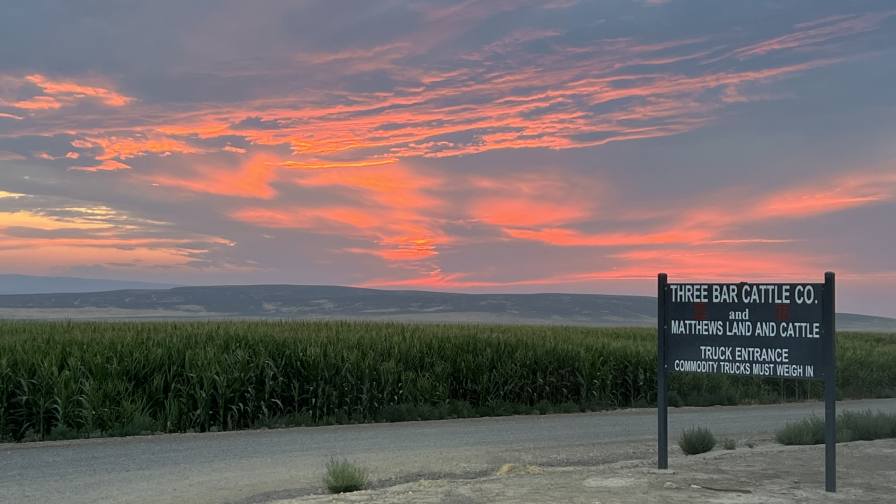
Enjoying an Idaho sunset at Matthews Land & Cattle LLC.
For instance: “We’ve been evaluating where everything landed from last year, including going back through our plant and soil samples and what we applied to figure out if we missed the ball anywhere to see if we could have done things differently, whether that’s getting more efficient with our fertility, asking ourselves if we really needed all 50 of those units … in other words, is there anywhere we can trim and still maintain yield and quality?”
Matthews is a firm believer in the value of trials and his farming operation conducts multiple trials throughout the year.
“Every year, we always do a bunch of trials, from seed trials to fertility trials, or just trying some different things to see if they impact the bottom line. We try and learn as much as we can and apply it to the following year,” he says.
Matthews’ openness to looking at a challenge and pursuing a creative solution, even if it serves only as a learning opportunity of what doesn’t work, is what qualifies him as a leading precision farmer.
Looking back on his experience at Tech Hub LIVE in 2024, he says, “It was great meeting and talking to different people. I really appreciated that!”
Subscribe Today For
