Soil ROI: Why Smart Growers Are Investing Below The Surface
 September 11, 2025
 Despite having explored every continent, there is still much yet to learn — just a few inches below our feet.
“The complexity of the soil microbiome cannot be overstated,” says Tim Laatsch, Director of Agronomy North America, Koch Agronomic Services. “We probably know more about managing microbial pathogens than we do about how to stimulate microbial reactions that benefit plants.”
While scientists have much to learn, there are a number of products available that improve soil health.
“Scientists estimate that we can culture somewhere between 1% and 20% of soil microorganisms, so 80% or more of soil microorganisms we only know are there because we can sequence their DNA, and so we have some idea of what their function is in the soil,” says Lizzie French, Manager, Soil Biology, Waypoint Analytical.
Retailers and their grower-customers need to pay particular attention to the health of their soil.
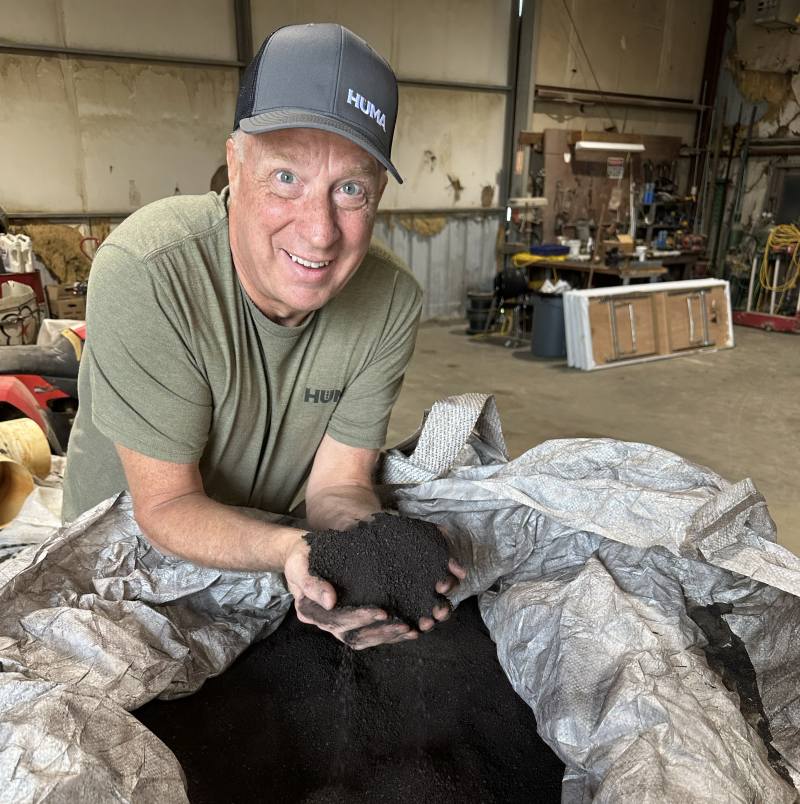
Fred Nichols, Huma. Photo: Huma
“Farmers need to farm their soil even more intensively than they farm their crop,” says Fred Nichols, Huma Chief Sales and Marketing Officer.
That approach is a relatively new one, says A.J. Kumar, Vice President of Sustainability Sciences at Indigo Ag.
“Over the last five years, we’ve seen a meaningful increase in understanding about the importance of soil health,” Kumar says. “Adoption is inconsistent. Many growers and advisors still lack reliable tools, clear data, and financial incentives to prioritize soil health. Our role is to make soil health actionable, measurable, and economically viable.”
Sustainability
“Soil health is the foundation of sustainable agriculture,” says Sarah Basiri, Chief Revenue Officer at Biome Makers Inc. “It directly influences crop productivity, resilience, nutrient cycling, and overall ecosystem balance. At Biome Makers, we see soil not just as a medium for plant growth, but as a living ecosystem — home to trillions of microorganisms critical to crop success. Prioritizing soil health is essential for long-term agricultural viability.”
While there are a number of products to improve the microbiome, ensuring the longevity of soil health requires a comprehensive approach.
“Where we used to leverage a chemistry-first mentality, now we are driven by a systems-based approach, where we encourage the use of multiple tools together,” Drew Harmon, Technical Agronomist, Valent BioSciences. “Things like cover crops, reduced tillage, biologicals, and biostimulants are excellent additions to a farmer’s toolbox.”
That thoughtful, integrated approach comprises encompasses more than just sampling the soil and applying products.
“We’ve shifted toward integrating biologicals, plant growth regulators, and biostimulants using advanced AI-powered tools and platforms to support both soil and plant vitality,” says Kuide Qin, Chief Science Officer, Verdesian.
Kieth Byerly, Commercial Sustainability Lead, The Mosaic Co., puts it: “We focus on ROFI, (Return on Fertilizer Investment) because it speaks directly to how growers evaluate value. ROFI shifts the conversation from cost per ton to return per acre. It is not just about how much is spent, but how effectively that investment performs in agronomic, biological, and financial terms.”
Subscribe Today For
