Economist Dr. David Sunding says the EPA significantly underestimates the economic impacts that the proposed “Waters of the United States” rule will have on local communities and businesses.
In his recent articles, Purdue Extension ag economist Roman Keeney explains the ways the farm bill has changed agricultural policy, outlines the new farm revenue protection programs and helps farmers start to evaluate their program decisions.
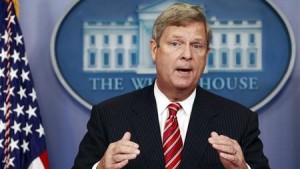
Agriculture Secretary Tom Vilsack reports major new initiatives have been established and existing programs have been reformed in the first 90 days of the 2014 Farm Bill.
The Ohio Senate has approved SB 150, directing the Ohio Department of Agriculture (ODA) to establish a fertilizer applicator certification program in Ohio.
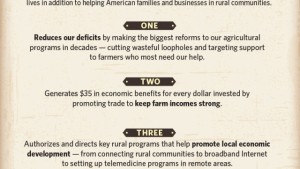
Despite its name, the Farm Bill isn’t just about helping farmers. It’s a jobs bill, an innovation bill, an infrastructure bill, a research bill, and a conservation bill — and it’s about growing our economy.
Last week 52 members of Congress urged EPA Administrator Gina McCarthy in a letter to acknowledge that the current ag worker protection standards are “limited” and “insufficient” to protect workers from the hazards of handling pesticides.
The CFATS Authorization and Accountability Act of 2014 will provide for a two-year extension of the program and provide important guidance to the U.S. Department of Homeland Security on key issues of importance to chemical security.
President Obama on Friday signed into law an agriculture spending bill that will spread benefits to farmers in every region of the country, but not everyone is happy.
TFI applauds Congressional leaders for coming together in a bipartisan fashion to provide American farmers with the certainty and resources they need to plan for upcoming planting seasons.
The current Farm Bill legislation falls short in helping farmers prepare for the fundamental long-term food and agriculture challenges posed by a number of factors, according to AGree’s four co-chairs.
The Fertilizer Institute has pledged to focus on nutrients in the environment, safety and security, energy and greenhouse gas emissions and transportation in 2014.
The Fertilizer Institute supports the January 7 U.S. District Court ruling that “puts the management of Florida’s water quality back into the hands of the state.”