
As the calendar months move from 2026 to 2027, there have been many positive developments that could spur renewed interest in spreaders sales.
This includes commodity prices increasing (with corn and soybean price up 14% and 25%, respectively, from 2025), fertilizer prices beginning to stabilize, and fuel prices coming down as federal and state governments have passed legislation to temporarily suspend taxes (such as in Ohio) and increase supplies (such as legislation allowing the use of red-dyed diesel).
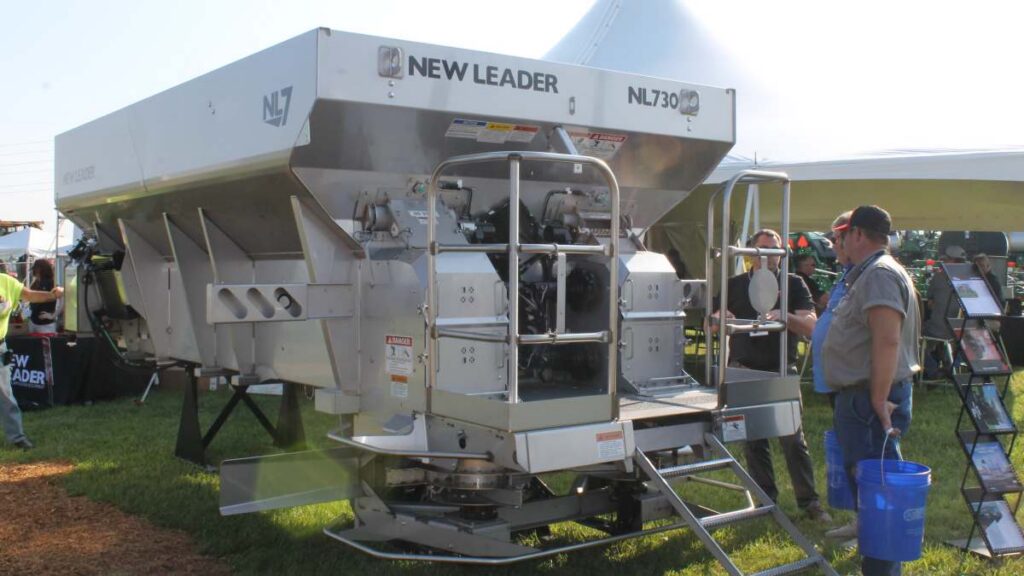
Matt Miner, Executive Director of Revenue at New Leader Manufacturing, says: “Many of our customers are optimistic in preliminary conversations about sales next year.”
Miner adds that another factor that could aid in this renewed interest in spreaders among customers is the introduction of newer technologies for the market.
Overall, he says, Smart Tech such as artificial intelligence (AI) and autonomy should allow for increased productivity and accuracy when applying fertilizer. This could help to maximize the return-on-investment of equipment for users.
“It’s not if but when AI will play an active role in the operation of agricultural equipment,” Miner says. “The trend we’ve seen in the market is producers and ag retailers wanting data, equipment, and technology that allows them to be as efficient and effective as possible.”
As always, Miner says that the agricultural spreaders business should continue to rely on its industry partners for success.
“Ag retailers and producers depend on each other, working side-by-side to get the nutrients and crop protection products in place in a timely manner to support maximum yield,” Miner says. “In the end, the input costs and return-on-investment for the producer will dictate the direction of the market.”
Last Minute Buying
For this past year, the spreader sales took a hit due to ag market challenges.
“Lots of companies have not updated their equipment fleets,” says Jason Eaton, General Manager at RBR Enterprise, speaking of 2026. “Most have put off their buying decisions until the very last minute.”
New Leader’s Miner agrees.
“The dry fertilizer spreader market is experiencing many of the same challenges as the larger agricultural community: Input costs are high and commodity prices are low,” says Miner. “Doing more with less has been the driving force for the past several years in this agricultural downturn.”
Spreader manufacturers say that a dropoff in fall fertilizer application has also depressed their sales in recent years. Traditionally, growers have split their fertilizer applications between the spring and the fall approximately 50-50.
With more scrutiny on agriculture due to fertilizer runoff over the past few growing seasons, many growers have started applying more crop nutrients in the springtime versus autumn. As a result of this trend, fall spreader sales have declined.
This trend continued in 2026, says Marc Heater, Head of Product and Marketing North America at Amazone, with the three added factors of low commodity prices, high fertilizer prices, and high fuel prices also impacting buying decisions.
“These three things are definitely the factors that are slowing down spending for new spreaders,” says Heater. “Because of this, we are hearing that many growers are not spreading fertilizer in the fall like they might have in the past. They are doing this to see where the fertilizer market goes along with saving fuel expenses. We are still moving spreaders, but it sounds like many are holding back on how much fertilizer they are putting out.”
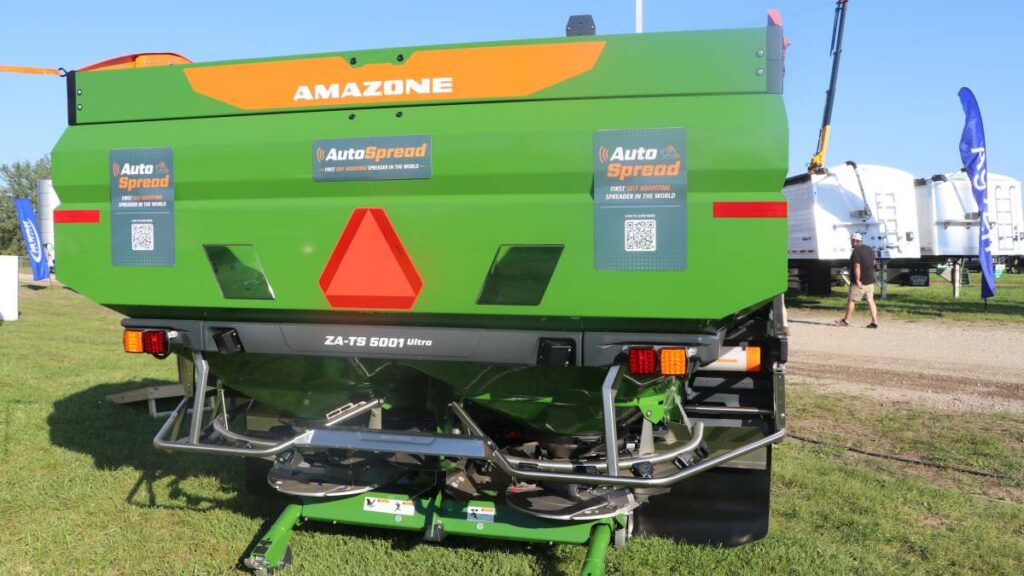
However, Heater agrees that the market could be on upswing.
“For us and our dealers, I would say the outlook is looking better for 2027,” says Heater. “Many customers have held onto their machines longer than they have in prior years. These customers need to start trading those older machines in to upgrade to newer ones.”