2025 Young Leaders: The Views on Agriculture from the Next Generation
 October 8, 2025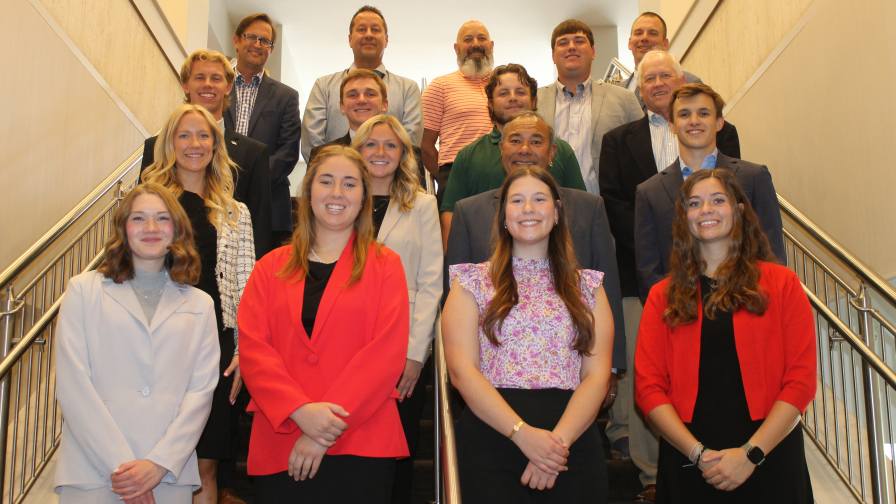
The 2025 Class of Mid America CropLife Association Young Leaders and sponsors, posing at the organization’s annual meeting in Kansas City, MO.
For 13 years now, one of the highlights of the annual Mid America CropLife Association (MACA) meeting has been hearing from the next generation of ag professionals. These Young Leaders are granted scholarships from MACA members and come to the event to network with long-standing participants and share their individual stories on what drew them to agriculture as a career in the first place.
According to Adam Loker from Southern Illinois University — Carbondale, he grew up on a family farm in Southern Illinois.
“What drew me to agriculture was the people,” said Loker. “I wanted a job where I could add value to people directly, make connections, and best represent whatever company I was with. So, I took a sales course, and I loved it! That’s why I am going into ag sales.”
Another Young Leader, Natilie Clemenson from the University of Wisconsin, said what drew her agriculture was the chance to help the industry improve its overall image – especially with the general public.
“I think one of the biggest challenges for our industry is the public’s viewpoint of agriculture,” said Clemenson. “Every generation is getting further from having that experience on the farm. Many of their viewpoints aren’t always true.”
In her mind, the best way for agriculture to address this issue is simple – swap stories.
“Having growers and ag retailers share their stories with the public is the key,” said Clemenson. “Those kinds of personal stories will help people make a much better connection with agriculture, even if they’ve never taken part in it.”
According to Reagan Koester from Purdue University, another way agriculture can help improve its image with the general public is through sustainability.
“I think sustainability is a piece of the puzzle that will energize the future of agriculture,” said Koester. “We have less acres to work with – and an ever-growing population to feed – so how do we optimize these acres in the best way possible? Sustainability is the answer, and one the public will appreciate and understand.”
Another future trend for agriculture to grow is technology, said Blaine Cords from Michigan State University.
“I think technology is going to be a way bigger selling point for agriculture,” said Cords. “In particular, drones will be big in application. Recently, my dad who farms couldn’t get his sprayer into the field because of the plants being too high. But we could use drones to apply, so that’s what we did.”
Subscribe Today For
