Crop Protection: A Three-Pronged Approach to Success
October 14, 2024
Scott Rawlins, Director of Government Relations for the Council of Producers and Distributors of Agrochemicals, talks about the significance of the Herbicide Strategy.
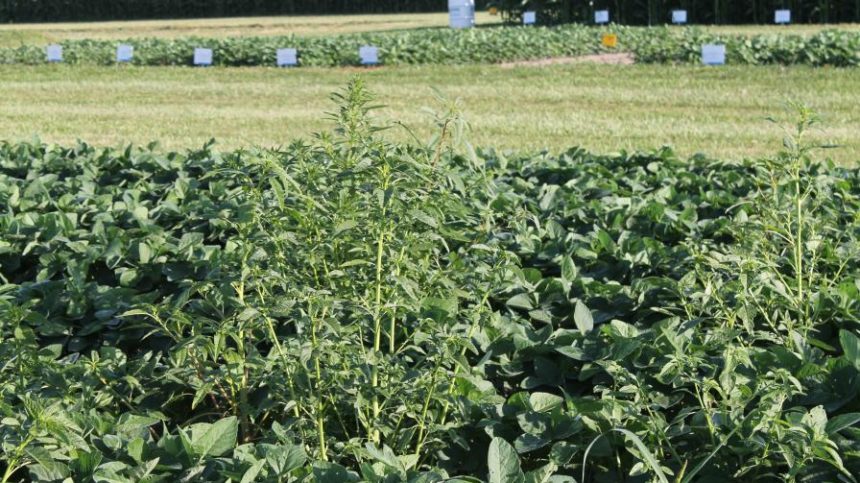
David Reddel of Wilbur-Ellis shares several factors that are contributing to weed escape and what approaches retailers should take today to fight resistance.
Drift reduction adjuvants are now included as a mitigation option in the final strategy.
Although crop protection companies are applying for new labels, the review process may prevent the herbicide from being used next year.
The fight against weed resistance continues to ramp up as crop protection companies double up on their R&D efforts.
The agreement is an important milestone which will potentially bring new MoA herbicides to help address the challenge of resistant weeds.
Growers and retailers should consider these factors when developing a weed management strategy designed to limit weed control escape.
The glyphosate market finds itself at a crossroads, prompting industry leaders to navigate these top three challenges.
The new MoA herbicide for preemergence use in corn demonstrates effectiveness as an integrated weed management strategy for waterhemp.
The herbicide offers optimized pre- and postemergence formulation to control more than 75 of the toughest broadleaf and grass weeds.
IronGate is a high-performance formulation herbicide delivering flush-after-flush control of a broad spectrum of grasses and broadleaf weeds.
Researchers have found a promising new control method for Palmer amaranth and possibly for many other difficult-to-control weeds.
Anthem Flex herbicide contains a high-load combination of two active ingredients: carfentrazone-ethyl and pyroxasulfone.
Glufosinate-P to control weeds in non-tolerant and glufosinate-resistant corn, sweet corn, soybean, cotton, and canola.
EPA recently proposed mitigation tactics that can be implemented to reduce spray drift, runoff, and erosion.
Industry experts say there are three weeds quickly developing herbicide resistance that could bear watching this growing season.
AI is optimizing operations and improving analytics across the food value chain while biologicals and biorationals gain traction with measurable results.
The product features two MOAs – tolpyralate, an AI new to the cereals market, and bromoxynil – to help combat the spread of resistant weeds.
The evolution of herbicide-resistant weeds is one of THE most significant developments in agriculture today. Fortunately, help is on the way.