
Many ag retailers may be feeling relieved as the 2026 spring fertilizer season is in the rearview mirror. However, the road ahead for pricing and sourcing for next year’s fertilizer needs will be anything but smooth.
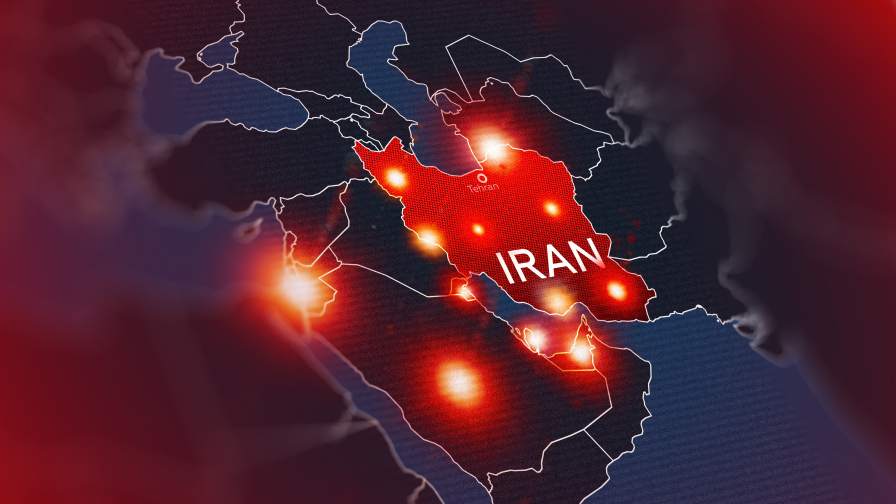
Ongoing uncertainty surrounding the Strait of Hormuz’s reopening, combined with infrastructure damage and supply chain disruptions, could create bumps across the fertilizer supply chain even after the crisis has passed. Add in anticipated delayed grower purchasing and higher interest rates, and this year will require a properly executed route to maneuver the twists and turns ahead.
Unlike the fertilizer price run-up in 2022 that saw a reshuffling of the flow of fertilizer products, the conflict in the Middle East has resulted in shutdowns and damage that will require significant time and resources to restart. This will create substantial delays with prices correcting lower even if headlines say the war is concluded.
For U.S. agricultural retailers, the Iran war creates the greatest exposure in urea and diammonium phosphate (DAP) and monoammonium phosphate (MAP) pricing due to the higher levels of imports of these products from the Gulf region to meet U.S. demand. In both urea and DAP/MAP, 67% of domestic use comes from domestic supplies. Meanwhile, 12% of urea and 17% of DAP/MAP products originate in the Persian Gulf region.
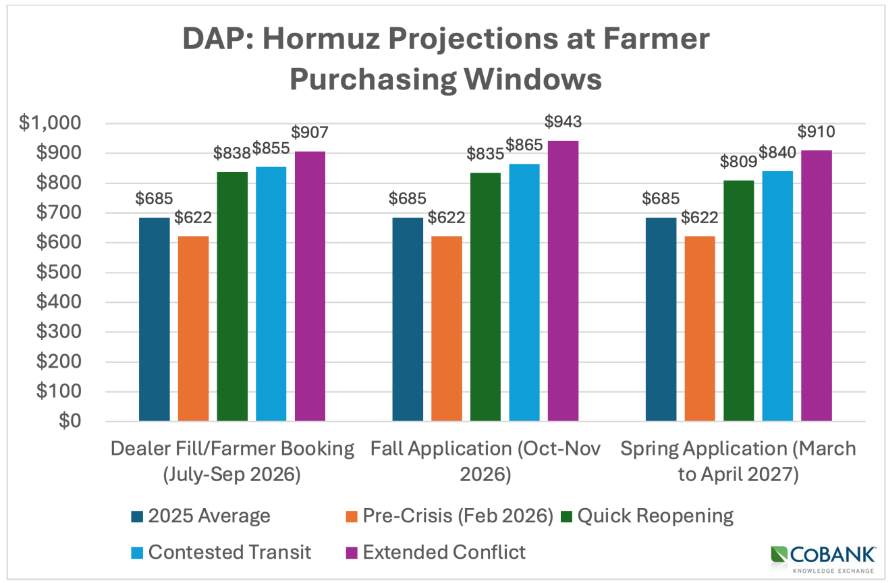
North Dakota State University (NDSU) projected fertilizer prices are expected to continue to rise and then see a prolonged plateau that remains above pre-crisis levels until 2028. Under the central “contested transit” scenario, urea is expected to peak at around $784 per short ton, while DAP reaches approximately $866. In a more severe “extended conflict” scenario, urea prices could approach $1,000 per short ton, nearing historical highs.
Anticipated Delayed Buying
Warning signs are already evident that nitrogen delayed buying is going to be a reality that could place supply chain challenges on summer fill buying. Retailers will bear the brunt of that uncertainty over the summer fill period that may be pushed back a few months to balance anticipated grower demand while managing the higher interest rates. Interest rates at 6% to 8% create a significant carry cost for several months if growers don’t decide to make purchases until the spring when nutrient prices are 30% to 50% higher than historical levels.
Corn Belt phosphorus (P) and potassium (K) are typically fall-applied, but that timeline could shift to spring as well. Growers typically book DAP during dealer fill in the July to September timeframe and apply in October and November. Retailers will need to be ready with supplies but run the risk of buying too much at high prices that later have to be marked down. Under the “contested transit” scenario, NDSU projects DAP prices to average $855 per short ton at dealer booking, $865 short ton at fall application, and still $880 short ton by spring 2027.
Even before the war, global phosphate supplies were limited, and prices were already headed higher. Ammonia and sulfur are the two biggest variable cost inputs for phosphate production, and three of the world’s 10 largest ammonia exporters are behind the Strait of Hormuz. China has also banned phosphate exports through August, but lower production may force China to extend the ban and further shrink available supplies to the global buyers. Mosaic also limited its domestic production due to high sulfur costs but said it could quickly resume production if the market improves.
Purchasing in Layers
Retailers should begin establishing fall phosphate positions and layering in purchases. Over the past two years, growers have scaled back some P and K purchases for use in their fertility plans, and retailers should expect that cautious approach to continue. Phosphate application rates have also declined in recent years, particularly in drought-affected areas of the Western and Southern Plains. As a result, some retailers may still have carryover supplies from 2026 to help meet what is likely to be lower demand in 2027.
If prices remain elevated through the fall, this may also create a greater incentive to push applications to spring and create an even more treacherous trail for ag retailers to manage fertilizer applications and get supplies where needed ahead of potential short planting windows.
On recent investor calls, fertilizer companies said that, although commodity prices have not risen alongside fertilizer prices as they did in 2022, lower application rates globally could modestly reduce yields and provide some support for commodity prices. This may smooth the path to normal grower purchasing and ease some worry that retailers may be stuck holding large inventories without willing buyers at high prices.