Adjuvants Increasingly Important Role in Crop Protection
 March 24, 2025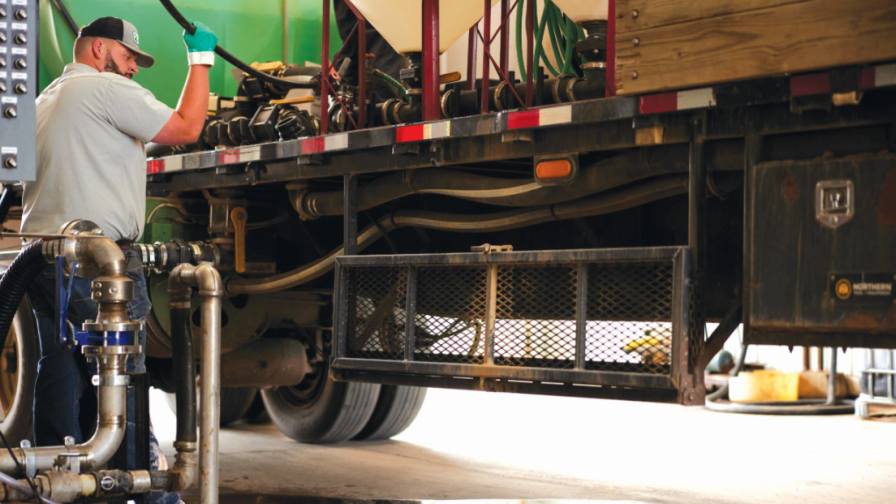
The right adjuvant system helps get the most out of chemistry applications, whether it’s the “latest and greatest” or a generic offering. Photo: Winfield United
When times are tough and money is short, it’s adjuvants that are often left out of the input plan. Given the role adjuvants play, dropping them from the routine might be a mistake.
“Adjuvants are a critical ag tool used to maximize spray droplet performance,” says Dan Karlik, Vice President, Adjuvants Unlimited. “While vast improvements in adjuvant technology have occurred over the years, growers are still not utilizing them to an optimal extent.”
Several decades of use have proven the important role these products play.
“For over 40 years, the use of adjuvants in agriculture has been standard practice since many herbicide labels instruct applicators to use a surfactant with the product,” says Dr. Lucy Marshall, Research Director, Biosorb. “This fact not only helped the agrochemical manufacturers, but also retailers by creating a larger product portfolio in their warehouses.”
Adjuvants contribute numerous benefits to healthy crops.
“An estimated 25% of all pesticide applications include an adjuvant in the spray mixture,” explains Terry Kipley, President and CEO of the Council of Producers & Distributors of Agrotechnology (CPDA). “Expanded adjuvant use, as a public policy goal, provides significant benefits to include:
Adjuvants reduce spray drift and off-target applications thereby reducing adverse effects to the environment and human health.
Adjuvants optimize a products effectiveness and can reduce overall pesticide use as well as a farm’s carbon footprint by reducing the number of applications. Adjuvant use coupled with precision technology can eliminate overspray, which reduces pesticide use.
Adjuvants can extend the time between applications, reducing overall pesticide use.”
In addition, adjuvants help growers abide by changing regulations.
“As an industry, we have taken a very proactive approach to regulation in the adjuvant space,” says Brian Anderson, Territory Sales Manager, Agriculture, Kop-Coat. “Drift control and targeted applications are the future of our industry, and as a group, we need to stay at the forefront. CPDA has done a very effective job of working with the EPA and other government organizations to ensure we are not overburdened with regulations.”
Retailer’s Role
“Retailers have been pivotal in increasing adjuvant usage,” Anderson says. “They’ve educated growers about the correlation between adjuvant usage and significantly increased pesticide effectiveness, decreased callbacks, and increased income at the grower level.”
Providing understanding and educating are key roles for retailers.
“Retailers recommend products to their customers,” Biosorb’s Marshall says. “They are trained individuals who want their customers, farmers or applicators, to maximize the performance of their treatments, whether it’s nutritional, weed, disease, or insect control. Retailers want to ensure that customers have good field results so that they will return as satisfied customers. The retailers’ main role is education and outreach for their customers.”
CPDA’s Kipley agrees with that sentiment.
“Retailers will play a central role in assisting growers in making a safe, beneficial and efficacious pesticide application by pairing the best adjuvant with each pesticide product,” he says. “This includes grower training on the proper boom height, speed, spray pressure and weather conditions. Choosing the right adjuvant can impact the performance of the product by up to 50%, so grower education is essential for optimizing every spray application.”
Jeff Bunting, Vice President of Crop Protection, GROWMARK, also agrees retailers are critical to success.
“Retailers close the gap of the how and why adjuvants are being used,” he says. “Now with the current herbicide strategies, the role of a certified crop advisor will be even more important as we begin to use products that provide the necessary mitigations points.
“Growers have embraced these changes, but I still feel that there’s a continued need for more education and product awareness of why you are spending money to improve performance or mitigate pesticide challenges,” Bunting continues. “The mindset of a farmer is not to add anything that will not maximize pesticide input dollars, but continued education is needed that showcase the strength and need for adjuvants and that they have evolved from what their earlier generation may have used.”
Kop-Coat’s Anderson says: “Gro-wers and retailers have both shown continued interest in adjuvants. With the onset of dicamba and Enlist, farmers need the expertise of the adjuvant industry to continue innovating new technologies in drift control and activator products. As pesticide rates decrease (such as with increased drone usage) and farms get larger, it is imperative that the adjuvant industry works to maintain effective weed, pest, and disease control.”
While adjuvants can help meet those changes, it’s important for retailers to work with their grower-customers to ensure success.
“Retailers play a tremendous role in adjuvant use,” says John Blackford, Branded Technology Portfolio Manager, Wilbur-Ellis. “In times like the current agricultural economy, some farmers want to control costs and perhaps cut products from an application. Adjuvants are added to a spray mixture to enhance the performance and/or physical properties of the chemical. The retailer is at the front line of this conversation, reminding farmers of the true value of the adjuvant in the tank.
Regulatory Concerns
“Adjuvants are not federally registered, so most of the regulations happen at the state level,” says Eileen Bernard, Senior Adjuvant Manager for Loveland Products. “This can create a patchwork series of regulations, making it harder for adjuvant retailers to sell products across multiple states. Increased pesticide restrictions, like those involving the Endangered Species Act (ESA), are creating many burdens for growers. Adjuvants can play a critical role in helping keep materials on target and complying with federal and state regulations.”
Because adjuvants are not federally regulated and because their use has increased, “several states now require state registration of adjuvant products,” says CPDA’s Kipley. “Some states have also proposed requiring adjuvant registrants to disclose the confidential formulas of their products on the label. CPDA opposes these kinds of provisions because they divulge proprietary information that, in some cases, was developed over many years at significant expense to the product registrant.”
Like many crop inputs it’s highly unlikely that the regulatory control will decrease or even remain at the existing level.
“Today, is the least regulated we will ever be; more states are looking at regulating adjuvants with varying requirements for registration,” says Adjuvants Unlimited’s Karlik. “Recently, the EPA has decided to recognize Delta Regional Authority and oil-based adjuvants as viable tools to comply with the ESA for the reduction of buffer zones.”
As of this writing, only a few states require registration.
“The regulations of adjuvants have not changed much in the USA during the past few years,” says Jacob Parnell, Director of Agronomy, Biome Makers. “There are still about 11 states that require registrations of adjuvants. In many European countries surfactants are viewed as endocrine disruptors, {e.g., the non-ionic alcohol ethoxylates). Products containing PFAs (per fluoro alkyls or poly fluoro alkyls) that are called the ‘forever chemicals’ are also being monitored by regulators. Many synthetic blends are being reviewed by regulators.”
Advanced Science
“The science behind adjuvants has evolved significantly in recent years, driven by advances in chemistry, biotechnology, and environmental science,” says Austin Anderson, Brand Manager of Adjuvants, Helena Products Group. “These developments have improved the effectiveness, specificity, and sustainability of adjuvants For adjuvants specifically, it has shifted toward more sustainable, efficient, and targeted solutions. By integrating advanced technologies, researchers and manufacturers are producing adjuvants that align with the future of agriculture: Higher productivity, lower environmental impact, and greater adaptability to evolving challenges.”
Biosorb Products has also developed a variety of new offerings.
“Our company invented the grain-based microsponge system called Biocar representing ‘biological carrier,’” Biosorb’s, Marshall says. “This microsponge system is used in all our products to absorb pesticides (biological or chemical), spread, adhere, protect, and provide rainfastness of applications. In the horticultural markets our Biocar based products are used with insecticides and disease control agents providing the grower up to 21-day control, even when plants are watered two to three times per day. Our system reduces worker exposure, number of sprays, and helps with the re-entry time requirements in greenhouses and shade houses. In direct aquatic applications for weed control, our product TopFilm provides rainfastness and sustained release so that the treatment does not wash-off or produce runoff, even on floating aquatic weed.”
Kop-Coat also is introducing advanced technology that contributes to the segment’s success.
“There are finally new chemistries coming into the market, including our Inapro technology which increases efficacy while reducing environmental impact,” says Anderson. “Another significant change has been in Drift Reduction Agents, which have been a game changer in keeping pesticides where they belong.”
Also, Adjuvants Unlimited is offering new tools.
“Science continues to bring change beyond simple NIS, COC, and MSO adjuvant formulations,” Karlik says. “One driving factor was the introduction of dicamba and 2,4-D traits. This required adjuvant producers to develop products that met AGDISP standards for drift reduction. The focus was on passing the test, while building in volatility reduction, along with other adjuvant properties such as wetting. New adjuvant demand for use with preemergent herbicides, biologicals, canopy penetration aids and uptake enhancement aids will all require discovery based on chemistry and biology.”
Subscribe Today For
