
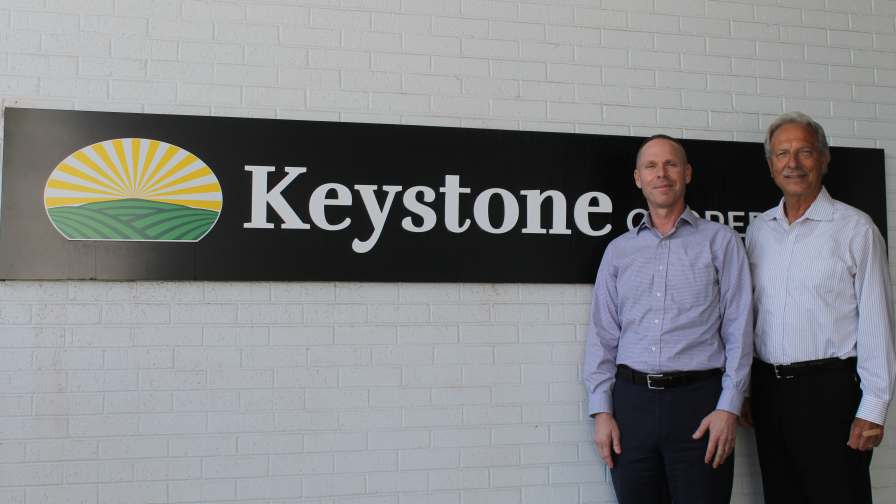
On September 1, 2026, the employees of Keystone Cooperative celebrated a seamless transition of power. On that date, long-time CEO Kevin Still officially handed the reigns over to Scott Logue, who had been serving as Keystone Cooperative’s Executive Vice President and COO.
With this move, the Indianapolis, IN-based ag retailer initiated its latest step to maintain its current market edge while simultaneously planning for what comes next in the agricultural world. According to Still, this fits with everything that has helped build Keystone Cooperative from a small ag retailer serving one Indiana county to one of the nation’s largest ag retailers with operations in hundreds of counties across multiple Midwestern states.
“I think the one word that best describes Keystone Cooperative is persistence,” says Still. “Over the years, we’ve stayed the course as a company, but were always setting new goals to keep up with changes in the market. And with this wonderful transition to Scott as the new CEO, I think we will be able to keep following this path.”
In essence, Keystone Cooperative’s history mirrors this mindset.
Although the company as it stands now was formally formed through the mergers of Co-Alliance and Ceres Solutions in early 2024, the cooperative can trace its roots back to dozens of mergers spread out over the late 20th and early 21st centuries.
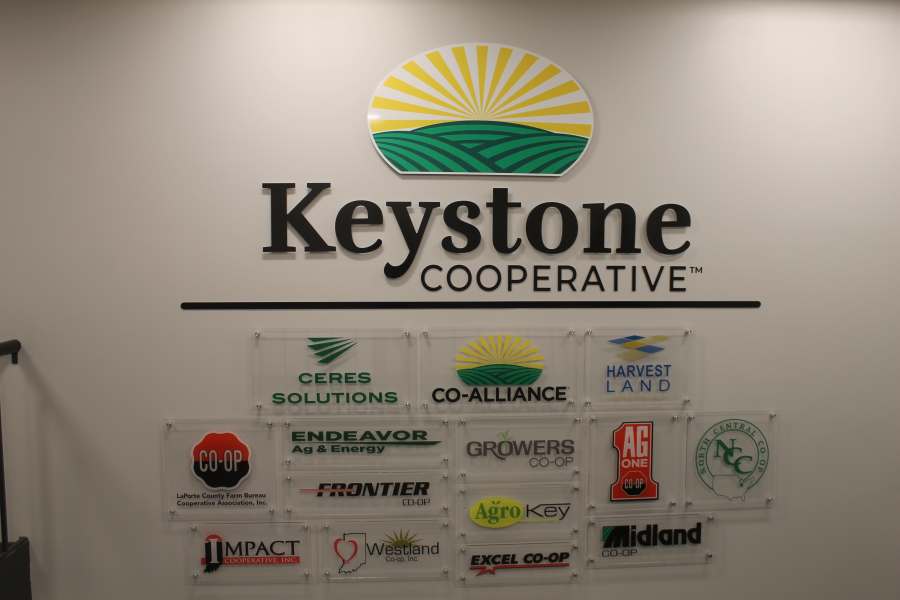
While this might not seem unique given the prevalence ag retail mergers over this same time span, incoming CEO Logue says Keystone Cooperative’s approach is different, particularly when it comes to the question of “why merge?”
“All of the retail mergers I was ever involved with were done out of necessity because the companies involved were experiencing financial challenges,” says Logue. “But when I first joined Keystone six years ago, when Harvest Land Coop merged with Co-Alliance, it was a very bold decision by the boards of those companies. These were cooperatives that basically had no long-term debt and plenty of working capital. They could have easily continued operating on their own. However, the Harvest Land and Co-Alliance boards recognized that in the future of ag retail, size and scale were going to matter more for continued success than just having a strong balance sheet.”
The Need for New Blood
To observers, it might seem equally bold for outgoing CEO Still to be stepping aside at this moment in Keystone Cooperative’s history. After all, the company’s four divisions — energy, agronomy, grain, and swine & animal nutrition — all showed a profit during 2025. The company’s overall sales are also strong, with Keystone Cooperative ranked among the Top 10 in the annual CropLife 100 listing of the nation’s top ag retailers at No. 8.
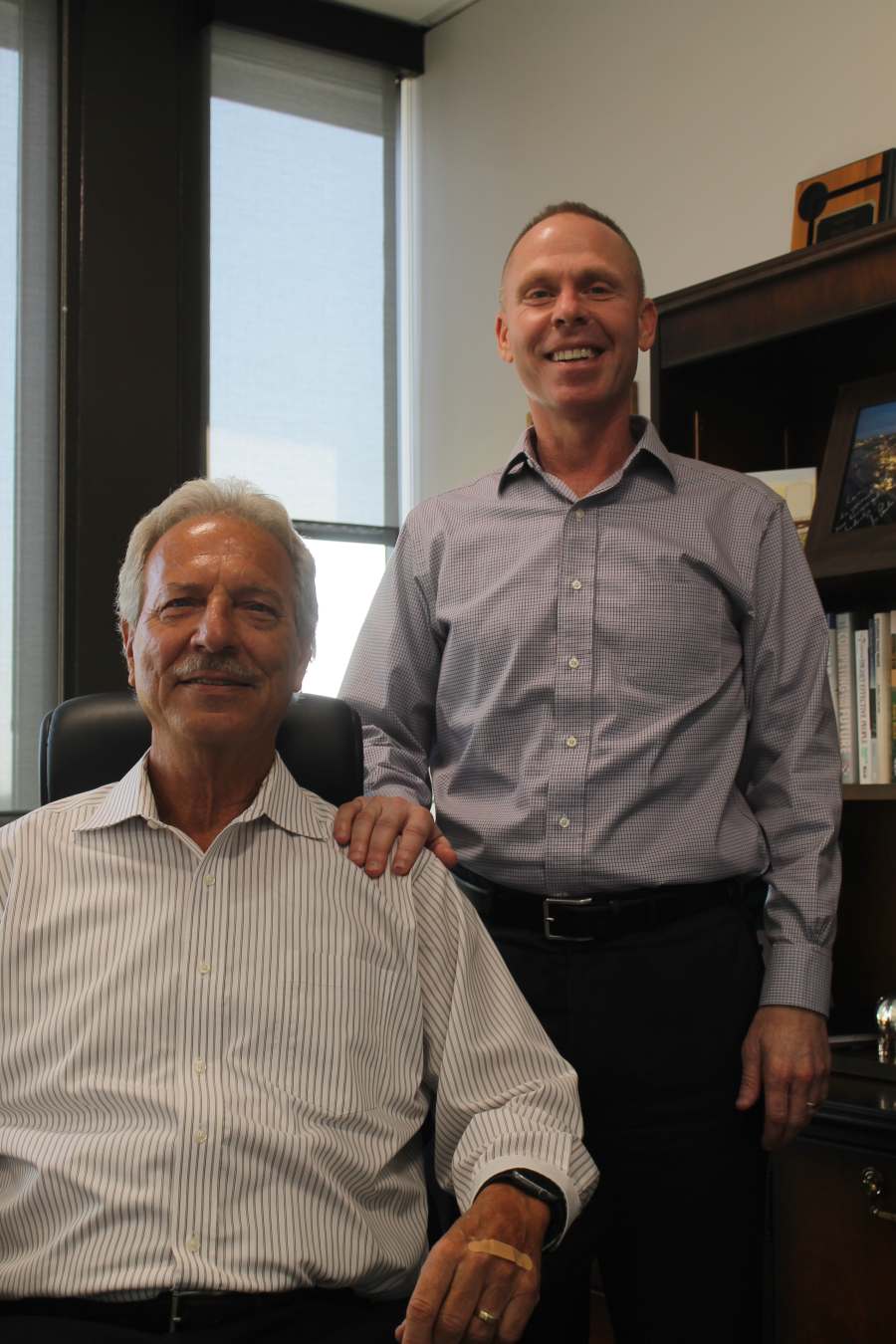
Despite all this, Still is convinced the time is right for a succession to Logue.
“The agricultural market and environment we all work in is changing very quickly in 2026,” says Still. “I see the need for younger, more innovative, nimble, and adaptable management for this company going forward. I think Scott really fits that role.”
According to Logue, the agricultural world of 2026 is as challenging an environment he’s witnessed since first starting in ag retail back in 1997.
“Today’s ag economy is negatively affecting all of ag retail and all of manufacturing,” he says. “We are seeing many directional shifts in how growers use inputs such as fertilizer and crop protection products.”
For example, Logue says that with crop input prices high and commodity prices low, many growers that Keystone Cooperative works with are now using off-patent crop protection products instead of brand name ones in their crop fields.
“The cost of these products vs. branded ones is key,” says Logue. “The U.S. farmer competes with the South American farmer, and off-patent product costs are much lower. U.S. growers have to be as competitive as possible with these cost considerations for them to successfully have access to global markets for their crops.”
The other big market challenge in 2026, says Still, is technology.
“That’s the big elephant in the room in my mind,” Still says. “Technology is playing a major role in today’s agriculture, and I view this as a structural change on the farm, not a cyclical one. That’s also one of the reasons I think transitioning to a new CEO is important for Keystone Cooperative, because I’ll be the first to admit that technology isn’t one of my strengths.”
Luckily, Keystone Cooperative is already looking to the future with many of its technology ventures. According to Logue, the company has for several years now been using drones to scout crop fields and apply some products for grower-customers. Keystone Cooperative has also experimented with autonomous sprayers in some test fields and is using autonomous loaders at one of its fertilizer hubs.
“We are also looking at opening a dry fertilizer building that is completely unmanned using autonomous vehicles,” says Logue. “This would be able to operate 24/7, seven days a week.”
But when it comes to employing Smart Tech systems more broadly into Keystone Cooperative’s operations, Logue says the company will need to be choosy. “We aren’t big enough to adopt a little bit of every technology that is out there right now,” he says. “To be successful and help our farmers, Keystone Cooperative will have to pick a path forward with the technology we do use and use it better than anyone else in ag retail does.”
“We are in a position where we get to help the farmer,” he continues. “Many farmers today are no longer just blanket applying products to their fields, thanks to being able to use new technologies such as artificial intelligence. We are going to have to make some decisions and maybe directional shifts because of this. There might be some products we will sell less of, but if these moves help strengthen our farmers, it will probably help us sell different products to them instead over time.”
Cultural Strengths
With all of these market challenges to deal with and a new CEO at the helm, Still believes Keystone Cooperative will be just fine moving into the 2027 growing season and beyond.
“The company has great people, a progressive culture, and vertical integration bringing diversification to the mix on its side,” he says. “Historically, Keystone Cooperative has moved very fast to adapt to market changes, but the company needs to continue moving faster still.”
Within the agriculture industry itself, Amy Kinsler, Senior Vice President and Chief Experience Officer, thinks one of the opportunities during 2027 is to better manage their cost structures.
“I think farmers and ag retailers are really learning how to chase out excess costs from the product system,” says Kinsler. “That’s something in U.S. agriculture we’ve all got to be focused on, learning how to live in a world of lower margins. Those companies that are successful in doing this and diversifying will win at the end of the day and help establish the next 25 to 30 years of farming.”
Still says he will keep an eye on how Keystone Cooperative performs in today’s agricultural economic environment as the entire industry evolves into something new and different.
He offers these words of wisdom to Logue and all of Keystone Cooperative’s employees that will help shape the future of the company.
“It’s going to take speed, capacity, accuracy, and urgency to succeed long term,” says Still. “And if you find an opportunity, enhance it.”