Corn disease pressure is less predictable and more aggressive than ever across much of the Midwest. This is causing retailers and agronomists to adjust how and when they help growers protect yield.
Madison Wozniak, a technical service manager for FMC, sees two forces driving that shift. “The last couple of years, we saw two very aggressive diseases back-to-back,” she says. “Tar spot moved in early and caught a lot of folks off guard, and then we had southern rust across a wide geography.”
Tar spot, in particular, is changing expectations. It has shown up as early as June for multiple seasons in parts of Indiana and Missouri, supported by residue-borne inoculum and cool, wet spring conditions. That risk window is pushing disease management decisions to earlier in the season, even as new university data refines when foliar applications deliver the most return.
Recent Purdue research points to R2, and even R3 in some cases, as more effective than the traditional VT/R1 timing for tar spot control. But that creates a gap. Growers are hesitant to wait when multiple diseases are in play and conditions can shift quickly.
“Utilizing a product like FMC’s Xyway® LFR® fungicide gives you peace of mind that you’re covering gray leaf spot, northern corn leaf blight, common rust, and suppressing tar spot1,” Wozniak says. “You’re not as concerned about waiting for that more opportune
timing to pull the trigger with a foliar fungicide.”
A New Role for Side Dress
That need for earlier protection is reshaping how retailers think about the side dress application. Traditionally focused on nitrogen, it is now an opportunity to establish foliar disease protection without adding trips across the field.
“You’re already out there making that pass,” Wozniak notes. “It’s a way to give the grower disease protection at the same time, and it becomes a differentiation tool for the retailer.”
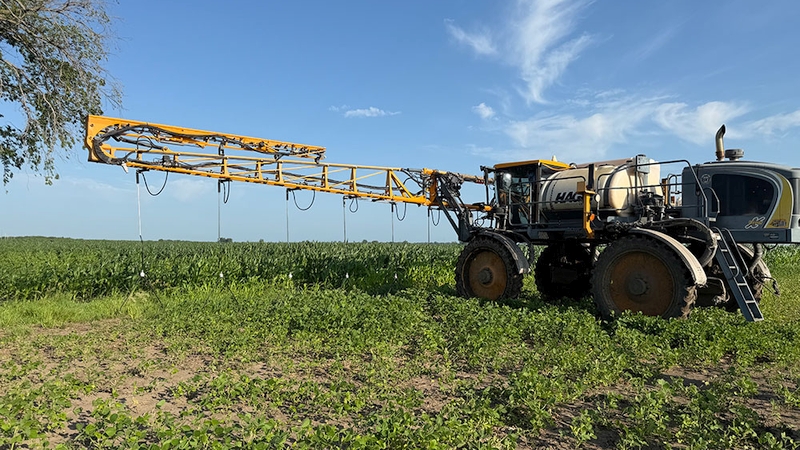
FMC tested whether Xyway® LFR® fungicide could be applied via side dress instead of at planting. The question was whether a product placed up to 15 inches off the row, as late as V6, could still deliver consistent uptake and control.
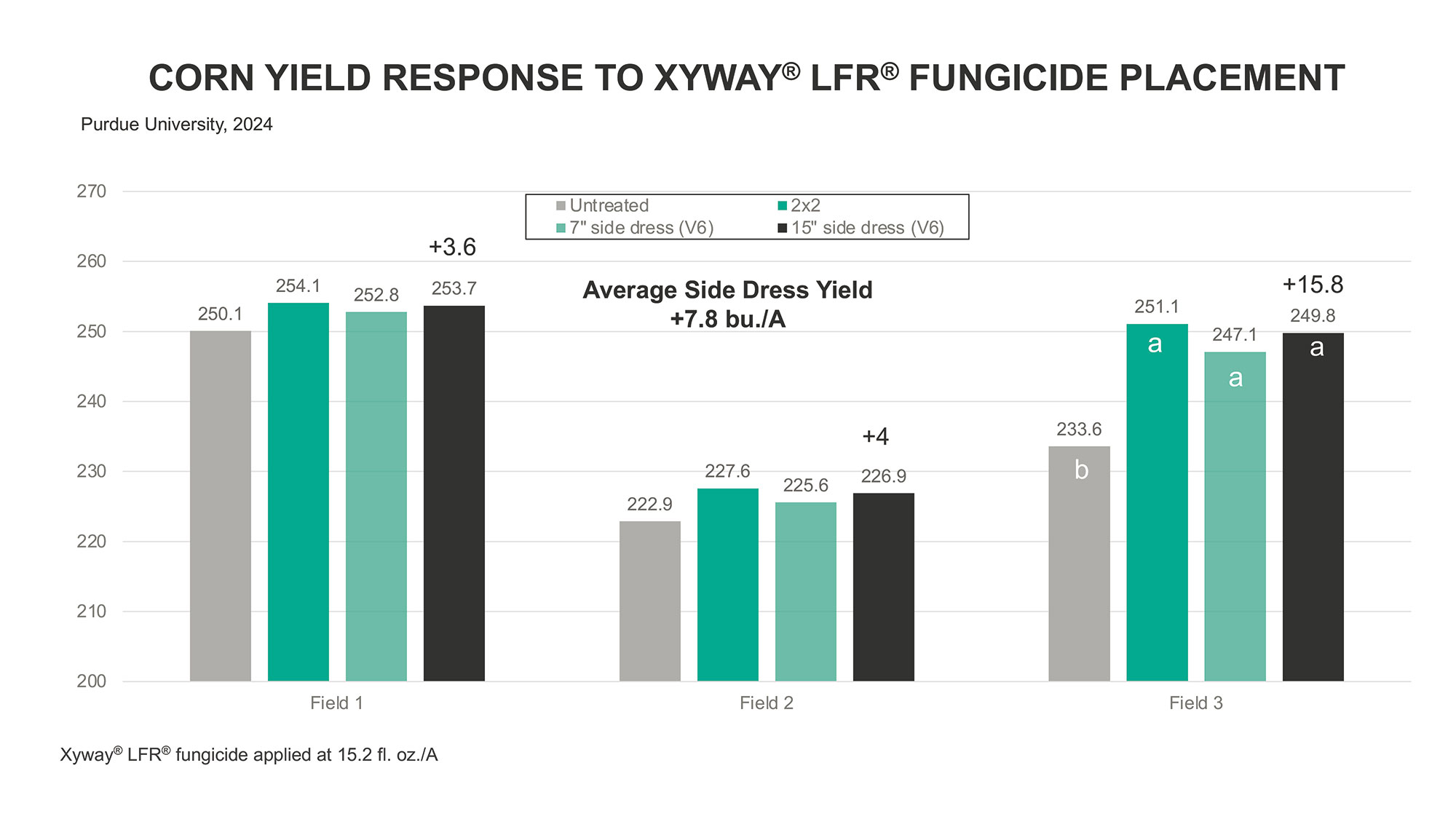
Purdue trials show it can. Across multiple site years, side dress applications of Xyway® LFR® provided the same level of disease suppression and yield protection as at-plant treatments2.
“That surprised us,” Wozniak says. “We didn’t realize the plant would be able to acquire the chemistry that far away from the row, that late, and still perform the same way.”
Flexibility that Carries Through the Season
Systemic protection does more than defend against disease that shows up early. It changes how the rest of the fungicide program is managed.
Growers who start with Xyway® LFR® report more flexibility on the back end. They can time foliar applications closer to actual disease pressure instead of making a prescriptive pass out of caution. That matters in tighter-margin environments, where unnecessary applications cut into returns.
It also helps protect the full grainfill period. “All healthy green plant material matters,” Wozniak emphasizes. “If we can keep those diseases at bay longer and be more timely, we preserve that green tissue deeper into the reproductive stages.”
Measurable Results
In the Purdue trials, Xyway® LFR® delivered an average yield advantage of about 8 bushels per acre. On-farm demos have shown gains of 15 to 20 bushels depending on disease pressure.
Beyond disease control, growers are seeing improvements in root development, water-use efficiency, and staygreen, all of which support consistent grain fill.
For retailers, the takeaway is practical. The side dress application is no longer just about fertility. It is a chance to layer in protection early, reduce timing risk later, and offer a more complete program in a single field operation.
As disease patterns evolve, that kind of flexibility is becoming essential.

1This Xyway® LFR® fungicide recommendation is made as permitted under FIFRA Sections 2(ee) for suppression of tar spot in corn. This recommendation has not been submitted to or approved by the EPA. The 2(ee) expiration date is 03/1/2028 (all registered states except TX).
2 This Xyway® LFR® fungicide recommendation is made as permitted under FIFRA Sections 2(ee) for side dress application in corn and grain sorghum. This recommendation has not been submitted to or approved by the EPA. The 2(ee) expiration date is 12/31/2030 (all registered states except TX) or 12/31/2028 (TX).
Results are based on field observations from specific conditions and may vary depending on factors including geography, weather and application timing.
Always read and follow all label directions, precautions and restrictions for use. Some products may not be registered for sale or use in all states. FMC, the FMC logo, LFR and Xyway are trademarks of FMC Corporation or an affiliate. © 2026 FMC Corporation. All rights reserved.