[youtube https://www.youtube.com/watch?v=6cguR70yJ-A]
With soybean margins under pressure, growers are weighing every insect control decision through the lens of ROI. FMC’s Bruce Steward discusses the performance traits that matter most, including speed, spectrum, and residual, and explains how choosing the right chemistry can reduce repeat applications while protecting yield when pest pressure is highest.
(Can’t see the video? To view it, please accept cookies by clicking the icon in the bottom-right corner of the screen, or click here.)

Smarter Insect Control Decisions for Tighter Soybean Margins
Soybean insect management is under sharp scrutiny. With tighter margins and rising input costs, growers are asking tougher questions about what each application delivers. According to Bruce Steward, a technical service manager at FMC, insecticide decisions are now tied directly to return on investment.
“Growers are taking a close look at every dime they put into the crop,” Steward says. “They want to know it’s well worth it, whether that decision is made at planting or later in the season.”
That focus puts pressure on every pass across the field.
The Performance Traits That Matter Most
Steward says the value of foliar soybean insecticides comes down to three core performance factors: speed of activity, spectrum of control, and residual performance. Those features matter because soybeans rarely face a single pest at a time.
“You can walk into a soybean field and see loopers, beet armyworms, podworms, stink bugs, grasshoppers, spider mites, even Japanese beetles,” he says. “Rarely do you just have one issue.”
For retailers, that means recommending products capable of handling overlapping pest pressure to help reduce the need for additional applications.
Speed Counts When Feeding Pressure is High
Fast activity matters most when insects are actively feeding. While some products may take hours to fully kill pests, Steward notes that feeding often stops almost immediately after exposure to Elevest® insect control from FMC. That rapid feeding cessation can limit defoliation and pod damage during vulnerable growth stages.
Stopping damage early helps preserve yield potential, even if mortality occurs later.
Residual Protection Reduces Costly Return Trips
Residual performance becomes increasingly important as application costs climb. Steward points out that a shorter residual can turn a single insecticide decision into a repeat expense.
“It’s about a $10 to $12 expense just for the application alone,” he notes. “If you’re using something that only gives you seven to ten days, you may be back out there sooner than you want.”
Longer-lasting control can help retailers and their customers reduce resprays, improve operational efficiency and protect grower-customer’s already thin margins.
Chemistry That Delivers Coverage and Staying Power
Product attributes drive residual and consistency. Steward highlights chemistries with translaminar or locally systemic movement, which allow products to penetrate plant tissue and hold up 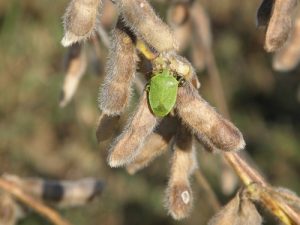 under environmental stress.
FMC’s Elevest® insect control was developed with those performance demands in mind, combining bifenthrin and Rynaxypyr® active to deliver fast knockdown, broad-spectrum control, and extended residual across key soybean pests.
“The two actives work differently,” Steward explains. “One targets the nervous system and the other affects muscle function, so you’re hitting those pests from more than one angle.”
That combination gives retailers added flexibility when recommending a solution across diverse pest complexes.
Timing Applications to Pest Pressure
As soybeans move into mid-to-late season, timing becomes critical. Steward stresses scouting and aligning applications with actual pest pressure.
“You don’t want to spray too early and have residual run out before insects show up,” he says. “But if you wait too long, pests like podworms can do real damage.”
For ag retailers, the goal is helping growers make insecticide decisions that balance efficacy, timing and economics. When evaluating insecticide options, Steward emphasizes consistency. Broad-spectrum control, fast feeding cessation, and dependable residual help ensure each application delivers measurable value.

Elevest insect control is a Restricted Use Pesticide. Always read and follow all label directions, precautions and restrictions for use. Some products may not be registered for sale or use in all states. FMC, the FMC logo, Elevest and Rynaxypyr are trademarks of FMC Corporation or an affiliate. ©2026 FMC Corporation. All rights reserved. 25-FMC-0499 05/26