

Tighter margins are changing the questions growers bring to their trusted advisers. Input costs remain elevated, labor is tight, and lenders want a clearer view of an operation’s financial position. For retailers, that makes financial readiness increasingly relevant to conversations that once centered primarily on products, rates and yield.
The opportunity is not for retailers to become financial advisers. It is to help growers connect agronomic decisions, production data and crop plans with the financial information they need to make better decisions and have more productive conversations with lenders.

According to Cam Rowe, embedded finance partner officer at Agri-Access, that starts with recognizing how interconnected farm decisions have become.
“For a long time, everyone kind of viewed themselves as having their pigeonhole area of expertise,” Rowe says. “I think we’re increasingly finding ourselves, all of us in this network in agriculture, helping advise on multiple layers.”
Move Financial Records from Tax Tool to Management Tool
One of the biggest shifts is treating farm financial records as an ongoing management resource rather than something assembled once a year for tax preparation or an operating loan renewal.
Current records give growers visibility into cash flow while there is still time to act. They can also help a producer move quickly when an opportunity appears, such as purchasing neighboring acreage.
Aryn Young, customer solutions manager at Ambrook, says growers increasingly need that information during the production year, not months later.

“Margins are feeling a little tighter, which means they have less room for error, and they also need to know in the middle of the year how they might need to make course corrections based on how their numbers are doing,” Young says.
Digital financial platforms can reduce some of the burden. Ambrook, for example, allows users to connect bank and credit card accounts, categorize transactions and receipts, and track financial activity from a mobile device.
The larger value, however, is what growers can do once their records are current.
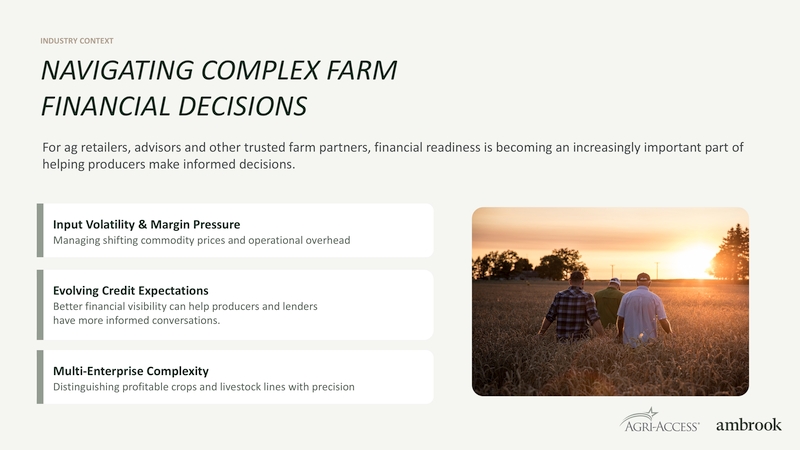
Understand What Is Actually Making Money
Enterprise-level analysis gives producers a sharper picture of profitability by crop, livestock enterprise, location or even individual field.
That distinction matters when a grower is deciding where to invest. A whole-farm profit and loss statement can show whether an operation makes money, but it may not reveal which acres or enterprises drive the return.
Young says financial data becomes more useful when producers can separate income and expenses among different parts of the operation.
She points to a producer who began selling mineral tubs to neighboring cattle operations. By tracking that activity separately, he discovered the enterprise was breaking even. That information gave him a basis for deciding whether to adjust pricing or continue operating it as-is.
The same principle can apply to crop production. A grower can compare fertilizer expense by location with yield information to determine whether spending more or less on an input actually improves the return.
For retailers, that creates a more useful starting point for agronomic conversations. If several years of records show that one field consistently underperforms, the discussion can move toward the cause. The answer could involve fertility, seed selection, another agronomic factor or the economics of farming those acres at all.
Better Information Can Mean Better Lending Conversations
Organized records also change the lender conversation.
Rowe says lenders increasingly manage larger books of business, making clear and accessible financial information especially valuable. A producer who arrives with a current balance sheet, cash flow and earnings information gives the lender a much clearer starting point than someone who first needs to reconstruct months of financial activity.
“Being better prepared is honestly your best defense to having the best interest rates, the best relationship with your lender, and honestly being able to make the best decisions for your operation,” Rowe emphasizes.
That preparation becomes even more important when financial performance disappoints.
Waiting until a problem becomes urgent can reduce the options available. Rowe advises producers to approach lenders early with current information, an explanation of what changed and a clear understanding of the potential shortfall.
Young adds that detailed records help producers explain the story behind their numbers rather than leaving a lender to interpret them.
“When you come to a meeting with a lender and you can explain your numbers and you can show them exactly what you’ve been seeing on the ground reflected in financial data, that conversation is going to get a lot easier,” she notes.
Ag Retailers Can Add Context Without Owning the Financial Decision
Retailers often know a considerable amount about a grower’s plans before a financing decision reaches the lender. They understand crop plans, expected input purchases and production history. They may also know when a customer is considering adding acres or changing an agronomic program.
That puts retailers in a useful position to help customers prepare.
Rowe recommends helping growers develop realistic crop plans and projections using information such as historical yields, expected input needs and available USDA Farm Service Agency guidance. Retailers providing trade credit can also make sure customers understand program terms, interest rates and maturity dates.
The distinction is important. The producer remains in control of the financial information and decides what is shared with the retailer, lender or other advisers.
The result is a more connected decision-making process. Farm management platforms provide current financial information. Retailers and crop advisers contribute agronomic context and planning expertise. Lenders use accurate financial information to evaluate risk and credit requests.
For retailers, the payoff is a better conversation with the grower. Instead of approaching a customer with another product to sell, the retailer can use production and financial context to ask a more valuable question: Where can this operation improve its return, and what agronomic decisions can help get it there?
If you missed the live broadcast of this webinar, “From Farm Finances to Funding: Building Financial Readiness for Better Lending Decisions” you can view the archived version online here or visit CropLife.com/webinars and check it out today.