
The Hidden Hand in Nutrient Cycling: How Soil Biology Drives Nitrogen and Phosphorus Availability
Nutrient management has always been a balancing act. Growers rely on traditional soil tests, fertilizer programs, and crop scouting to manage the availability of key nutrients like nitrogen and phosphorus. But despite best efforts, yield gaps and nutrient inefficiencies persist. The reason is becoming increasingly clear: most of those programs overlook the role of soil biology.
“Biological cycling is one of the key elements that determines how much of your fertilizer investment actually makes it into the crop,” says Gus Plamann, Agronomist at Biome Makers. “Historically, we didn’t have the tools to measure or manage that biology. Now, with technologies like BeCrop® Farm, that’s changing.”
The science of nutrient cycling is advancing quickly. Research from institutions like the University of Illinois and others confirms what many agronomists have suspected for years: soil microbial communities play a central role in how nitrogen and phosphorus move through the soil and into the plant. For growers, that means soil biology is no longer a background factor. It’s a critical lever for nutrient efficiency and profitability.
Biology: The Engine Behind Nutrient Efficiency
The nitrogen and phosphorus cycles are driven by far more than fertilizer application rates. Microbial activity beneath the surface determines whether those nutrients stay locked away or become available to crops.
“Microbes are essentially the supply chain,” explains Plamann. “The nutrients are your raw materials, but biology manufactures and distributes them to the crop.”
Take nitrogen as an example. Growers may apply nitrogen fertilizers in the form of urea, ammonium, or other products. But nitrogen doesn’t always automatically become available to plants. Instead, soil microbes play a crucial role by converting nitrogen into forms that are more readily available to crops through biological processes such as mineralization and nitrification.
Biological nitrogen fixation is another key piece of the puzzle. Certain soil microbes, including well-known species like rhizobia, pull nitrogen directly from the atmosphere and make it available to plants. While biological products that boost nitrogen fixation are gaining traction, many growers underestimate the role of native microbial populations already present in their soil.
The story is similar for phosphorus. Large amounts of phosphorus may exist in the soil, yet much of it remains chemically bound to minerals or locked in organic forms that plants cannot access. Specific bacteria and fungi have the ability to solubilize phosphorus, breaking these bonds and making the nutrient plant-available.
“Phosphorus can get tied up with iron, aluminum, and other minerals in the soil,” says Plamann. “But certain microbes can unlock that phosphorus and help crops access it. Without the right biology, a grower could be applying more and more fertilizer without solving the real problem.”
Traditional Soil Tests Leave Blind Spots
Standard soil tests remain an essential tool for understanding nutrient levels, organic matter, and pH. But they don’t account for the biological processes happening in the soil that drive nutrient cycling.
“Traditional soil tests give you a snapshot of what’s in the soil,” says Plamann. “But they don’t tell you how efficiently those nutrients are cycling or whether biology is limiting availability.”
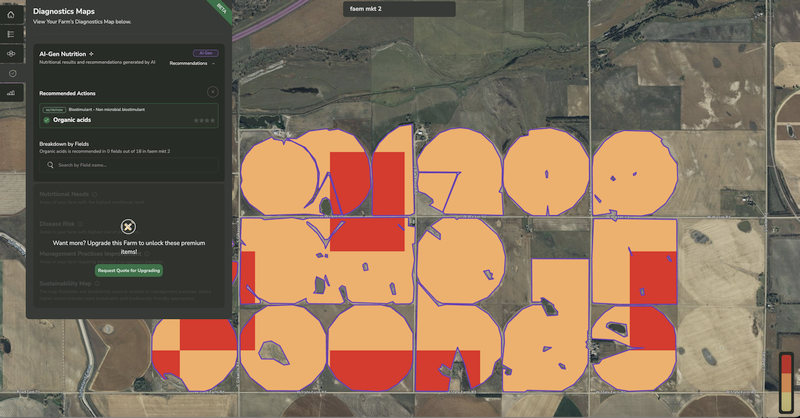
This is where BeCrop® Farm from Biome Makers comes in. Using advanced DNA-based soil analysis, BeCrop® Farm profiles the microbial communities in the soil and provides insight into how they influence nutrient cycling, plant health, and overall soil function.
“Think of it like this,” explains Plamann. “Your soil might have plenty of phosphorus on paper, but if the biology isn’t working properly, that phosphorus stays locked up. BeCrop® Farm helps reveal where biology is creating a bottleneck.”
Practical, Profitable Insights for Growers
With fertilizer prices at historically high levels and markets under pressure, improving nutrient efficiency is a top priority.
“Fertilizer is a huge expense, especially for crops like corn,” says Mark Kinsey, Sales Director at Biome Makers. “When prices are tight, you can’t afford inefficiencies. Being able to manage nutrient cycling at the subfield level is what helps protect margins.”
BeCrop® Farm provides growers with biological data that complements their existing agronomic tools. This added layer of information helps pinpoint hidden factors limiting nitrogen and phosphorus availability and guides management decisions that improve input efficiency.
In some cases, that may mean incorporating microbial products or biostimulants that enhance nutrient cycling. In others, it may involve soil health practices like crop rotations, cover crops, or reduced tillage to support beneficial microbes.
“Sometimes, it’s not about applying more fertilizer,” says Kinsey. “It’s about improving the soil’s biological function so that what you’re already applying is more effective.”
BeCrop® Farm can also inform decisions around fertilizer selection. With more specialty fertilizers, enhanced efficiency products, and coated nutrient options entering the market, understanding how those inputs interact with soil biology helps ensure they deliver on their potential.
Going Beyond the Soil Test
Importantly, BeCrop® Farm is not a replacement for traditional soil testing. It’s a complementary tool that helps growers see the full picture.
“Soil fertility is more than just a chemical equation,” says Plamann. “It’s physical, chemical, and biological. BeCrop® Farm helps growers understand the biological side, which has been largely invisible until now.”
With microbial data in hand, growers can adjust nutrient programs, evaluate product performance, and identify opportunities to boost nutrient use efficiency. The result is a more precise, informed approach to nutrient management that protects both yields and ROI.
Managing What You Can’t See
The days of guessing how soil biology affects nutrient cycling are over. With BeCrop® Farm, growers can quantify microbial activity, identify hidden bottlenecks, and make smarter decisions that drive real returns.
“Biology has always been part of the nutrient cycle,” says Kinsey. “The difference now is that we can measure it, manage it, and use that information to improve efficiency.”
Ready to see what soil biology is doing for your nutrient program? Contact Biome Makers and learn how BeCrop® Farm can help you close the nutrient efficiency gap.