


Precision. Few concepts have been so quickly embraced by the agricultural community.
“Adoption of precision technology is the biggest driver in application technology,” says William Smart, President, Greenleaf Technologies. “Farmers and applicators must find ways to be efficient and maximize the performance of the pesticides that they are applying. With PWM (pulse width modulation) and spot spraying technology, they can put exactly the right amount of product in the right place. This also applies to using HoseDrops for fungicide in corn. Spraying in-canopy rather than trying to penetrate from above the corn puts more fungicide right where it needs to be to do the job. We expect the trends noted above to continue.”
When it comes to sprayer technology, PWM is de rigueur. All major self-propelled sprayer manufacturers offer PWM systems Smart says. Other companies sell aftermarket solutions that can be added to existing equipment already in the field.
“Once a farmer or applicator adopts this technology, they rarely go back to conventional spraying,” he says. “Customers will continue to look for nozzles that can provide better coverage and efficacy with PWM systems.”
The last several years have been good ones for Greenleaf Technologies, Smart says. Whether it’s PWM or conventional Greenleaf expects 2025 to continue that trend, the company’s “TurboDrop DualFan (TADF) continued to grow in popularity, boosted in part by a Beck’s Practical Farm Research study.
“After three years of trials across multiple states, Beck’s has designated our TADF as PFR (practical farm research) Proven,” Smart continues. To earn that honor a product (or practice) must provide positive yield gains each year and average an increased return on investment for a minimum of three years.
The TADF nozzles showed a $23 per acre ROI, which pays for the nozzles very quickly,” Smart says. “At the winter trade shows we had lots of inquiries about this nozzle, which has proven to be extremely versatile for coverage critical applications.”
Targeted Spraying
Another change the industry has experienced in the last several years includes spot spraying. Greenleaf has designed nozzles to complement that approach.
“While PWM technology is gaining rapid acceptance, spot spraying (green on brown and green on green) is just getting started,” Smart says. “There are a few systems on the market, but they have not been used over a large amount of acres. Nevertheless, we have been developing narrow angle nozzles for use with spot spraying systems.”
A few years ago, John Deere’s See & Spray system burst on the scene. The company has since complemented that technology with nozzles designed for that offering.
“In 2024, John Deere brought new nozzles to market that were developed specifically for our See & Spray system,” says Josh Ladd, Go-To-Market Manager for Application Equipment.
“These new nozzles improve targeted application, leading to better weed control and supporting chemical savings. We look forward to releasing additional sizes of the targeted spray TSL60 and TSL80 nozzles that will help support See & Spray technology over a wider range of applications. There will also be increased support for additional See & Spray machines hitting the fields this spring.”
The Deere solution allows growers to use smaller amounts of crop inputs saving them money and time.
“Customers are always looking for opportunities on their operation to do more with less and technology is driving changes,” Ladd says. “Customers continue to look for ways to save on inputs and be good stewards of the land.”
“John Deere will continue to develop and refine targeted spray technology with new nozzles to enhance See & Spray, helping customers optimize weed control and reduce costs,” Ladd continues.
Each year, growers decide what the season’s crops will be, and that informs the solutions they will need.
Managing Expectations
“2024 did indeed meet expectations,” says Marty Heyen, Director of Marketing, TeeJet Technologies. “However, the downturn in the agricultural market that is affecting most equipment companies is also affecting the supply chain due to a trickle-down effect. However, spraying is an application that happens no matter how the market is trending and TeeJet was heavily involved in providing solutions to farmers that make their spraying process most efficient.”
Heading into 2025 TeeJet is “cautiously optimistic,” Heyen says, “although we see many opportunities in certain applications and certain parts of the market, the continued downturn in agriculture cannot be ignored and has our expectations tempered.”
Heyen expects the challenges the industry has been facing will continue through 2025, but that won’t slow down TeeJet’s investments into better products for spray applications.
“However, new technology in the application of crop protection products will continue to drive the changes in the market,” Heyen says. “Spot spraying, which in now being recognized more as target spraying is having an impact on product development. Target spraying does require special technology and in particular special nozzles for the application to be most effective.”
According to Heyen, PWM will continue to resonate with growers and manufacturers will continue to develop their offerings to mee that growing segment.
“Valves that can handle the on and off sequence required by PWM as well as nozzles that perform efficiently under these application parameters continue to be of the upmost importance,” he says. “Individual nozzle shutoff valves are also technology that is being used more commonly on agricultural sprayers.”
TeeJet has new and updated tools to manage the changing needs including the DGX spray nozzle series that came out earlier this year. In addition, the company developed a new version of the 191500 Series e-ChemSaver DynaJet Valve, which can be used on most diaphragm-type nozzle bodies.
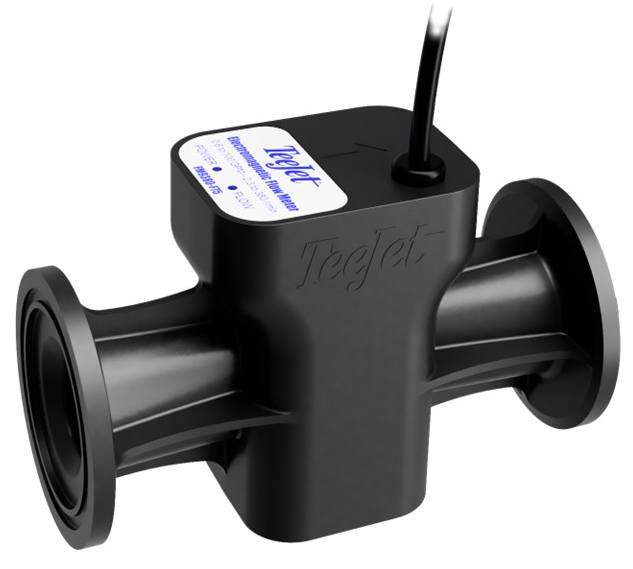
“We also introduced our new FM9380-F75 electromagnetic flowmeter in 2024,” Heyen says. “This EM flowmeter and its innovative design has no moving parts which means no service or maintenance and has no risk of clogging. It has been optimized for agricultural application equipment and works with any conducting fluid.”
Wilger, like other manufacturers, is embracing the precision approach.
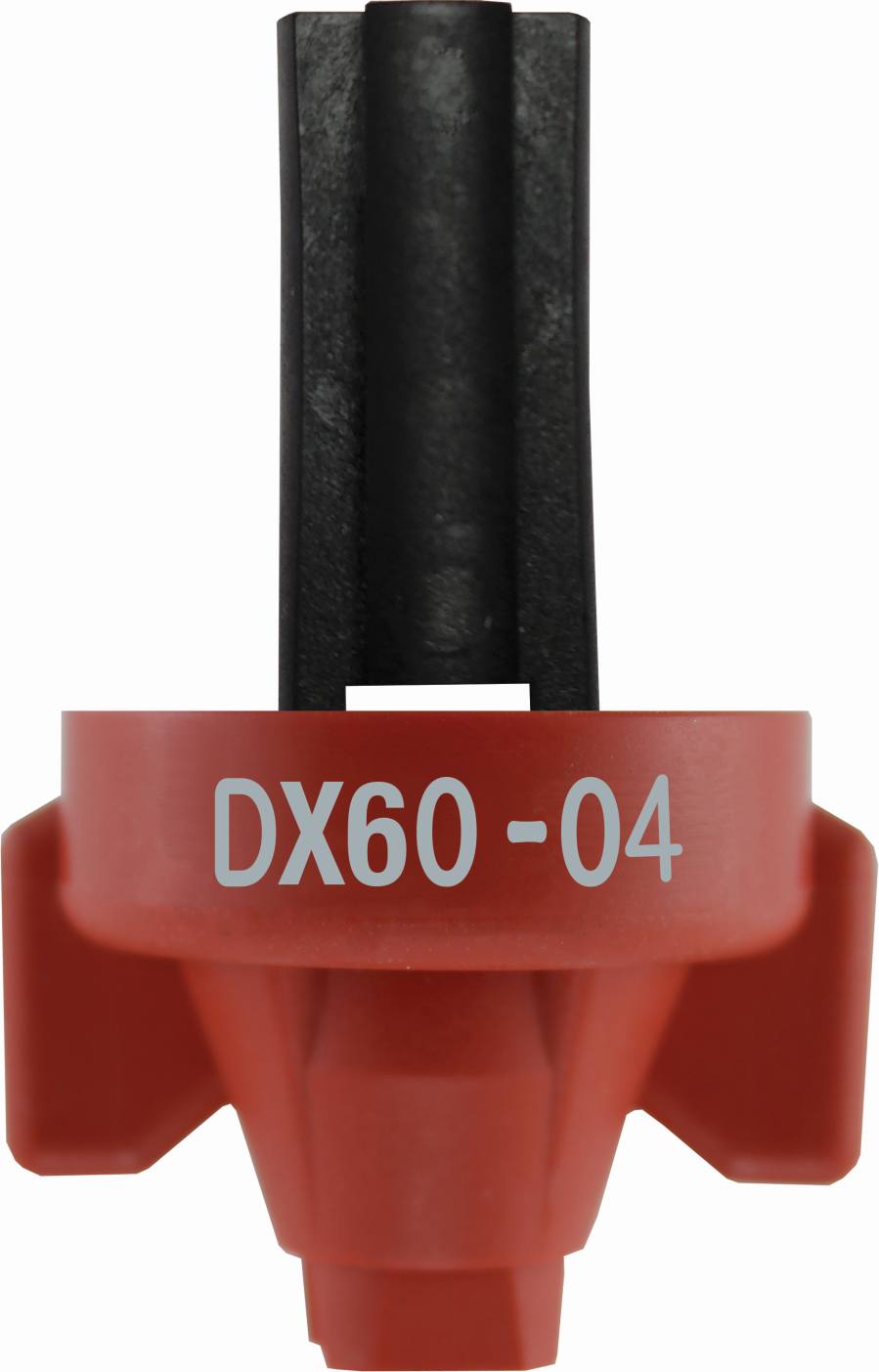
“The market is undergoing a significant change, driven by the widespread adoption of advanced spraying systems, including spot spray and variable-rate sensors,” says Lucas Olenick, Marketing Manager, Wilger. “As these cost-saving systems become more prevalent, there’s a growing demand for nozzles that can deliver precise, targeted applications, typically in the form of narrow angle spray nozzles.”
Changing Needs
“This shift is driving the demand for specific nozzle angles, such as 80-degree for broadcast spraying on spot-spraying equipped sprayers, and 60-, 40-, and 20-degree nozzles for precise spot spray usage,” Olenick continues. “The pressure is on nozzle manufacturers to produce high-performance nozzles that maintain the balance between drift and coverage, while also meeting the evolving needs of sprayer applicators. The increasing sophistication of sprayer applicators is also a key driver of change, as they need to optimize their equipment and make sure their sprayer improvements pay off. This means smarter applicators are paying more attention to their nozzle selection, requiring more information and context from spray nozzle manufacturers.”
To accommodate those needs, Wilger introduced new solutions to the market.
“The 2024 nozzle and valve market exceeded our expectations, driven by adoption of new technologies being commercially available for real-world field conditions,” says Olenick.
Synergies between precision technology and sprayer equipment manufacturers create demand for new styles and types of nozzles, says Olenick. When both the operators and equipment become more sophisticated, “we are witnessing the emergence of greater demand for spray nozzles that fit into the integrated spray systems to enhance efficacy, efficiency as well as significant chemical savings.”
Like other manufacturers, Wilger customers have been drawn to tools that offer more precise spraying.
“Notably, Wilger’s COMBO-JET 80° nozzles have experienced a surge in demand, namely due to demand for spot spraying equipment,” Olenick says. “With three stages of drift reduction for any size of 80-degree nozzles already developed and available, it has been a step-up for proper nozzle selection onto spot spraying equipment used for broadcast spraying.
“As I look into 2025, I see a convergence of several innovative technologies that are hitting commercial usage,’” Olenick continues. “These technologies affect the nozzle market or new nozzles in different ways, but many share the same demand for tailored nozzles to emphasize the system itself.”
The focus on precision isn’t the only reason manufacturers are bringing new nozzles to the market. Drift remains a concern.
“As long as the wind continues to blow, drift can always be something to be aware of,” TeeJet’s Heyen says. “Newer technology nozzles and application technology like PWM make managing and controlling off target drift much easier.”
Wilger’s Olenick also highlights the need for tools that minimize drift issues.
“Drift and coverage will always be a delicate balance that applicators and nozzle manufacturers must maintain, regardless of advancements in technology and systems,” he says. “While innovative solutions like spot spraying and variable-rate-on-the-go (such as Augmenta) offer reduction in chemical volumes being sprayed, it’s still crucial that the nozzles follow chemical label requirements and ensure to maintain the required level of drift and coverage for the given conditions. This is highlighted particularly with chemical labels like Enlist, which have specific nozzle requirements to ensure safe and effective application which have been updated to include Wilger’s 80° and 60° nozzle series.”