Crop Protection Manufacturers Expect a ‘Just-in-Time’ Market for Herbicides in 2025
 December 25, 2024
 Resistance. Pre- and Post-emergence. Weather. Economy. Technology … the list of factors that influence herbicides goes on.
“When considering the future of the herbicide industry, several key points come to mind,” says Nick Fassler, Director, U.S. Technical Services for BASF. “One of the most important considerations is the continued reliance on post-emergent herbicides. It is more important now than ever for retailers and growers to devise robust weed management strategies to protect the utility of the products we have today.
“These strategies should utilize multiple modes of action, layering of residuals, and controlling weeds pre-emerge or while small. This helps to more effectively manage resistant weed species such as Palmer, waterhemp, and kochia, which have developed resistance to multiple modes of action (MoA).”
The variety of factors influencing the herbicide market changes with every planting season.
“While 2024 seemed like a just-in-time environment, it wasn’t,” says Jeff Wagner, Vice President Crop Protection Sales, at Nufarm. “Manufacturers had more inventory than we wanted, which has corrected moving into 2025. The loss of over-the-top dicamba applications brought a surge in demand for burndown products and we delivered that capacity. It was notable that newer combination herbicides addressing weed resistance picked up share.”
While the 2024 planting didn’t turn out to be a just-in-time environment, 2025 might turn out to be one — not by choice, but by necessity.
“While weed seed banks are loaded, economics at the farmgate won’t allow most growers to take product before its needed,” Wagner says. “The channel will need to react to demand more quickly and efficiently, putting retailers in a competitive position to service the grower.”
2024 proved to be a challenging year, says Carlos d’Arce Junior, UPL North America Portfolio Lead – Herbicides, UPL.
“We knew going into the season that 2024 would be a very challenging year,’” he says. “There were signs that the prices of agricultural products were going to return to pre-pandemic levels, which combined with a need to adapt to the volume of inventory that was in the field. Anticipating that, UPL returned to an approach to growing in the market in a more sustainable way.”
- Related: Sustainable Technologies, Regulatory Obstacles Among Leading Factors Shaping the Herbicide Market
With a rough 2024 season behind them, companies are expecting a better year.
“The outlooks for 2025 and beyond are more optimistic,” d’Arce says. “UPL will be bringing innovative solutions to market that will hand more control back to growers in the fight against resistant weeds.”
Nufarm’s Wagner also looks forward to the coming year.
“2025 will be the first just-in-time market through the value chain, placing the focus on two-way communication,” he says. “We need to understand expectations on the herbicide demand front as we focus on delivering fall and spring burndown products with the right amount of inventory.”
While herbicide manufacturers continue to deliver new solutions, nature continues to throw up roadblocks. For example, weed resistance continues to be a major hurdle for growers.
“The herbicide industry has witnessed significant technological advancements in recent years,” BASF’s Fassler says. “One notable improvement is in product formulations, such as encapsulation technology, that can enable wider or new application windows. In addition, the growing interest in using drones for herbicide applications has been driven by the scalability of drone technology. Another exciting development is the adoption of optical spraying technology, like One Smart Spray or John Deere’s See & Spray; both will change how growers manage weeds in the future.”
Challenges
“Despite a general decline in costs for fertilizers and crop protection products over the past few years, farmers are still concerned about increases in costs,” UPL’s d’Arce says. “Extreme weather events are also a top concern for the coming season. Another topic that is top of mind with farmers going into next year is the volatility of commodity prices and how that will affect their profitability.”
The regulatory environment forces manufacturers to adjust their crop protection portfolio. Nufarm has adjusted its offerings to deliver products that are no longer available.
“As we face a patent cliff with crop protection herbicides, Nufarm’s pipeline will focus on bringing incremental value to channel partners, retailers and the growers they serve,” Wagner says.
In addition to the company’s portfolio, Nufarm also works with a variety of companies to ensure it’s able to deliver the solutions growers need. “We’re engaged in discovery partnerships with Enko, MOA, and others to evaluate the potential of new molecules more efficiently.”
One issue they hope to address is herbicide resistance.
“The increase of kochia resistance to Groups 2, 5, and 9, including fluroxypyr, makes new options critical to success,” Wagner says.
Even with a diverse portfolio, Nu-farm must find ways to ensure its herbicides are available. In the past couple of years, one of the challenges manufacturers and the retailers who sell their products is managing supply disruptions.
“Herbicide innovation also means supply chain innovation,” Wagner continues. “Nufarm has modernized and doubled its herbicide manufacturing capacity across the past year to deliver the capabilities necessary to support reduced lead times in tomorrow’s crop production environment.”
Regulatory Concerns
”The largest challenge impacting the seed treatment industry is the urgent need for effective regulatory frameworks around the world that support the efficient introduction of innovative crop protection technologies and seed treatments,” says Eric Boeck, Regional Director North America Seeds, Syngenta. “We also are committed to continuing to raise grower awareness of pests that are not as visible — such as plant-parasitic nematodes in soil — or evolving pest and disease threats such as Fusarium stalk rot in corn and Fusarium crown rot in wheat.”
Following the 2016 presidential election, Donald Trump instituted a variety of tariff that concerned a number of products. President Joe Biden left many of those in place. Trump promised not only to continue tariffs, but also to increase them. During the campaign, Trump repeatedly touted his plan to increase tariffs. With his reelection to the highest office in the land, we’ll see if he follows through on those promises, how they’ll be impacted and what it means for growers across the country.
“The impact that tariffs play on the cost of 2,4-D are real but navigable,” Nufarm’s Wagner says. “We’re going to continue to see 2,4-D bring value and utility to a full range of spray applications.”
While the election could affect the cost of future products, it is far from the only issue.
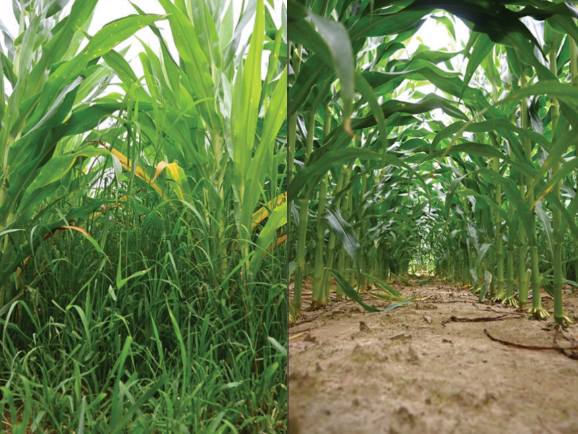
Left: Surtain nontreated; Right: Surtain Pre-Treatment. Photo: BASF
“As we approach the new planting season, a critical evaluation of past seasons can help identify successes and areas needing improvement, particularly considering the impact of weather on field conditions,” BASF’s Fassler says. “Growers increasingly rely on a limited number of effective herbicides, and using residual herbicides to control weeds early is crucial. Timely management of weed populations is also essential to ensure effective weed control throughout the season. We continue to recommend using multiple modes of action and a plan that includes effective pre-, post-, and layered residual herbicides to control weeds until canopy closure.”
Retailer’s Role
Whether it’s new products or supply chain disruptions, retailers must continually adjust to an ever-changing market.
“As retailers put themselves in position to service the grower on a just-in-time basis they’ll need capable suppliers who can deliver the first and last gallon with speed and agility,” Nufarm’s Wagner says. “Foundational product reliability for glyphosate, 2-4,D, and dicamba will stay core to the grower alongside innovative herbicide opportunities that create value. Retailers evolve in 2025 as agents of value when it comes to herbicide availability, savings and ROI.”
BASF’s Fassler agrees that retailers have an important role in the future of herbicide use.
“Retailers play a pivotal role in developing and implementing herbicide plans,” BASF’s Fassler says. “As the first point of contact for growers, retailers and agronomic sales personnel provide essential local expertise on incorporating new products and services into herbicide programs.”
Manufacturers are generally optimistic. Syngenta’s Boeck sums up the sentiment for 202 and beyond.
“At Syngenta, we have a robust pipeline of new and highly effective technologies as well as an expanding portfolio of biologicals, and we expect our business to grow on the back of new product launches and greater awareness of the threat from plant-parasitic nematodes,” he says.
Subscribe Today For
