[youtube https://www.youtube.com/watch?v=B9PLGPZ-5Ww]
Traditional fertilizers can leave much of their phosphorus unavailable to crops, creating costly inefficiencies for growers. In this CropLife Smart Tech interview, Mike Howell of Ostara explains how advanced fertilizers, like CG P2X are reshaping nutrient management and creating opportunities for retailers.
(Can’t see the video? To view it, please accept cookies by clicking the icon in the bottom-right corner of the screen, or click here.)

Phosphate Fertility Is Due for a Technology Upgrade
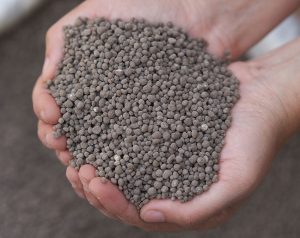 For decades, phosphate fertility programs have relied on the same approach. High water-solubility products such as DAP, MAP and TSP have dominated across North America. But today, economic and agronomic pressures are prompting a closer look. As input costs rise, margins tighten, and nutrient efficiency faces greater scrutiny, growers and retailers are asking a key question: how much of that phosphorus I bought reaches the crop?
According to Mike Howell, vice president of agronomy at Ostara, the answer reveals a significant gap. Traditional phosphate fertilizers typically deliver only 10 to 30 percent of applied phosphorus to the plant. The rest becomes tied-up in the soil or is lost through runoff and leaching.
“That means growers are paying for a full ton of nutrients but only realizing a fraction of the return,” Howell explains.
For ag retailers, this inefficiency creates both a challenge and an opportunity. Growers are increasingly focused on return on investment, looking beyond application rates to measurable performance in the field. While agriculture has advanced rapidly in areas like genetics, equipment, and data, phosphate fertilizer has changed relatively little, until now.
Rethinking Phosphorus Availability
Ostara’s solution focuses on changing how nutrients, including phosphate, behave in the soil. Its flagship product, CG P2X™, a next-generation form of Crystal Green fertilizer, features a 9-42-0 analysis plus 9 percent magnesium and is designed around a concept called “Crop-Driven Release.”
Unlike conventional fertilizers that dissolve immediately in water, CG P2X reacts to organic acids released by plant roots and soil biology. This allows the granule to remain intact until the crop actively draws nutrients, reducing fixation and improving availability.
“In simple terms, it feeds the crop instead of the soil,” Howell says.
This distinction matters because phosphorus chemistry changes rapidly after application. In many soils, nutrients can become unavailable before roots can absorb them. By aligning nutrient release with plant demand, CG P2X aims to improve efficiency and reduce losses.
Changing the Conversation
Adopting a new approach requires rethinking long-held assumptions, especially the belief that water solubility equals effectiveness. For many growers, visible dissolution has been synonymous with performance.
But that mindset is evolving. “Water solubility isn’t the goal,” Howell emphasizes. “Getting nutrients into the crop is.” The industry is realizing that total nutrients don’t tell the value creation story, but that “available” nutrients do.
Education plays a key role in that transition, creating an expanded opportunity for ag retailers. As trusted advisors, retailers are well-positioned to guide growers through new technologies using field data and real-world results.
Built Around Retail Partnerships
Ostara works exclusively through ag retailers and distributors, supporting them with technical expertise, training, demand creation and field research. The goal is to help retailers confidently integrate CG P2X into existing fertility programs without disruption.
“Our job is to make their job easier and their growers more profitable,” Howell says. Every retailer wants to bring nutritional value to their growers and with CG P2X they can.
Manufactured in St. Louis, Missouri, the product continues to expand its footprint across North America. Adoption tends to accelerate once growers see results firsthand, often shifting skepticism into advocacy.
Efficiency Is the Future
As nutrient management grows more complex, efficiency is becoming inseparable from profitability. Products that maximize availability while minimizing loss address both economic and environmental concerns.
In practice, that efficiency translates into measurable flexibility for growers. It is recommended to apply CG P2X at 60 percent of the recommended rate of traditional phosphate fertilizers.
“The gap between what growers pay for and what crops use is no longer acceptable,” Howell notes.
For retailers looking to differentiate their offerings, that shift creates an opening for a new kind of phosphate conversation; one focused not just on inputs, but on outcomes.