USMCA Renewal Could Impact Fertilizer Imports
 April 7, 2026
 By all accounts, the spring season for fertilizer was satisfactory for ag retailers, with demand for most macronutrients following historic norms. Fall, however, could be another matter. According to key trade associations and fertilizer industry experts, the U.S.-Mexico-Canada Agreement (USMCA) renewal rather than high prices or tight supplies could cause the most issues.
The USMCA is a trilateral trade pact that was signed in July 2020. It replaced the previous agreement between the three countries, the North American Free Trade Agreement, with stricter rules on country-of-origin definitions, enhanced labor/environmental standards, and digital trade protections.
By arrangement, the three participants in the USMCA are required to jointly review the agreement every few years. The first such mandatory review will take place this July.
Potash Imports
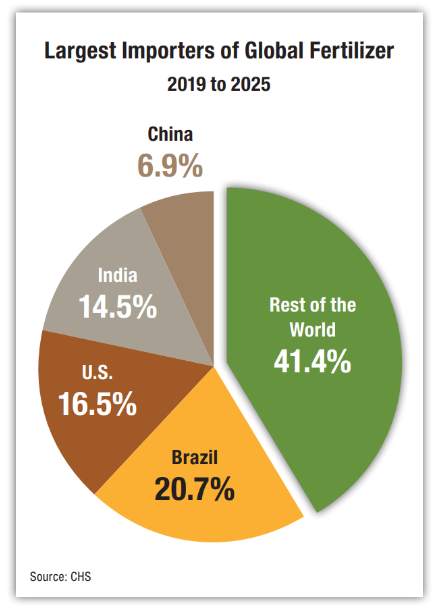
According to industry experts, ag retailers that handle fertilizer for grower-customers in the U.S. should pay attention to the USMCA review process because of its potential impact on imports. In particular, potash imports.
“The U.S. relies heavily on Canada for potash,” says Ben Haselbauer, Product Director for Potash at CHS. “As of late 2024-25, Canada accounted for 85% to 87% of U.S. potash imports.”
According to Haselbauer, the U.S., Mexico, and Canada could simply agree that the USMCA is working and renew it, but he doubts the process will be quite so simple.
“I’m going to bet that the Trump Administration is going to say that it is not totally happy with the USMCA, and they are going to start battling, trying to get more leverage,” he says. “That could affect potash and how it gets into the U.S.”
Farm groups share these worries about the USMCA renewal. In fact, in February, 40 farm and agricultural groups launched the Agricultural Coalition for the USMCA. As part of the launch, the group unveiled a new website and kicked off an ad campaign in the nation’s capital.
“USMCA is one of President Trump’s signature achievements and one that has significantly propelled the ag economy,” says Bryan Goodman, a spokesperson for the Agricultural Coalition. “Our farmers make decisions a year or more in advance. They need the certainty of knowing USMCA is here to stay.”
Daren Coppock, President and CEO at the Agricultural Retailers Association, echoed these views.
 “If renewed, the agreement would remain in effect for an additional 16 years, with another review scheduled in 2032,” says Coppock. “If the countries fail to reach an agreement and move to terminate, USMCA will expire in 2036. The review could also enter a period of annual consultations with no clear path forward, creating significant uncertainty for the farm economy.”
Either way, CHS’ Haselbauer recommends U.S. ag retailers with fertilizer interests take a proactive approach when it comes to potash imports.
“Retailers should make plans now to get potash tons across the border before the USMCA renewal talks start,” he says. “I would suggest everyone get through the spring season and immediately refill their systems with potash, just in case.”
Subscribe Today For
