
As 2025 draws to a close, uncertainty remains one of the defining characteristics of the global agricultural market. Among the many factors driving this uncertainty, few have had as far-reaching an impact as U.S. tariffs on agricultural imports and exports.
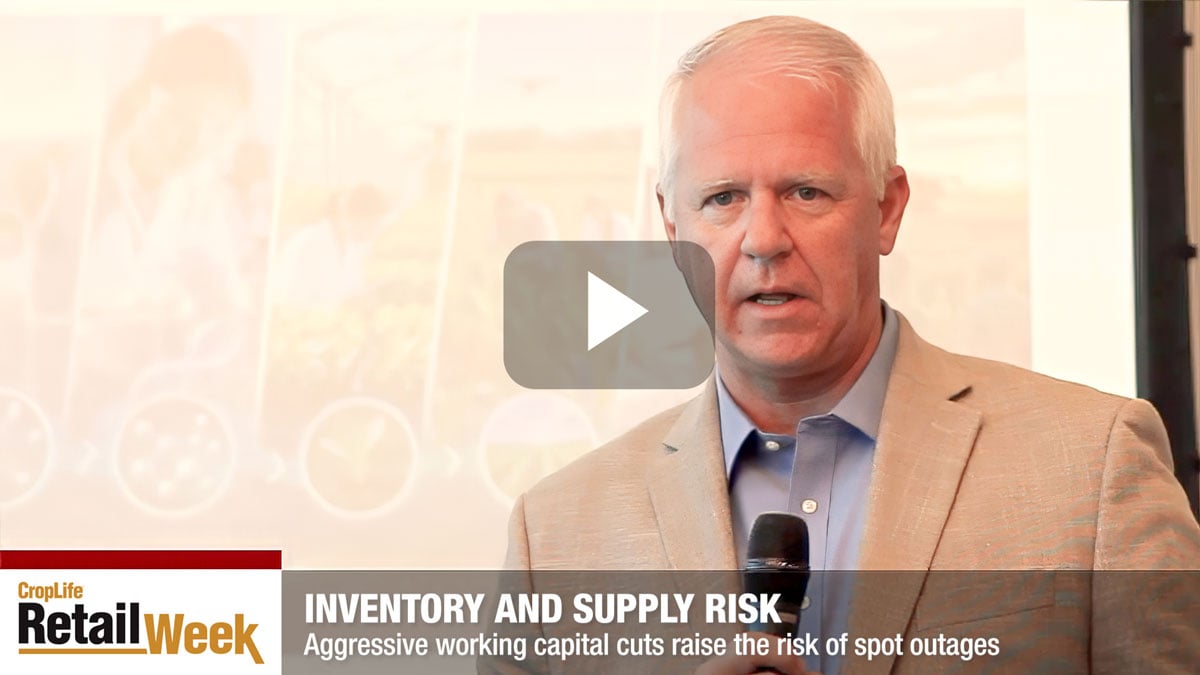
Jim DeLisi, President of Fanwood Chemical and a long-time industry trade advisor, recently joined CropLife Retail Week to provide perspective on how tariffs are shaping both farm-level economics and the broader agrochemical landscape.
DeLisi has spent nearly five decades in the chemical industry, serving in leadership roles on multiple trade advisory committees, including the Industry Trade Advisory Committee for Chemicals, Pharmaceuticals, and Health Science Products and Services (ITAC 3). He has witnessed firsthand how trade policy decisions ripple through the agricultural supply chain.
Significant Impacts on Both Sides of the Equation
“The impact of tariffs has been significant — on both the input and output sides,” DeLisi explained. “From the output side, there have been major tariffs on U.S. exports to China, which have hurt farmers’ ability to prosper.”
Recent agreements have allowed some soybean exports to resume, but the volumes remain well below historical levels. “There’s about 12 million metric tons expected to move between now and the end of the year,” he noted, “which is less than half of what would be normal. From a farmer’s point of view, it’s been painful.”
On the input side, DeLisi said tariffs have had a pronounced effect on the price of crop protection chemicals, particularly given that many active ingredients come from China or India. “When tariffs are 10 to 20 percent, the per-acre cost isn’t drastically affected,” he said. “But when they reach 60 percent, those calculations become much more critical.”
Agronomists, he added, have played an increasingly important role in helping retailers and growers navigate these price shifts to find the most economical solutions.
A Supreme Court Challenge and a Market on Edge
Adding to the volatility, the U.S. Supreme Court heard oral arguments on November 5 regarding the legality of the president’s authority to impose certain tariffs. DeLisi listened to much of the session and said the justices appeared “skeptical of the statute the president used to impose these tariffs.”
He cited several examples of questionable applications of tariff power in recent months, including penalties on Brazil and Canada tied to domestic or political issues rather than traditional trade disputes.
“There’s no precedent for putting a tariff on a country because of an internal court argument or an advertisement,” DeLisi said.
The Court’s decision, expected in mid-December, could have sweeping implications. “If the Supreme Court rules against the tariffs, refunds are likely,” DeLisi said. “There’s already a class action case waiting that would require repayment of billions of dollars. How that’s handled will be fascinating to watch because it’s billions and billions and billions of dollars that would have to go back into the system.”
If the Court upholds the tariffs, however, the administration will likely continue using them to pursue trade policy goals, particularly in relation to China and India.
Shifting Supply Chains and New Workarounds
According to DeLisi, one of the most complex outcomes of the current trade environment is that tariffs designed to reduce dependence on China are sometimes having the opposite effect. “Right now, the total tariff on a formulated agrochemical from China is 51.5 percent,” he said. “From India, it’s 56.5 percent, which actually discourages business with India. There are product after product where there are disincentives to decouple from China.”
Still, he noted, American innovation is adapting quickly.
“Companies are finding creative workarounds,” DeLisi said. “We’re seeing materials sourced from free trade partners like Guatemala, Colombia, Canada, and Mexico under the USMCA agreement. American ingenuity is kicking in to find ways to make things work.”
These efforts, he stressed, are being carried out carefully to ensure compliance with EPA regulations and to maintain product safety standards.
Looking Ahead: More Questions Than Answers
Whether the Supreme Court upholds or overturns the tariffs, DeLisi expects more turbulence ahead.
“It will be fascinating to see how the president reacts if he wins — or if he loses,” he said. “Tariffs are central to his platform, and there are other ways to impose them, though none are as administratively simple as what he’s using now.”
For ag retailers and farmers, that means continued vigilance. Pricing, sourcing, and strategic planning will all depend on how the legal and political landscape evolves in the coming months.
In DeLisi’s words: “Uncertainty has been the buzzword for the entire year, no matter what part of the global economy you’re looking at. And it doesn’t look like that’s going to change anytime soon.”