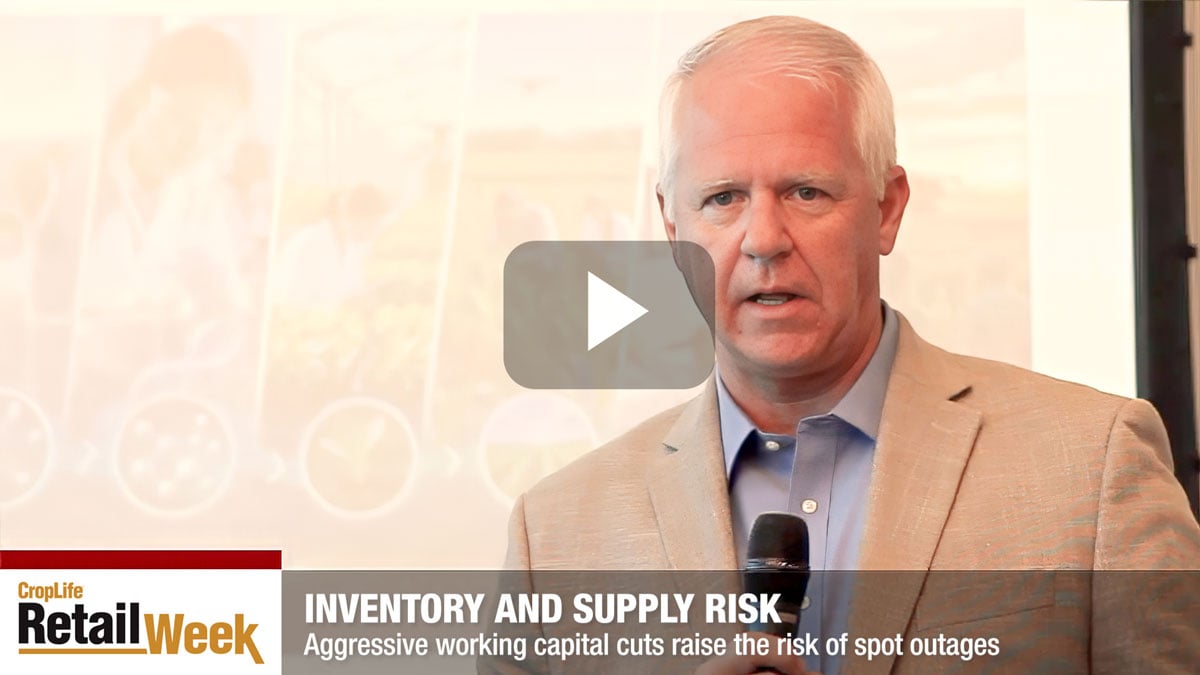

As the 2026 planting season gets underway, shifting acreage expectations, ongoing financial pressures, and evolving crop protection tools are shaping the outlook for ag retailers. These topics took center stage during a recent episode of Retail Week, where CropLife Editor Eric Sfiligoj sat down with Amy Asmus, Co-Owner of Asmus Farm Supply, to discuss what retailers are seeing on the ground.
Acreage Expectations Meet On-the-Ground Reality
According to the latest USDA planting intentions, soybean acreage is projected to increase in 2026, with growers expected to plant 84.7 million acres — up 4% from the previous year. While those numbers suggest a notable shift, Asmus says the reality in her region tells a more nuanced story.
“I just surveyed my agronomists to see — it wasn’t just my perception, it was theirs as well,” she explained. “And it seems like in our area, for the most part, people are respecting the rotation. So they’re not seeing a whole lot of jumps for the reasons that USDA was stating.”
Much of the anticipated shift has been attributed to fertilizer price concerns, particularly for corn. However, Asmus noted that in her geography, those decisions are typically locked in well before spring.
“In our area, fertilizer decisions are made in the fall, so it’s not very easy to switch away from that because of a fertilizer decision,” she said.
Instead, weather could prove to be the bigger wildcard. While some locations have seen rapid planting progress, others — like Asmus’ area — have faced delays due to excess moisture. That variability could ultimately influence final acreage more than early-season intentions.
“When that planting season is disrupted, we do get acres that change — and that change favors soybeans,” Asmus said. “Even though the intention may not be there in our area, with the spring season setting up the way it is, I think we could see some switch to soybean acres from corn — not for the reasons we think, but for the weather disruption that may be ahead of us.”
Economic Pressure Reshaping Input Decisions
Beyond acreage shifts, retailers are also navigating mounting economic pressures. Asmus pointed to a sharp rise in financing demand as a clear indicator of stress in the marketplace.
“We’ve seen our financing programs… increase 191% so far this year,” she noted. “So we know there’s some economic pressure out there.”
That pressure is beginning to influence how growers approach crop input decisions — particularly when it comes to pest management programs.
“What I’m fearful of is people are going to take a premium program and change their pest management program to just the bare minimum,” Asmus said. “That might get them over a hump for this year, but we’re going to have more pest pressure, and we’re going to be dealing with that for probably the next three to five years.”
While such cutbacks may provide short-term relief, Asmus warned they could ultimately lead to higher costs down the road as growers work to correct issues that were left unchecked.
Paraquat Exit Raises Concerns for Growers
Another major topic discussed during the episode was the future of paraquat, following Syngenta’s announcement that it will cease production of the herbicide in 2026. Though not widely used in Asmus’ region, she emphasized its importance in other parts of the country.
“It’s more predominantly used in the Southeast, Southern Plains, and in California,” she said. “It’s a great product for quick burndown — I don’t know of anything else that works quicker than paraquat.”
Paraquat has also played a key role in resistance management, particularly in areas where glyphosate-resistant weeds are prevalent. Its loss could create new challenges for growers already facing limited control options.
“Any of the alternatives… are most likely going to be more expensive, they’re going to be way slower in action, and they’re going to have resistance issues that have already entrenched themselves,” Asmus explained. “So I do think, as far as resistance management goes, we’re losing a good tool.”
Despite these challenges, Asmus remains focused on helping growers navigate an increasingly complex landscape — balancing agronomic best practices with economic realities while preparing for continued change across the industry.
For ag retailers, the 2026 season is shaping up to be one defined not just by what is planted, but by how decisions are made under pressure — from input investments to product selection and long-term risk management.
To hear more insights from Amy Asmus and the full discussion on these critical topics, be sure to watch the complete episode of Retail Week.