
 Editor’s Note: As we mark the first 25 years of the 21st century, CropLife reflects on the innovations, challenges, and transformations that have shaped ag retail — honoring our past while looking ahead to agriculture’s promising future. In this article, we explore how the modern ag retailer is built for scale, speed, and service, adapting through consolidation and technological advances to meet evolving grower needs and prepare for the next wave of innovation.
First comes growth, then maturation, and finally consolidation. In the past decade mergers and acquisitions have decreased the number of large crop input providers. The same can be said for the retail market.
“There have been a few significant waves of ag retailer consolidation over the last 25 years,” says Nate Wittmaack, President and COO of Ranco Fertiservice. “This has resulted in fewer independent, full-service ag retailers. Also, there has been increased emphasis on speed and accuracy of delivery. This has promoted a focus on improving technology and system design. On the agronomy/dry fertilizer project side, customers have become more and more open to investing in stainless steel equipment and associated items. Over this period of time, Ranco’s supply of mild steel components (even non-fertilizer contact items) has plummeted. Customers (ag retailers) have been ready to invest in stainless steel up front as opposed to replacing items down the line.”
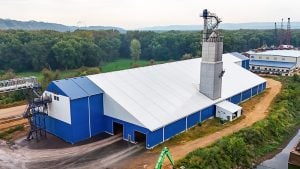
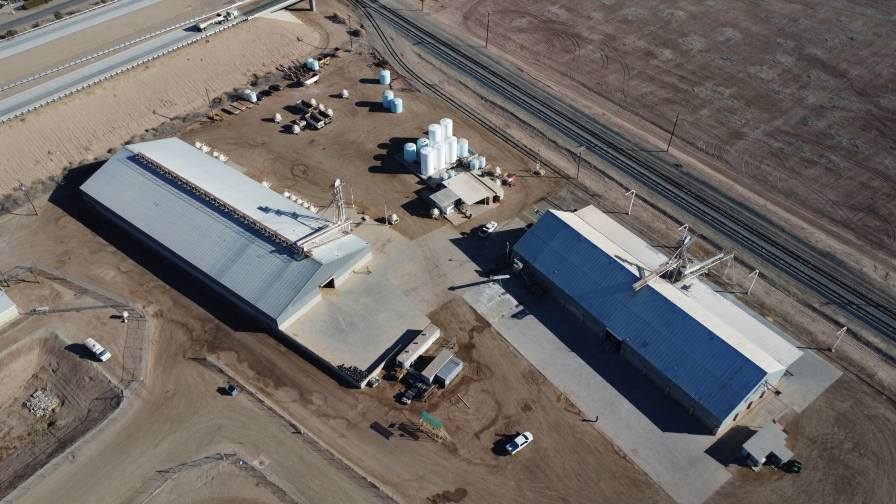
While there are fewer retail outlets across the country, the ones that remain are getting larger, offering more amenities, and serving more grower-customers over a greater range.
“Facilities, on average, have become larger and more capable,” Ranco’s Wittmaack says. “There has also been a steady increase in ag retailers looking to technology and integration to help solve human errors and streamline operations.”
In 2005, CropLife® Magazine wrote an article that focused on consolidation and the need to purchase fertilizer earlier in the season since much of it is imported.
“The same factors that are changing the way retailers manage their fertilizer and ag chemical business are also affecting the storage and containment of these materials,” we wrote.
Don Bradley, who worked with Murray Equipment Inc. as Director of Marketing and Sales in 2005, explained it this way: “These two trends are pushing retailers in the direction of larger storage tanks because of the need to have the product on hand,” he said.
Twenty years later, Ranco’s Wittmaack says that trend has continued. “Retailers have gotten larger, but on average growers have as well,” he says. “This has applied pressure for ag retailers to be able to deliver what the grower wants, when they want it. While grower loyalty is still very much a thing, if needs aren’t being met, growers will find someone that will meet them.”
Since larger tanks are becoming more prevalent on the ag chemical storage side, “retail outlets are bigger, their application equipment is larger, they cover more acres, and they need to have enough capacity for the entire season,” Bradley said.
Consolidation wasn’t the only factor retailers were considering. Quality was an important factor for retailers, too, said Gene Good, who in 2005 worked at Mid-State Tank Co., Inc. New formulations in chemistry are “challenging the standard 304 stainless steel tank mindset, and Mid-State has switched to 316 stainless steel. “It’s a higher grade and more resistant to corrosion.”
Gary Ruff, Regional Sales Manager at Precision Tank and Equipment (PT&E), agreed with that sentiment.
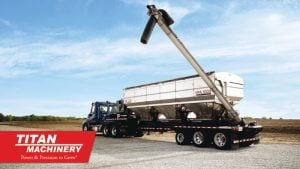
Tank sales continue to be strong for PT&E as well, with a noticeable shift from mild steel to fiberglass on the company’s large storage tanks — and growing demand for ever larger nurse tanks, Ruff told CropLife in 2013.
Dennis Neal, Owner of Enviropac, explained many growers are adding storage facilities that are the same size that were put in dealerships 10 or 15 years ago. “There is a new demand out there for on-farm storage and containment. And farmers in most areas have to meet the same containment requirements that the ag dealer has to do with proper containment facilities.”
Increased Sophistication
Size is only part of the picture. Labor continues to be a challenge for nearly every aspect of agriculture. If the past few months have shown us anything, artificial intelligence just might be the solution to several of our challenges. While we’ve yet to see a system that doesn’t need an employee somewhere in the process, some technology has been developed that limits the number of humans that need to be part of the process.
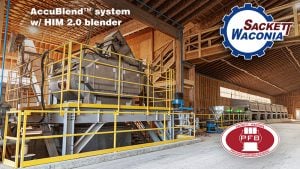
“In plant blending systems give a retailer the ability to produce a wide range of products and blends from a smaller set of bulk products,” said Mark Mohr, who in 2021 was Vice President of Sales and Marketing, Kahler Automation. “They are important for providing more and higher value products and services, while managing inventory and inputs. They allow the retailer’s agronomy sales team to expand products and services into more and higher revenue offerings, while at the same time managing inventory and storage for efficient operations.”
Dan Murray, President, ICS, echoed that concept.
“With continued industry consolidation and increased competition, retailers are turning to automation to maintain their competitive advantage with topnotch customer service,” Murray said in 2021. “Automation improves customer responsiveness, lowers the time to the fi eld, reduces human error, and streamlines the billing process. On the supply side, inventory levels are better tracked and monitored to make sure there’s enough product on hand to service customers while maintaining profitability.”
Serving the Customer
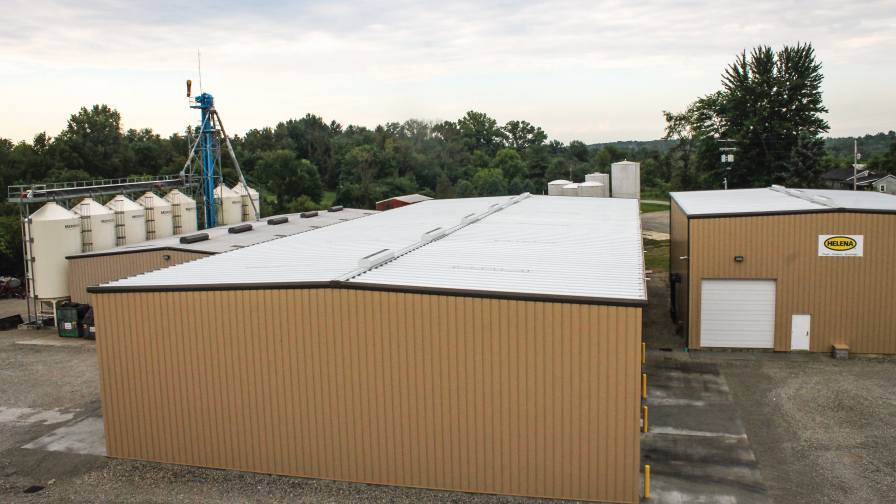
Not surprisingly, new facilities are designed for two populations — the grower-customers and the employees who serve them. Sometimes that means finding a way to balance the existing site with a newly added facility.
According to Doyle Pearl, Co-owner/General Manager of J.B. Pearl Sales & Service in 2013, the reason for this mixing of traditional with modern is simple — to meet customer needs. “Like a friend of mine once said, churches are built with their busiest day, Easter Sunday, in mind,” Doyle said. “We did the same thing here. The rest of our facility was fine, but we needed the ability to load and blend fertilizer for our busiest week or two of the year better than we were able to previously.”
Troy Pearl, Co-Owner and Special Projects Manager, told CropLife Magazine the company was constantly trying to keep pace with the increased demand for fertilizer in its Kansas territory, and failing. “I remember many times coming in at 4:30 in the morning to start loading trucks so we could have all of them loaded by daylight when the rest of the crew arrived,” says Troy. “We just couldn’t keep doing that the way our business was growing. We needed a better way.”
Technological Advances
Jim Howe, President of Star of the West Milling Co., has seen a great deal in his more than 40 years with the company, including the first computers. “The technology was (limited),” he says. “I have more power on my watch,” than we did with that first application.
There’s often a difference between what new technology can do under ideal conditions vs. what it can do in the field. For example, when Star of the West first utilized satellites, the information was transmitted via radio signals.
“The problem was if you didn’t have a repeater nearby, it didn’t work very well,” Howe says.
Ranco’s Wittmaack agrees that technology will continue to influence the industry, especially ag retailers.
“Technology and the adoption of technology will continue to increase,” he says. “There is also a very real possibility that the next 25 years will be shaped in ways we cannot understand yet by the impending artificial intelligence wave that is building.
‘Retailers are being bombarded by new products and applications on a daily basis,” Wittmaack continues. “This has given ag retailers the opportunity to differentiate themselves in the market, but has also lead to a lot of noise that they have to deal with.”