How Keystone Cooperative’s Internship Program Invests in the Future of Ag Tech — One Student at a Time

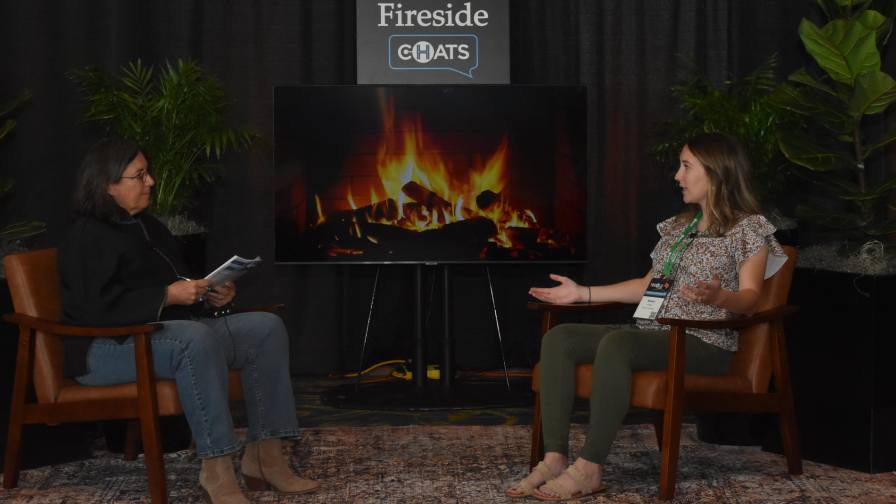
Makala Krieger (right), Agronomy Intern Lead at Keystone Cooperative, joined CropLife Editor Lara Sowinski for a Fireside Chat at the 2025 Tech Hub LIVE in Des Moines, IA.
As agriculture continues its rapid transformation through digital tools and precision technologies, finding and keeping young talent has become both a challenge and a priority for ag retailers and cooperatives. At Indiana-based Keystone Cooperative, that challenge is being met head-on through a forward-thinking internship program that’s building a robust pipeline of skilled, tech-savvy professionals — starting in the field.
“We treat the internship as a pipeline for future employees,” said Makala Krieger, Agronomy Intern Lead at Keystone Cooperative, during a Fireside Chat at Tech Hub LIVE 2025. “We’re always in need of great talent, and this program allows us to train, develop, and retain the next generation.”
Krieger, a Purdue graduate who has been with Keystone full-time since 2023, oversees the entire agronomy internship program—recruiting, hiring, onboarding, and mentoring students from across the Midwest. Now in her third recruiting season, she says the program has evolved significantly from its early days as a basic field scouting role.
“Back then, it was just clipboard and pen. Now, every intern has a drone and a digital scouting app. We’ve embraced technology to meet grower needs and to give students meaningful, real-world experience.”
Training Tomorrow’s UAV Operators — Today
At the core of the program is its UAV (unmanned aerial vehicle) initiative. Every intern in the introductory track is issued a drone — typically a DJI Mini 3 — and receives training toward their FAA Part 107 certification.
“We bring them in around February or March and host a Part 107 training session with our in-house trainer,” Krieger explained. “They have until May to pass the exam, and we reimburse them for it. Once the internship starts, they get their own drone to use — and keep — by the end of the summer.”
The drones are flown daily, weather permitting, and are used to capture aerial imagery for crop diagnostics. These insights are integrated into Keystone’s proprietary scouting app and used to inform agronomic decisions across the cooperative’s operating region, which spans Indiana, Michigan, and Ohio.
This hands-on, high-tech approach is a major draw for students — especially underclassmen seeking early experience.
“Most interns just want to get their hands on a remote and start learning,” said Krieger. “They’re not necessarily ready to run spray drones yet, but they’re eager to be in the field and see what’s possible.”
Two Tracks: Introductory and Advanced Internships
Keystone’s internship program is structured to grow with the student. The introductory track is focused on foundational skills — crop scouting, disease identification, and drone-based imaging. The goal, says Krieger, is to prepare students for more specialized roles in future summers.
“For returners, we offer advanced positions in agronomy sales, operations management, and agronomy innovation,” she said. “We want them to explore what they’re passionate about and gain experience that aligns with future career goals.”
One standout opportunity is the agronomy innovation track, where interns take on niche projects involving cutting-edge technologies. “Last year, we had interns help engineer an autonomous soil sampling robot,” Krieger shared. “That’s the kind of experience that not only excites students, but also adds real value to our operation.”
In addition to technical roles, students can also step into leadership positions. Keystone offers a student coordinator role, where returning interns manage a team of crop techs and gain valuable management experience.
Strong Numbers, Stronger Outcomes
In 2025, Keystone hosted 45 agronomy interns, with 33 in the introductory crop tech position. Of those, 100% are now licensed UAV pilots — an impressive success rate that reflects the program’s thoughtful structure and support.
Many of these interns come from Purdue University, Michigan State University, and regional colleges — schools with strong ag programs and student populations eager to learn.
“We don’t struggle to find participants,” said Krieger. “There’s a need for scouting across our business territory, and we’ve built a reputation as a place where students can grow, contribute, and gain valuable skills.”
What’s Next: Evolving with the Industry
Krieger and her team are already thinking about how to improve and expand the program.
“For the interns, we want to continue offering strong professional development — networking opportunities, business tours, exposure to different parts of our organization. That keeps them connected even after their internship ends,” she said.
But the broader goal is to increase the value of the data the interns collect — particularly for growers.
“There’s a lot of great technology out there, but once you have all this data, the big question is: What are we doing with it?” Krieger noted. “We’re focused on making that information more accessible and useful to our growers. And our interns are just as motivated as we are to figure that out.”
With that kind of passion, structure, and vision, Keystone Cooperative isn’t just filling internship slots — they’re investing in the future of ag tech, one student at a time.
Subscribe Today For
