Seed in 2026: Staying Resilient Through Genetics and Smart Tech
 November 23, 2025
 Like most segments of the crop inputs market, seed has seen its share of highs and lows over the past few growing seasons. However, according to Nathan Alonso, Portfolio Marketing Leader for Brevant Seeds, the industry has been able to rise above all the turmoil because of one overriding philosophy.
“Resilient,” said Alonso. “The seed industry continues to adapt and grow, through ongoing challenges like unpredictable weather patterns and evolving market dynamics. We’re seeing strong momentum in seed breeding advancements and trait diversification. New varieties are being developed with greater agronomic improvements and yield potential, reflecting a robust pipeline of innovation. We are investing in more tools that can help increase profitability and productivity for farmers, and that’s a great thing.”
This approach to seed development, he adds, has helped the seed industry work through myriad challenges — and should continue to do so going forward.
“Some of the top challenges are current economics and changing weather patterns that are causing drought and other environmental stressors,” says Alonso when looking at the 2025 growing season. “We respond to these challenges in real time, stay agile with our retail partners and keep bringing innovative solutions to their customers.”
Traits Innovations
According to Alonso, one of the major ways the seed industry has been able to keep pace with all these market challenges is through its development of new traits.
“When we think about opportunities to grow, we must consider what new traits and technology have to offer and, more importantly, understand the impact that genetic gains have on setting up a bright future,” he says. “As new technologies come to market, differentiation between trait offerings will be more important than ever and understanding the key differences of trait technology is going to be more complex. Seed professionals will need to continue to learn, evaluate and adapt as technologies are introduced so they can provide expertise to customers.
“The launch of Enlist E3 soybeans was one of the first strong signals to the market that things are changing,” he continues. “Now, the Enlist E3 soybean trait is planted on the majority of soybean acres in the U.S. New choices that include the Enlist trait in corn are being introduced. As an example, Brevant seeds recently launched large commercial volumes of Vorceed Enlist corn and PowerCore Enlist corn through ag retail. These innovations offer differentiation in insect control, herbicide tolerance, and genetic performance. Understanding the differences between trait offerings will be critical for seed sellers to be successful and for farmers to maximize their yield and profit potential.”
Other companies apparently share this view on traits. For example, in September, Stine Seed Co. announced plans to introduce 2026 Enlist E3 soybeans to its line-up. These include options such as 08EJ32, 13EG23, 38EH02, and 43EJ23.
“Our customers expect us to stay a step ahead,” says Stine President Myron Stine. “By offering exclusive products, we are giving growers more than just another option.”
Another company looking at new traits — in this case, stacked traits — is Syngenta Seeds. Earlier this year, the company announced that its latest innovation — Durastak corn — had been approved by the EPA. It is expected to be available in hybrids from both the Golden Harvest and NK brands through independent seed companies for the 2027 season.
According to Drew Showalter, Head — Corn Portfolio Strategy for Syngenta, the Durastak trait stack helps control damaging above- and below-ground pests with alternative modes of action for farmers to provide them with a tool to delay insect resistance for long-term corn rootworm management. It will also be delivered to the market in combination with Viptera trait technology.
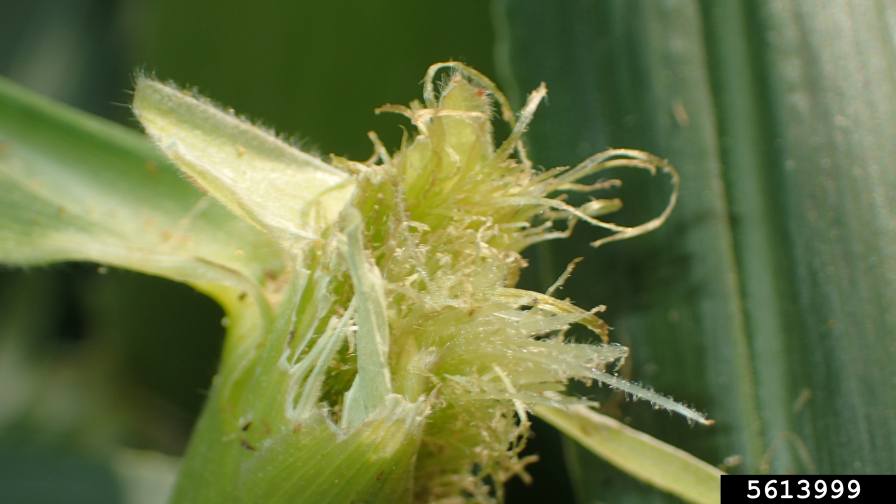
Corn rootworm. Photo: Whitney Cranshaw, Colorado State University, Bugwood.org
“With corn rootworm costing farmers up to a billion dollars in crop losses every year, they need a trait line-up that is stacked in their favor,” says Showalter. “The new Durastak trait stack lets farmers attack corn rootworm full force with durable, proven performance that will help them take control of their yield and profit potential for seasons to come.”
Going forward, Brevant’s Alonso believes that Smart Tech will increasingly play a role in the development of new seed offerings.
“Advanced technology, like artificial intelligence (AI), has been critical to agriculture for many years,” he says. “Corteva uses advanced breeding technologies for in-depth knowledge of the germplasm pool and improved data quality to characterize product attributes. This allows us to advance only the best products so we can bring more high-performing solutions to the market faster.”
As an example of this, consider Corteva’s recent collaboration with Phytoform, using that company’s CRE.AI.TIVE AI technology to apply gene editing to improve corn’s resilience to some of the most damaging diseases impacting U.S. growers.
“New genetics are not only delivering more yield at an accelerated rate, but they also reduce risk against things like disease and wind events,” says Alonso. “Today’s competitive environment will benefit those who adapt to new genetics first.”
Subscribe Today For
