Getting Ready for Insects and Diseases in 2026

Most industries can review the previous year and predict what comes next. In agriculture, each growing season brings new variables that make pest and disease pressure difficult to forecast.
Heading into 2026, growers and agronomists are shifting from reactive treatments to preventing pests and diseases from becoming established.
“There was a lot of hype for tar spot in 2025,” says Nathan Popiel, Territory Sales Manager at UPL. “But what many people didn’t expect was southern rust showing up as far north as it did.”
It was one of several surprises last season as weather, cropping systems, and shifting pest populations reshaped disease and insect pressure in corn and soybeans.
“Remember the disease triangle,” Popiel says. “You have the pathogen and the crop. It’s really a matter of whether the environmental conditions line up.”
As pest pressure evolves, agronomists say growers are increasingly relying on integrated management strategies, predictive tools, and more precise application timing to protect yield potential.
Familiar Corn Diseases Still Quietly Cost Yield
While tar spot and southern rust dominated headlines and conversations last year, gray leaf spot and northern corn leaf blight remained consistent yield threats.
“When you hear southern rust or tar spot, you immediately go into this kind of fear mode in your mind. And yet, we also see gray leaf spot and northern corn leaf blight every year,” says Madison Riggle, U.S. Portfolio Marketing Leader for Row Crop Fungicides at Corteva Agriscience.
Because these diseases appear so regularly, growers sometimes underestimate their impact. Under the right conditions, they can still cause significant yield losses.
“I used to be a territory manager in Ohio, and when northern corn leaf blight came in, it was pretty detrimental,” says Trenton Brisby, Agronomy Innovation Marketing Manager at Corteva. “If you didn’t have the right disease ratings or weren’t spraying a fungicide, we were talking significant yield loss — 20 bushels or more.”
“You know you have the pathogen and the crop,” says UPL’s Popiel. “It’s really only a matter of whether the conditions are right.”
Emerging Disease Threats, Changing Management Strategies
With disease pressure a near certainty each season, the conversation has shifted from whether to protect crops to how and when to do so most effectively. As growers push for higher yields, protecting plants from foliar diseases early in the season is increasingly important.
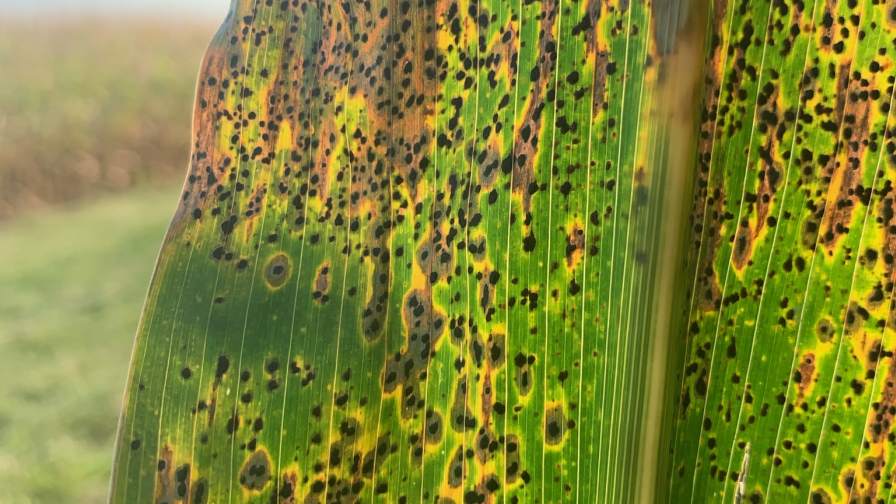
Over the past eight years, tar spot has spread widely across corn acres. Photo: Syngenta
“Tar spot has really flipped us on our head a little bit, because historically, you apply your fungicide at VT-R1 preventively,” says Drake Copeland, Technical Service Manager at FMC. “But this one kind of challenge that, even if it comes in late, it can still cause significant yield loss. We’re constantly learning more about application timing, when and how to manage that one.”
That uncertainty makes fungicide timing more critical than ever.
“If you spray fungicides at the wrong time, now you’re coming back, spraying again or trying something else,” Copeland says. “Not every acre is the same. So, that’s where your local agronomist or retail rep can help drive those decisions.”
While corn diseases such as tar spot and gray leaf spot continue to challenge growers, soybean producers are facing their own evolving pest pressures, particularly from nematodes and soilborne diseases.
“If growers aren’t protecting against nematodes, those populations continue to grow,” says Dale Ireland, Syngenta Agronomic Service Representative. “They don’t just stay the same or disappear.”
Ireland notes that the commonly used PI88788 resistance source in soybean varieties is becoming less effective as nematode populations adapt and bring other challenges.
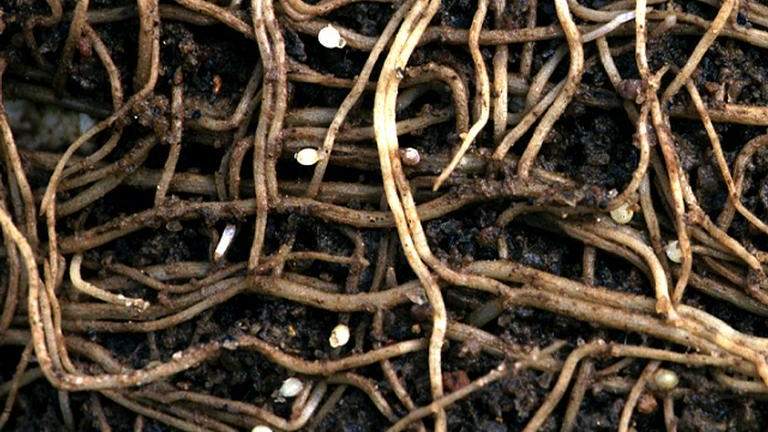
Soybean Cyst Nematode. Photo: Jonathan D. Eisenback, Virginia Polytechnic Institute and State University, Bugwood.org
“Soybean cyst nematode (SCN) opens up that root system, and we know it plays a role in sudden death syndrome (SDS) being worse,” Ireland says. “When you have bad SDS, you generally always have a nematode present. Normally, it’s SCN, but it could also be a root-knot nematode. Generally, if you have bad SDS, you also have a bad nematode problem.”
Another soilborne disease gaining attention is red crown rot, which can be difficult to distinguish from SDS in the field.
“At 50 miles an hour, the foliar symptoms of red crown rot and sudden death syndrome look very similar,” Ireland says.
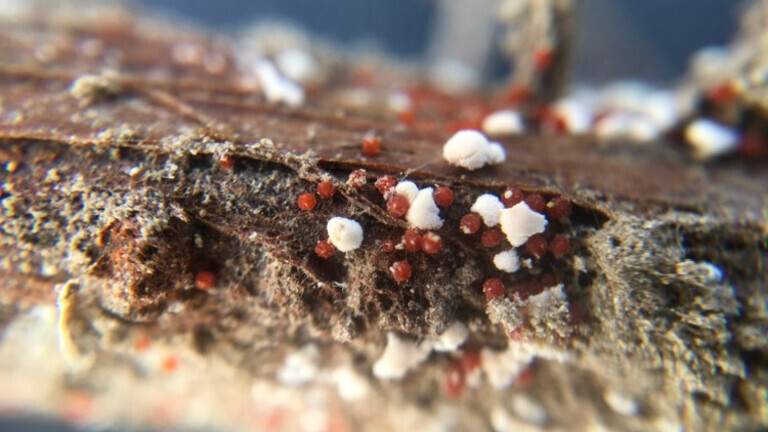
Red Crown Rot of Soybean. Photo: Seth Geisler, Bugwood.org
The disease is also appearing in new areas. In 2025, red crown rot was confirmed in 18 new counties across six states, according to Ireland, highlighting how quickly the disease is expanding across soybean production regions.
Insect Pressure Still Requires Integrated Control
While diseases continue to challenge corn and soybean growers, insects remain another persistent threat to crop productivity. Managing those pests often requires the same proactive mindset that agronomists emphasize for disease control.
“It feels really good to go out and get revenge on those adult pests,” says Jesse Grote, Agronomic Service Representative at Syngenta. “But you’re really missing the opportunity to suppress the population before they become adults.”
Instead, Grote says the most effective approach is focusing on early suppression and integrated management strategies.
“The best approach is combining superior corn traits with a superior product,” he says. “That’s like making one plus one equal three.”
For pests such as corn rootworm, that layered strategy is especially important. Relying on a single tactic can allow populations to build over time, while combining genetics, soil-applied insecticides, and targeted applications can help reduce long-term pressure. This shifts the strategy from reactive to preventive management.
Predictive Tools Are Reshaping Crop Protection Decisions
To truly implement preventive strategies, farmers need better prediction models and programs to help them make those key management decisions. For 2026, digital tools, predictive models, and data-driven decision systems are increasingly influencing fungicide timing and pest management decisions.
However, relying on them still takes experience and farming wisdom.
“Those prediction models are tools, and you can use a tool the right way or the wrong way,” says UPL’s Popiel. “Plan to spend the money on a fungicide or pesticide but use the predictive tools and follow the models to help you know if and when to pull the trigger.”
And yet, while these predictive models and tools are improving and taking the guesswork out of application timing, they aren’t out in the fields looking for the problems before they become major issues.
“There’s nothing that beats boots on the ground, understanding when you have it, and if you’re seeing it. That’s when you know if you’re already infected and you need to make an application,” says FMC’s Copeland.
As pest pressure becomes more dynamic, growers are increasingly relying on layered strategies that combine genetics, chemistry, predictive tools, and field scouting.
The tools are better than ever. Smarter fungicide timing, more precise insecticide programs, and seed treatments that protect from day one, but the fundamentals haven’t changed.
“Do the math,” says Corteva’s Riggle. “Understand what the value of a fungicide truly is. Because almost every year, especially in corn, it’s going to pay off.”
Subscribe Today For
