
As the 2026 growing season has progressed, market watchers acknowledge that the ag retail business is undergoing many unprecedented changes. High fertilizer prices, an influx of new equipment technologies, and tightening margins due to more post-patent products coming into the mix are just a few of the challenging variables.
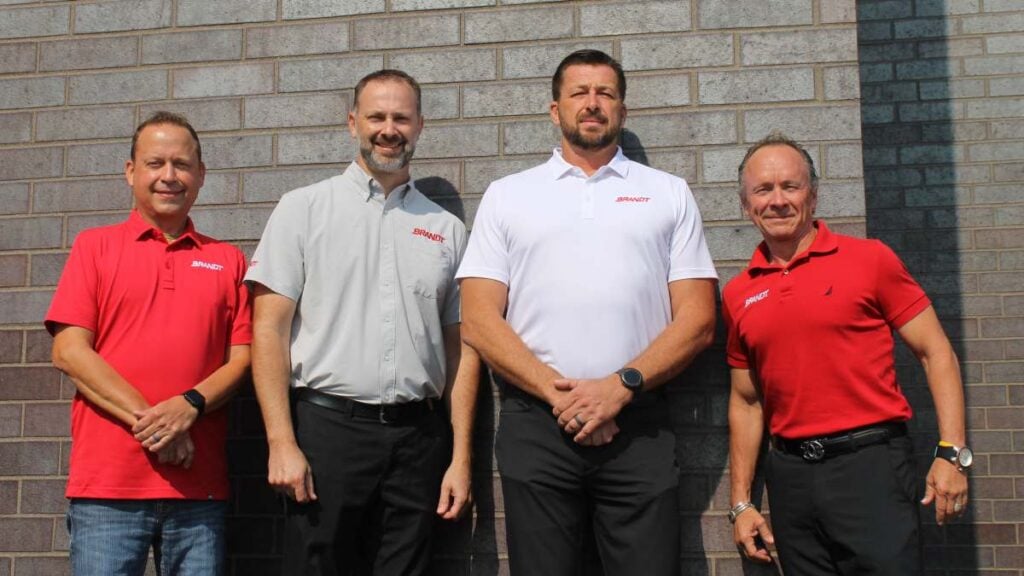
However, according to Carl Kessler, Vice President of Agronomic Services at BRANDT, the Springfield, IL-based independent ag retailer is better positioned to weather these agricultural market storms versus other ag retailers because of two words that have guided the company throughout its existence — family and speed.
“Despite everything that’s changed with ag retail over the past few decades, BRANDT has remained a family-driven company,” says Kessler. “That’s part of the reason I originally joined the company this past April after a 20-year career with Syngenta. BRANDT is not a huge company but has a global reach and is more relevant than ever in our local retail market, with our people, culture, and innovation.”
Tied to this feeling of family, he added, is the speed at which BRANDT can operate compared with other suppliers.
“There’s an incredible speed of decision-making here you don’t see at a lot of companies in agriculture,” says Kessler. “Here, you can go straight to the people that own the company — the BRANDT family — and pitch new ideas on things that might be unorthodox, and you can get an honest answer fairly quickly. That’s a huge advantage in our industry right now with all the changes taking place.”
A perfect example of this quick decision-making in action is BRANDT’s Evelyn Brandt Thomas Ag Innovation Center. Back in 2023, as BRANDT celebrated its 70th anniversary, management looked at the company’s product portfolio and decided more innovation was needed to keep pace with an evolving agricultural market.
According to Rodney Riech, Director of Marketing, BRANDT wanted to build a hub for research and development and production practices advancing the company’s mission to provide solutions for growers across the globe.
BRANDT officially broke ground on the Evelyn Brandt Thomas Ag Innovation Center in nearby Pleasant Plains, IL, in late August 2023. The 17,500-square-foot facility, located on 300 acres of land, officially opened in fall 2024.
Since then, an average of 300 to 400 visitors annually have toured the center and its grounds to see all of BRANDT’s latest product innovations in action.
According to Brian Haschemeyer, Vice President of Discovery and Innovation, the Evelyn Brandt Thomas Ag Innovation Center illustrates BRANDT’s mission statement for its customers.
“The Center is a testament to the innovation of BRANDT and the speed at which it can make decisions for the market,” says Haschemeyer. “The vision for the Center was for the company to be able to reach out to the grower base, to share ideas and educate them. Having an educational facility on the property allows us to demonstrate our research while strengthening relationships with our customers.”
Adapting Other Ideas
Another part of this commitment to new innovations by BRANDT is investing heavily in the biologicals sector of agriculture. Over the past decade, biologicals have steadily grown as a part of the crop protection/fertilizer business. In fact, based upon statistics from MarketsandMarkets, the global agricultural biologicals market is valued at approximately $18.27 billion to $19.49 billion in 2026, with a projected compound annual rate of between 10% and 15% by the end of the decade.
According to Haschemeyer, biologicals are an important segment for BRANDT, with the company investing in a new biologicals manufacturing plant in Cambé/Londrina (Paraná) as part of the company’s BRANDT Brazil operation. Opening this spring, the plant will manufacture biopesticides, inoculants, and biostimulants.
“Our goal is to be a leader in biological solutions,” he says. “In the U.S., we’ve had an advanced portfolio of biological products based on proprietary enzyme formulations for years. Many of these enzymes are being incorporated by our customers with their starter fertilizer applications. In the future, we plan to commercialize our Brazilian products in the U.S.”
Then there’s technology. Like many other ag-focused companies in 2026, BRANDT is embracing the use of new ag technologies into its wider operations. These include the use of drones for scouting customer crop fields and working with equipment partners such as John Deere using artificial intelligence (AI) to collect data from grower-customer combines and planters to help them make quick, informed decisions in their crop fields.
According to Brent Wallner, Vice President of Supply Chain, the use of new ag technologies will impact ag retail in a transformative way, but only to a point.
“The ability to speed up data processing using AI systems is really amazing, and it’s going to change the game for every single industry on the planet,” says Wallner. “However, in the agricultural business, we’ve always been based upon our relationships with people. That won’t change anytime soon. But utilizing the efficiencies and processes of how we can do things across all of our segments using data management and AI analysis? We’d be fools not to take advantage of those opportunities.”
Furthermore, says Kessler, employing more technology in BRANDT’s day-to-day operations could help with one of the key challenges facing the company — labor. As with many other ag retailers in 2026, BRANDT is experiencing a wave of retirements among its more experienced employees. This is putting incredible strain on the company’s knowledge pool, which new technologies could help address, he says.
“In ag retail, it still takes people to make a mark with customers,” says Kessler. “But many of the younger people we hire are very tech-knowledgeable and are used to using AI to help bridge some of the knowledge gaps that might exist. I think AI will definitely have a role in accomplishing this in the future.”
Besides the challenges presented by finding employees and using more technologies in its business, BRANDT is facing numerous pressures in the crop input marketplace in general. Among these are continuing issues with fertilizer costs/supply logistics and tighter margins in crop protection products as lower-cost, off-patent offerings enter the market.
“The cost of inputs for everybody right now is dramatically higher than they’ve ever been,” says Kessler. “Potentially, we will end up with a strong crop this fall in our market, but that will pull a lot of phosphorus and potassium out of the soils. Some growers have been mining these same soils for years when it comes to these fertilizers, but I don’t think they will be able to do this much longer, to continue producing the yields needed to be competitive.”
Concerns for Next Year, Beyond
Crop protection presents a different challenge. As has been widely reported across the industry, dozens of previously proprietary active ingredients are coming off patent over the next few years. Kessler foresees this altering how many suppliers bring their products to the market.
“The whole crop protection product business is changing rapidly,” he says. “Many manufacturers are making difficult decisions on how they plan to bring their products to customers and what ag retailers they will work with to do that.”
Still, Kessler sees opportunities for BRANDT’s business as these market challenges develop, especially with one of the company’s operative words, speed, driving all of its decision-making.
“In crop protection, for growers to maintain high yields, they are going to have to address the multiple product-resistant weeds such as Palmer amaranth and waterhemp, which might mean only certain products can be used as the solution to achieve control,” he says. “How we as BRANDT work with our grower-customer presents a great opportunity for us, to help them make the wisest moves to improve their return on investment. The speed at which we can help them make these decisions will be key to our continued success.”