Restocking the Herbicides Toolbox: What Ag Retailers Need to Know for 2026

Although it’s not that far along, 2026 is already a watershed year in the history of weed resistance, says Lynn Justesen, Technical Service Lead at UPL.
“In January, there was a scary announcement,” says Justesen. “We have found glufosinate-resistant waterhemp in more than one area. It’s now been confirmed in Arkansas, Illinois, and Indiana.”
The discovery of waterhemp resistance to glufosinate follows on the heels of one other major weed resistance — Palmer amaranth — which was found in 2023 in Missouri.
“That removes one of the last tools in our arsenal,” says Justesen. “We are running out of tools in our herbicide toolbox, and there’s nothing magic to help coming down the line.”
Dr. Michael Cox, Herbicide Brand Manager at Helena Agri-Enterprises, agrees.
“Weeds are developing resistance faster than new chemistries are coming out,” says Cox. “We, as an industry, have to get smarter with our techniques. We have to start overlaying residuals every time we go into the field.”
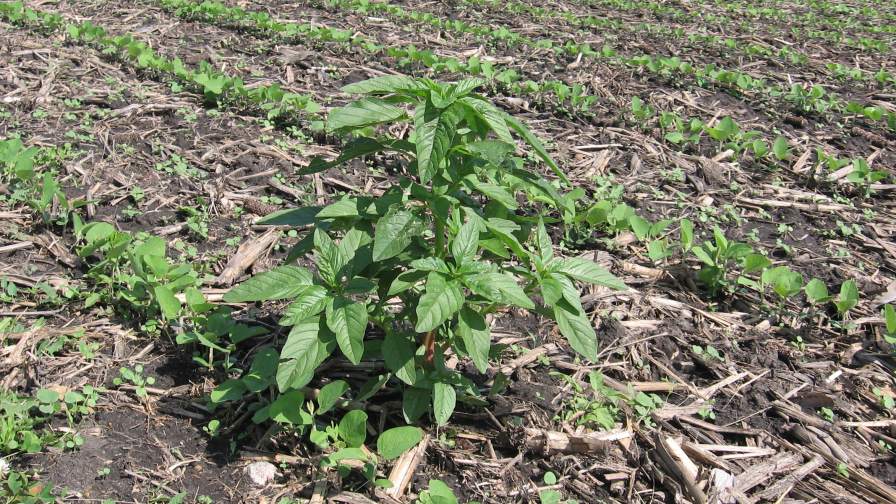
Waterhemp has now developed resistance to glufosinate.
For those in agriculture, weed resistance is a longstanding problem. In fact, the first herbicide-resistant weeds started appearing in the 1960s — approximately 20 years after the introductions of 2,4-D and atrazine. When glyphosate first appeared in the 1970s, it was hoped that this versatile herbicide would keep resistant weeds at bay.
However, as the first glyphosate cropping systems began to appear during the mid-1990s, the first glyphosate-resistant weed wasn’t far behind. Glyphosate-resistant marestail was discovered in Delaware in 1998. Since then, dozens of weed species have developed resistance to glyphosate.
According to sources, there are approximately 273 herbicide-resistant weed species around the globe in 2026. In recent years, weeds resistant to such herbicides as dicamba, s-metolachlor, and HPPD (4-hydroxyphenylpyruvate dioxygenase) have also appeared. There is also the danger of metabolic resistance, says Josh Putman, Technical Marketing Manager at BASF.
“Metabolic resistance is a major issue in weeds because it is non-specific in terms of the active ingredient,” says Putman. “In other words, the weeds can gain resistance to multiple herbicides all at once through their genetics.”
Eric Scherder, Crop Protection Marketing Leader at Corteva Agriscience, says this aptly illustrates the problem of herbicide-resistant weeds for the 2026 growing season.
“We are now seeing five- and six-way resistance to modes of action in many more weed species than ever before,” says Scherder. “That is taking a lot of tools out of the toolbox really, really quickly.”
Hope on the Horizon
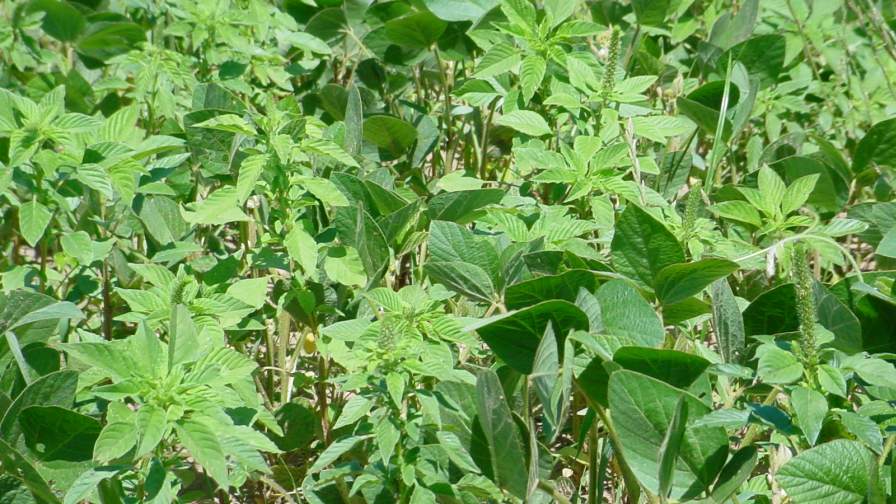
According to the Weed Science Society of America, Palmer amaranth ranks as the most problematic weed to control for growers.
Luckily, there are new tools coming to help restock the herbicide toolbox. For example, during the 2025 growing season, Corteva launched a pair of new herbicides — Kyber Pro and Sonic Boom. According to Scherder, Kyber Pro contains three modes of action — metribuzin, flumioxazin, and pyroxasulfone. These create a solution for control on more than 50 broadleaf and grass weeds, including ALS- and PPO-resistant weeds like Palmer amaranth and waterhemp.
Meanwhile, Sonic Boom offers two powerful modes of action — metribuzin and sulfentrazone — for weed control plus a crop safety for higher yield potential. “The solution is especially effective against difficult resistant broadleaves, including waterhemp, Palmer amaranth, marestail, and kochia,” says Scherder.
Another newer herbicide is Storen from Syngenta. Storen is a combination of four residual active ingredients — bicyclopyrone, mesotrione, s-metolachlor, and pyroxasulfone. According to Matt Geiger, Agronomic Service Representative, Storen is labeled for pre-emergence and post-emergence in field corn and seed corn and has partial control, or control, of more than 74 weed species. This includes control of Palmer amaranth, waterhemp, kochia, common lambsquarters, morning glory, giant ragweed, common ragweed, and annual grasses.
“Storen can also be used to manage HPPD-resistant weeds,” says Geiger. “The best way to control resistant weeds is to never let them emerge in the first place. Once they’re up, you are done for.”
Then there’s Intrava DX from UPL. First introduced in 2025, Intrava DX contains amicarbazone, an active ingredient that is new to the corn market and has no known resistance issues. According to the company’s Justesen, it also contains metribuzin — another active ingredient with no known resistance issues. Put together, he says, these two Group 5 herbicides feature 30-plus days of residual control against many difficult-to-control weed populations.
“While resistance in glyphosate-tolerant crops is well known, populations of atrazine- and HPPD-resistant weeds also have expanded throughout the Corn Belt to rob growers of productivity and yield potential,” says Justesen. “Intrava DX gives corn growers back control over atrazine- and HPPD-resistant amaranthus species such as common waterhemp and Palmer amaranth.”
At Valent U.S.A., the company is touting its newest herbicide, Rapidicil. A PPO inhibitor, Rapidicil can help control broadleaf and grasses, says Pat Clay, Product Development Manager, Herbicides.
“But Rapidicil is not just another PPO inhibitor,” says Clay. “It’s very different in the way it’s structured and the way it behaves in the plant.”
In essence, he says, the active ingredient in Rapidicil — epyrifenacil — is applied to plants in this form but quickly changes into epyrifenacil calcium to begin working on control.
Two other things to note about Rapidicil, according to Clay. One, the name is the tradename for epyrifenacil, not the brand name the product will ultimately be marketed under. And two, this product should always be tank mixed with another herbicide with a different mode of action.
“It’s not meant to be used as a standalone product,” he says. “This way, it is hoped weed resistance will not become an issue.”
Looking past the 2026 growing season, one of the new herbicides still awaiting EPA approval for the U.S. is Convintro from Bayer Crop Science. Containing the active ingredient diflufenican, Convintro is a Group 12 herbicide (that inhibits pigment synthesis) that has been used in wheat in Europe for several years now.
“There wasn’t really a reason to bring this product to the U.S. until now,” says Dr. Dominik Hoffmann, North American Product Manager, Herbicides. “But there certainly is now.”
In practice, Hoffmann says Convintro should be paired with a Group 15 herbicide. “This way, it can combat some of the more troublesome resistant weeds such as waterhemp,” he says. Right now, adds Hoffmann, Bayer is hopeful that Convintro will be approved in time for the 2027 growing season.
Also waiting in the wings is Ridivex from BASF. A combination of three active ingredients with three different sites of action — diflufenzopyr, dicamba, and pyroxasulfone — Ridivex can be used to control more than 200 broadleaf weeds.
“Ridivex herbicide will equip corn growers a new all-in-one early-post tool engineered to stay ahead of weed emergence and maintain clean fields through critical growth stages,” says Jessica Dorsey, Product Manager for Corn POST Herbicides. “This triplemode-of-action formulation is designed to help growers stay ahead of resistant weeds and protect yield potential without compromising on performance.”
Finally, at this year’s Commodity Classic, Helena introduced its latest herbicide. Called Testament, it combines three active ingredients — saflufenacil, pyroxasulfone, and dimethenamid-p — and can be used to control Palmer amaranth, waterhemp, marestail, morning glory, and annual grasses.
“Testament will step in and fill that gap where you’re now able to get a user-friendly product that gives you great weed control, but it’s also favorable in those areas where you may run into a crop rotation sensitivity,” says the company’s Cox. “With all three of them combined, the saflufenacil and the two Group 15s (pyroxasulfone and dimethenamid-p), it’s a really complementary mixture to give us broadspectrum, broad-acre weed control from a preemergence or even a burndown standpoint.”
Other Weeds to Watch
Although weeds such as waterhemp, giant ragweed, and Palmer amaranth get most of the attention from those in agriculture, there are others that should be watched, say industry insiders. In particular, says Drake Copeland, Technical Service Manager at FMC Corp., Italian ryegrass has shown resistance across many southern crop fields for more than two decades now. And the problem is spreading.
“Herbicide-resistant ryegrass is a huge problem, from the Carolinas to the Missouri River Valley,” says Copeland. “It’s been resistant to glyphosate for a while and now resistance to gramoxone is starting to show up.”
Another weed to watch is kochia, says Jeremy Hawkins, Regional Sales Manager for Texas, Oklahoma, and Eastern New Mexico at Helm Agro U.S.
“This weed is really becoming resistant to many herbicides and has become a real problem in West Texas,” says Hawkins. He adds that’s why the company is planning to introduce a new herbicide to combat this problem — called Reviton Ultra — for the 2027 growing season.
Subscribe Today For
