Biologicals: The Next Step in Soil Health and Crop Performance
Healthy soil is more than dirt under your boots. It is a living ecosystem that drives crop productivity. According to Jessica Link, agronomist at The Andersons, managing that ecosystem is critical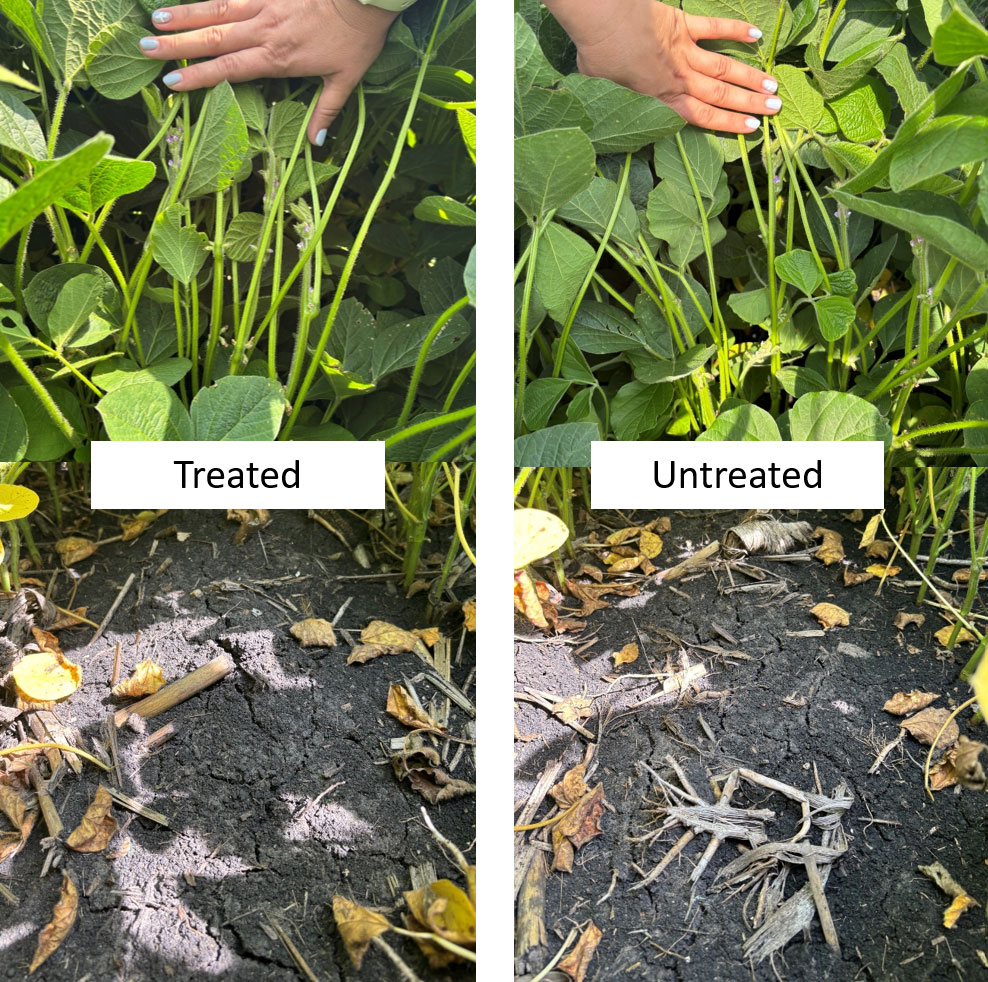 for long-term success. “Your soil, in tandem with a healthy microbial population, will help mineralize nutrients for the crop to use, decompose crop residues, and maintain soil structure,” she explains.
Biologicals are one way to strengthen that system. These products introduce beneficial microbes that support nutrient cycling and residue breakdown. The Andersons offers Bio Pass for corn and wheat and Bio Pass LG for soybeans, both designed to pair with low-salt starters. For residue management, Bio Reverse accelerates decomposition and recycles nutrients for the next crop.
What Makes These Biologicals Different?
Ease of use and efficiency were top priorities during development. “Our biologicals are formulated to be tank-mix-friendly with a variety of fertilizers and crop protection products,” says Link. A proprietary stabilization technology provides a two-year shelf life, reducing waste and storage headaches.
Performance is equally important. Each product delivers 300 billion colony-forming units per pint. Once applied, the microbes exit sporulation and begin doubling every 45 to 60 minutes, depending on soil temperature. “We identified specific microbial strains to perform targeted functions within the soil system,” Link notes. That precision translates into measurable results.
Return on investment is non-negotiable. “We have conducted multiple years of testing for each product in the biological lineup and are confident in their efficiency and productivity,” she says. Trials span diverse geographies and climates, ensuring reliability across operations.

Your soil, in tandem with a healthy microbial population, will help mineralize nutrients for the crop to use, decompose crop residues, and maintain soil structure.
– Jessica Link, The Andersons
Proof in the Field
Link points to Bio Reverse as an example of how biologicals deliver value. In one trial, Bio Reverse was applied to corn residue alongside Sweet ‘N Eezy, a sugar product that provides a carbon source for microbes. The goal was to accelerate residue breakdown and improve crop health for the following season.
The results were clear. “We observed warmer soil temperatures the next spring, which allowed the grower to get into the field faster,” says Link. During the season, soybeans showed stronger vigor and improved nutrient uptake based on tissue tests. At harvest, the payoff was tangible: yield gains of about 6.5 bushels per acre. “These results have been consistent year over year,” she adds.
The Bottom Line
Biologicals are not a trend. They are a practical tool for improving soil function and crop performance. When managed correctly, they deliver measurable benefits in nutrient cycling, residue breakdown, and yield. For growers looking to maximize efficiency and ROI, integrating biologicals into a nutrient management program is a proven strategy backed by data and field results.