Rovensa Next Advances Smart Tech with Drone-Optimized Biosolutions
 March 9, 2026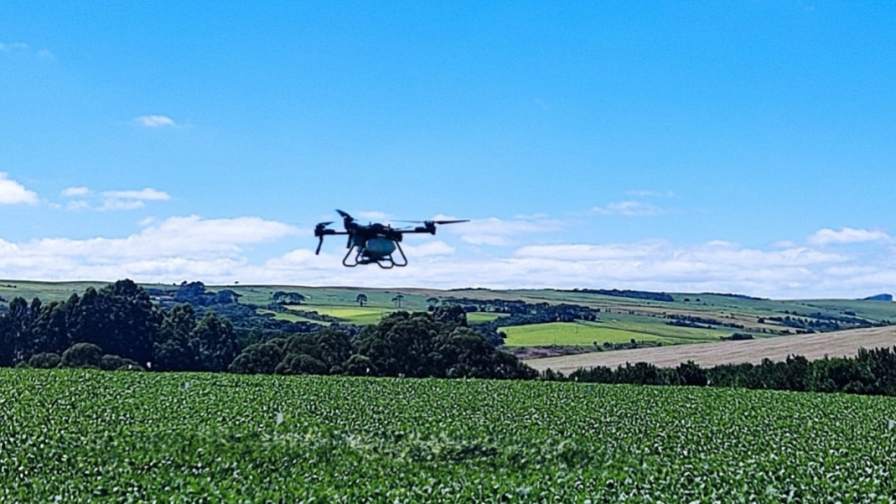
Rovensa Next is working with natural-derived ingredients to improve drone application work.
While many companies are experimenting with biologicals in the field, Rovensa Next is aiming to improve how such products can be used in Smart Tech. In particular, the company is focusing on spray drone applications.
The FAUVE project, which partners Rovensa Next with the Université de Technologie de Compiègne in France, is exploring how drones and ultra-low-volume spraying technologies can make crop adjuvant applications more sustainable, efficient, and profitable for growers. The biosolutions company has developed a product for the Brazilian market based on natural oil derivatives that acts as an anti-drift, anti-foam, spreading, and penetrant helper.
According to Rovensa Next, one of the most innovative aspects of this research is the focus on Natural Deep Eutectic Solvents (NADES). These are natural, biodegradable liquid mixtures made from plant ingredients.
The FAUVE project studies how NADES-based adjuvants behave when applied via drones at very low volumes, including whether they maintain spray uniformity, how they interact with plant surfaces, or how they may reduce off-target drift. A key aspect, says Cédric Ernenwein, Global R&D Product Design Manager at Rovensa Next, is that studies show that they improve penetration without the need for surfactants.
“This project is a great opportunity to continue pushing innovation in two areas that really matter to us at Rovensa Next: Using less water and reducing the amount of product required by farmers in their crops,” says Ernenwein. “We want to see how these next-generation adjuvants behave, how they spread and cover the leaf, so growers can minimize water use and inputs while maintaining performance. In some cases, even improving it.”
From the Lab to the Field
The FAUVE project has progressed through several research phases combining laboratory analysis, controlled testing, and early field trials across different crops and regulatory environments. Research parameters included application volume, droplet size, coverage, and spreading, to help understand the efficiency of different active ingredients when sprayed from drones.
In Brazil, trials have concentrated on large-scale crops such as soybean and corn. Research activities include fungicide, insecticide, and herbicide applications, with a strong emphasis on understanding droplet behavior and minimizing off-target movement. Wind tunnel trials have been used to simulate controlled airflow conditions, allowing researchers to assess drift reduction performance under varying parameters such as nozzle type, pressure, and formulation.
According to Rovensa Next, early trials are already demonstrating significant results in spray precision. This includes a reduction in wind-drift by up to 57% and a decrease of up to 63% in finer droplets during herbicide applications.
With this research, says Ernenwein, Rovensa Next aims to optimize the use of crop inputs by reducing the reliance on conventional fertilizers and pesticides and promoting eco-friendly solutions with a lower environmental impact
“We’re already seeing measurable progress in water savings and reducing reliance on conventional chemical inputs through integrated crop strategies tested under real farming conditions, which was a key focus on our Biosolutionize Agriculture campaign,” he says. “Drone spraying applications are proving to be critical in this goal.”
Subscribe Today For
