
What Really Pays? Smarter Sulfur and Potassium Strategies for Corn and Soybeans
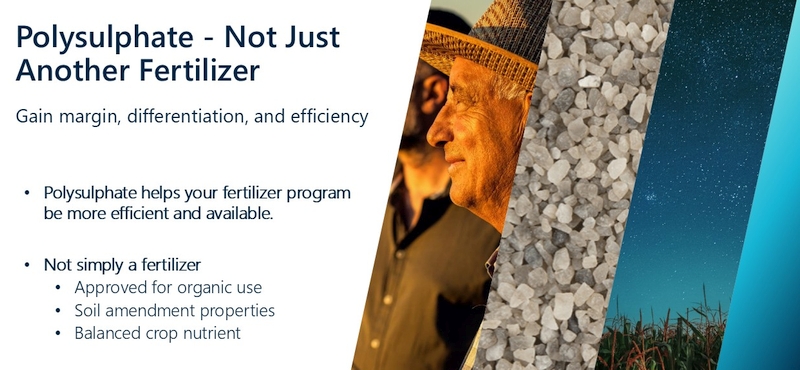
In a recent webinar, ICL Growing Solutions technical sales managers Zack Minnihan and Ryan Sanders presented Polysulphate as an innovative fertilizer solution for modern row crop production. Polysulphate contains four types of sulfur—delivered as sulfate, potassium sulfate, magnesium sulfate, and calcium sulfate. Polysulphate is a balanced crop nutrient that delivers sulfur, potassium, calcium and magnesium in plant-available sulfate form packed into one homogeneous granule. This multi-nutrient approach provides crops with simultaneous nutrient release and improved nutrient uptake efficiency.

Zach Minnihan
Polysulphate’s unique characteristics address multiple production challenges. Its low salt index makes it exceptionally seed-safe, suitable for strip-till systems and direct placement near seeds without risking seedling injury. It demonstrates gradual, season-long nutrient release that mirrors crop uptake curves, particularly during critical reproductive stages. Solubility testing shows Polysulphate requires six gallons of water to dissolve one pound—slower than ammonium sulfate but faster than gypsum, providing ideal timing for nutrient availability.
“Research demonstrates that plant roots actually attach directly to Polysulphate granules, unlike traditional fertilizers where salt content repels root growth. This remarkable characteristic enhances nutrient efficiency and uptake throughout the growing season,” Minnihan says.
Polysulphate Enhances Yield Performance and Efficiency
Field trials across multiple crops show consistent performance improvements. In canola, Polysulphate increased stand counts while potassium chloride reduced them. Corn trials demonstrated two-bushel yield advantages with improved test weights. Cotton and alfalfa studies revealed both yield increases and quality improvements, including higher crude protein content in forages.
Beyond direct nutrient supply, Polysulphate enhances overall system efficiency. Studies show it increases nitrogen uptake by 20-40% and phosphorus uptake by similar margins, despite containing neither nutrient. When blended with urea, growers achieved better results using 100 pounds less nitrogen by adding Polysulphate to the mix.

Ryan Sanders
Polysulphate carries the lowest carbon footprint of any commercial fertilizer, addressing growing concerns about carbon intensity scores in agriculture. Its low chloride content supports soil microbiology and is certified organic (OMRI certified), making it compatible with biological products and sustainable production systems. “Polysulphate provides meaningful reductions in carbon intensity scores, not only in renewable fuels and corn and ethanol, but also on a whole- farm basis within your fruits and vegetables,” Sanders says.
Application efficiency provides significant operational advantages. At equivalent nutrient rates, growers can cover approximately 400 more acres per truckload compared to traditional gypsum applications—valuable when weather windows tighten during planting or application seasons.
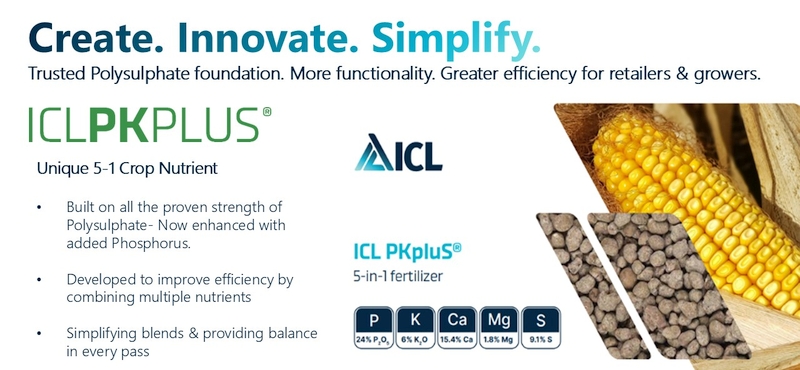
ICL recently introduced PKpluS, adding phosphorus to Polysulphate’s nutrient package for a five-in-one delivery system. PKpluS maintains all of Polysulphate’s beneficial characteristics while addressing phosphorus needs in a single, seed-safe granule with excellent spreading characteristics.
Both Sanders and Minnihan emphasized that Polysulphate integrates easily into existing programs, typically blended 50/50 with traditional potash or other fertilizers. This approach allows variable rate application while establishing baseline sulfur coverage across fields. With multiple application timing options and suitability for various crops, the material offers flexibility for different farming operations and regulatory environments.

If you missed the live broadcast of this webinar, “What Really Pays: Smarter Sulfur & Potassium Strategies for Corn & Soybeans” you can view the archived version online here or visit CropLife.com/webinars and check it out today.