Durable, Efficient, Dependable: How Fertilizer Tenders Are Meeting Modern Ag Demands
 January 15, 2026
 Tariffs. A fragile economy. Weather disruption. Depressed commodity prices. There are a lot of variables manufacturers must consider when they are making plans for the coming year. It’s no wonder tender manufacturers expressed a mix of optimism and trepidation heading into the past year.
“There was a great deal of uncertainty at the beginning of 2025,” says Casch Doyle, Vice President of Marketing and Technology, Doyle Manufacturing. “We weren’t sure how the market would respond to tender sales. As the year progressed, however, it became clear that significant opportunities were emerging. At Doyle, our mission is to continually innovate the equipment we build so we can consistently provide our customers with high-quality, reliable machines. Those opportunities reinforced the importance of that mission.”
Like Doyle, Simonsen Industries was cautious heading into the year.
“Our expectations were muted coming into fall due to market uncertainty but have exceeded our expectations significantly,” says Jon Simonsen, President. “Tender demand started slowly, I believe because of tariff uncertainty and lower commodity prices. Demand has been robust since harvest got underway and has remained strong to date.”
That initial uncertainty was shared by Hays LTI.
“We expected 2025 to be a steady year, but not a record-breaker,” says Matt Hays, Hays LTI’s CEO. “Following some volatility in the ag industry, that’s pretty much how it played out. Retailers were cautious but still investing in equipment with a focus on reliability and service. Sales were good, and there was a steady flow of equipment rebuilds with customers looking to extend the life of the equipment they already own. Through all the ups and downs of 2025, we remained steady in our production and our focus on innovation for coming seasons.”
Not every company CropLife® Magazine contacted went into the year with concern.
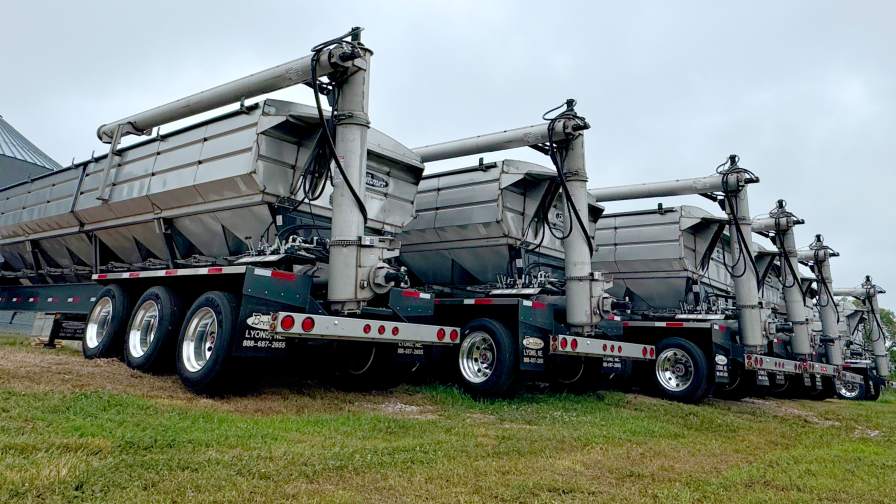
A group of Brehmer tenders pictured at one of the industry’s trade events. Photo courtesy of Brehmer Manufacturing
“We were optimistic at the start of 2025; we expected a certain amount of growth, and we’ve achieved that,” says Alex Brehmer, Vice President of Administration at Brehmer Mfg., Inc. “However, tariffs, grain prices, and economic concerns are putting a damper on the latter half of the year. The question we’re asking now is if the Fed’s interest rate cuts will help offset these increases and push customers to make decisions?”
Market Changes
Every year, Detroit’s automakers deliver updates to existing models. Tender providers do the same.
According to Brehmer: “Manufacturers are always looking for ways to make their products less expensive without compromising quality and functionality. At Brehmer, we’ve always had the mindset that we can achieve this by increasing the lifespan of each tender — improvements in paint finishes, incorporating 304 stainless steel into as many tender components as possible. We make the upfront cost worth it because the tender will last longer out in the field.”
No matter what product an end user chooses, value is key.
“In 2026, the market is clearly demanding high-quality, well-built tenders,” Doyle says. “These machines handle large volumes of fertilizer and travel across diverse and challenging terrain, making durability essential. Our standards are intentionally high — we want every unit delivered to our customers to withstand the toughest operational conditions, so they get the most value from their equipment.”
Those are the same attributes Hays works to instill in its tenders.
“The biggest trends shaping the tender market right now are safety, efficiency, and long-term reliability,” Hays says. “Unloading speed, quality components, and durability in the elements that come with fertilizer hauling are always a focus for manufacturers.
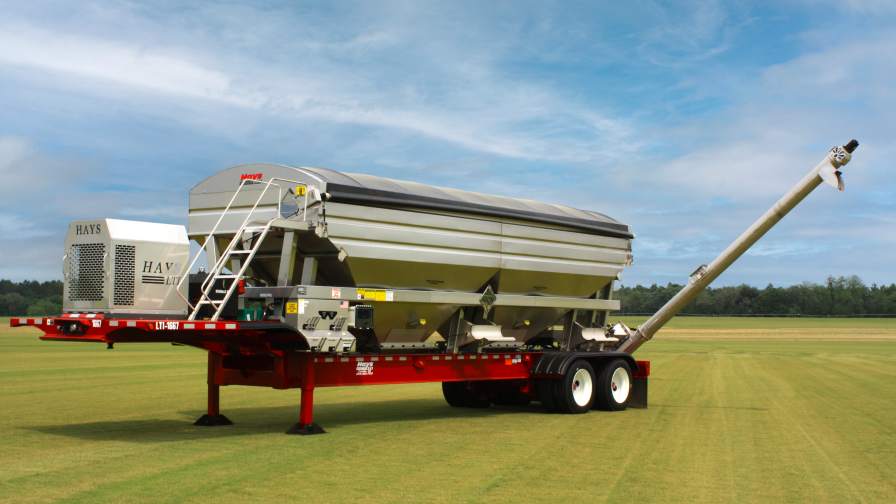
Hays tenders feature a 32-foot trailer assembly and integrated hopper cradle. Photo courtesy of Hays
“Another trend we’re seeing in this uncertain agriculture market is the increasing focus on sticker price over long-term value,” Hays continues. “There are some aggressive discounts in the market right now, but retailers know that the cheapest tender on paper often becomes the most expensive one over the next few seasons. Downtime, stripped-down components, and service headaches wipe out any savings fast. We’ve stayed committed to building dependable, full-featured equipment at a fair, consistent price. We are proud to manufacture the kind of equipment that holds up under real-world use. Our customers still recognize that reliability, performance, and service will out-earn a short-term discount every single time.”
Right Sizing Boxes
According to Simonsen, what defines value, though, is changing.
“One trend that has been present for the past several years and continues today is the demand for 304 stainless steel box construction vs. 409 stainless steel construction,” Simonsen says. “There seems to be a trend to ‘right size’ boxes to fit specific retailer needs rather than just purchasing the largest box available.
“We have seen the demand for smaller tenders increase, which is somewhat of a reversal from many years of ‘bigger is better,’” he continues. “We believe that much of this is driven by the inability of many retailers to be able to fill driving positions with Class A drivers.”
Intuitive, Efficient
Hays agrees labor continues to be an issue across the ag industry.
“The biggest challenges for manufacturers are skilled labor shortages and cost inflation on components and materials,” Hays says. “We’re fortunate to have retained an experienced crew, and we work closely with our vendors to keep prices controlled and parts always available. Our customers need equipment that works flawlessly. We’re responding with designs that simplify operation and maintenance. We’re also prioritizing our service and parts departments, so customers can avoid downtime.”
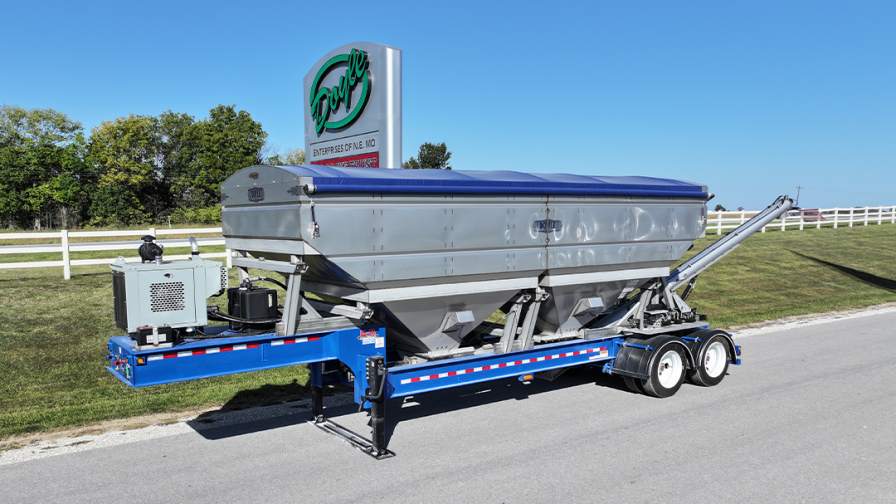
The Doyle 2-Bin Tender is made using 304 stainless steel and features a 24-foot hydraulically raised and lowered discharge auger. Photo courtesy of Doyle
“Today’s operations can’t afford downtime,” Doyle says. “Any improvement that increases efficiency directly benefits customers during peak application windows. As a result, operators want tenders that will stand the test of time. At Doyle, we’ve invested heavily in our manufacturing processes to improve how our tenders are built and to ensure every unit we deliver meets — or exceeds — customer expectations.
“Speed and efficiency are the dominant trends,” Doyle continues. “With more high-capacity spreaders entering the market, tenders capable of keeping pace with those volumes are essential to maintaining productivity. In response, Doyle has continued to enhance our equipment by increasing discharge rates to match demand. Time is money, and the more time we can give back to our customers, the more successful their operations will be.”
“In the past few years, we have put an emphasis on easily accessible and serviceable equipment, more reliable hydraulic system setups, corrosion resistance, and many other upgrades,” Hays says. “Most improvements haven’t been flashy, but they’ve made tenders safer, faster, and more reliable.”
Given the labor challenges, Brehmer highlights the features buyers require.
“‘Easy to operate and easy to train’ — that’s what we’re hearing from tender customers,” Brehmer says. “Fewer manual controls, less complexity, and more digital systems that can provide clear, real-time data on how the system is functioning — like unit pressures and overall performance.
“Spreaders continue to operate at ever-increasing speeds, and we need to keep pace with that by offering greater capacity and quicker unloading times,” Brehmer continues. “We’re working on designs to minimize trips from the field to fertilizer distributors and retailers. “Our goal is to reduce downtime for spreaders and increase delivery efficiency for applicators.”
Subscribe Today For
