Star of the West Milling: 155 Years Strong and Still Growing in Frankenmuth

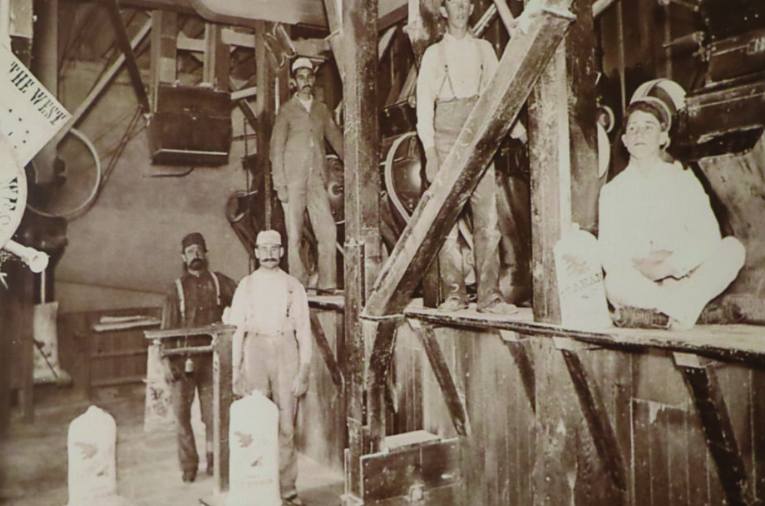
 It’s not often companies survive long enough to celebrate a sesquicentennial, let alone view one in the rearview mirror. Star of the West Milling Co. experienced that half a decade ago. For those not interested in doing the math, the company began operations, 155 years ago in Frankenmuth, MI, and continues to operate in a town otherwise known for its German restaurants and motif and the world’s largest Christmas-themed store. The town itself was only founded a quarter of a century earlier by Lutheran immigrants from the Franconia region (Bavaria/Germany) interested in spreading Christianity in America.



View all

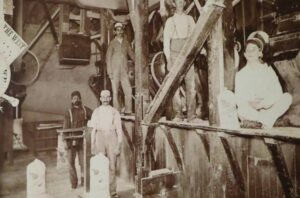



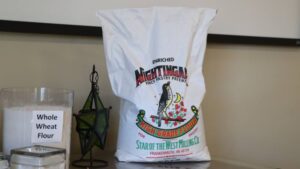





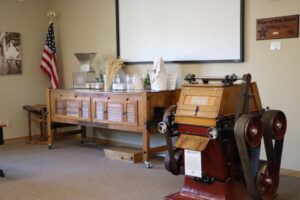
The German heritage is deeply ingrained in the company. In fact, well into the 20th century the company’s meetings were held in German and its minutes as well.
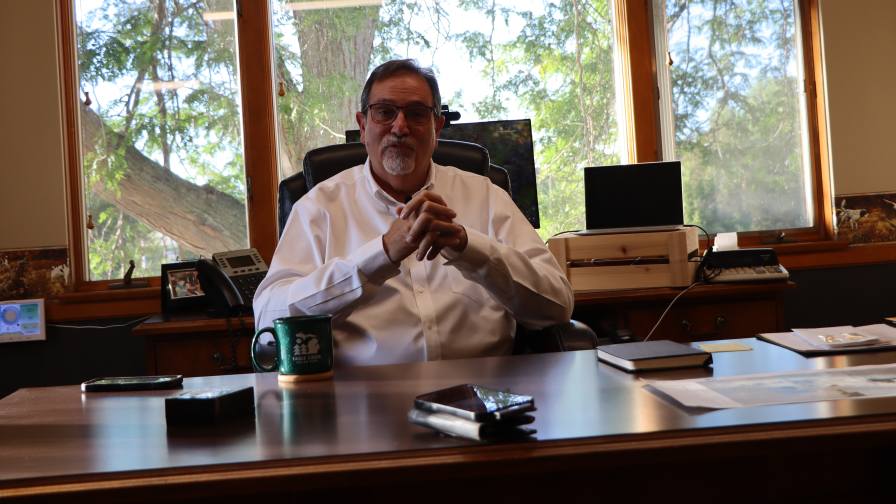
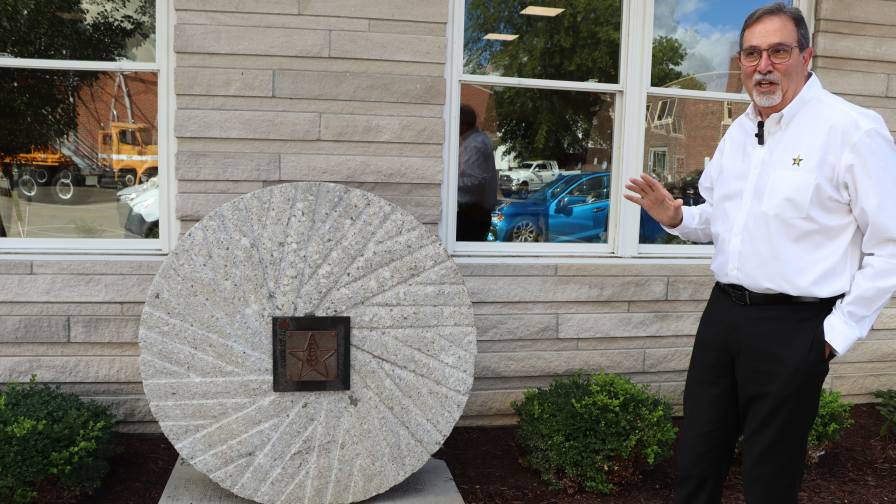
Jim Howe, Chief Executive Officer of the company, has family ties to that original group of 15 settlers. His wife’s great-great grandfather was 22 years old when he came to the town that would become Frankenmuth.
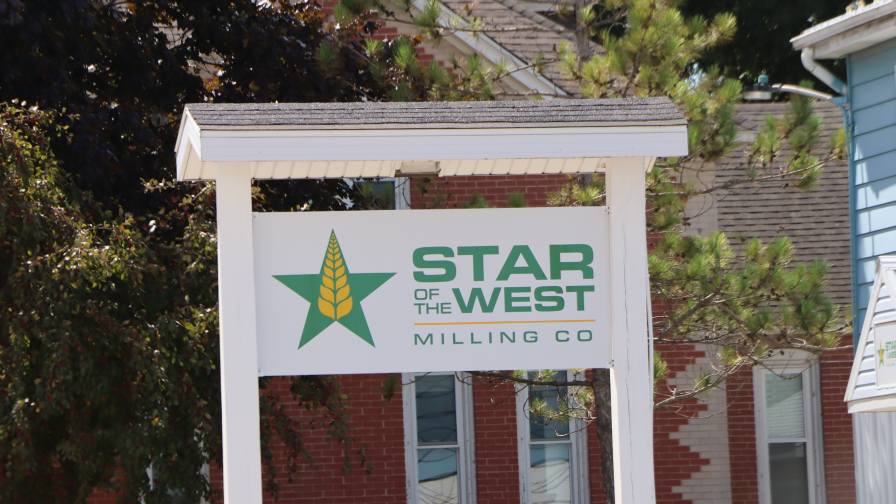
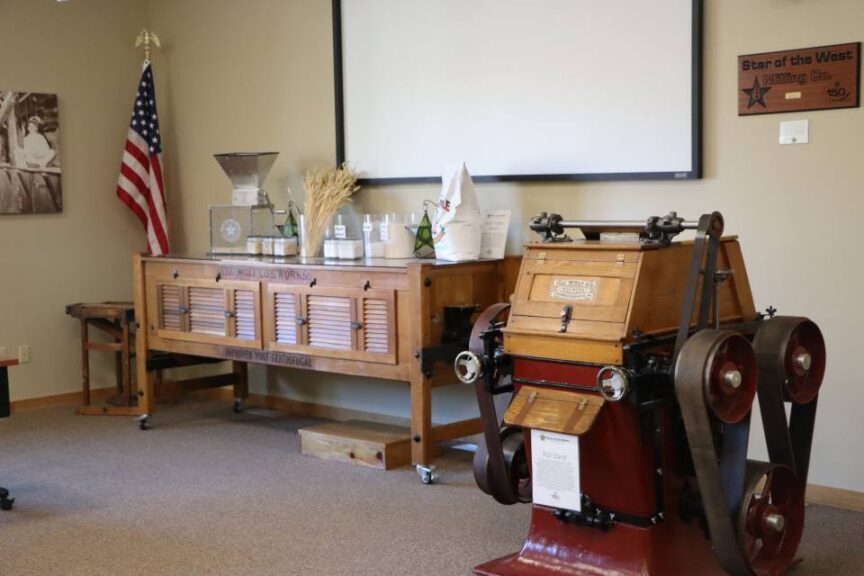
Star of the West Milling Co. was founded in 1870 on the banks of the Cass River. Today the company operates five flour mills in four states and now also sells grains, dry beans, edible soybeans, agronomy/plant food and organic material.
Those who live in Frankenmuth — or any of the communities in which it operates — are familiar with the company’s fleet of yellow trucks (wheatland yellow officially).
Origins of a Name
The city Frankenmuth, not surprisingly, ties its name to its settlers’ European home and the people who risked their livelihoods (and lives) to spread their gospel to the indigenous people of Michigan.
Franken represents the region of Germany, Franconia, where the settlers came from. The second half of the name, muth, means courage in German. When tied together it was the courage of the Franconians.
The company’s name, Star of the West, is rooted in the Civil War. In 1861, a merchant ship the Star of the West was being used to transport soldiers and supplies south. Under the command of Major Robert Anderson the ship attempted to resupply Fort Sumter but was fired upon as it approached Charleston Harbor by confederate soldiers. The resupply mission failed and nearly started the Civil War.
Three months later Fort Sumter fell, and the Civil War was officially underway. Two young Frankenmuth men, as an act of patriotism, named their fledgling company, after this iconic merchant ship. After all, in 1870, Michigan was one of the westernmost states at that time.
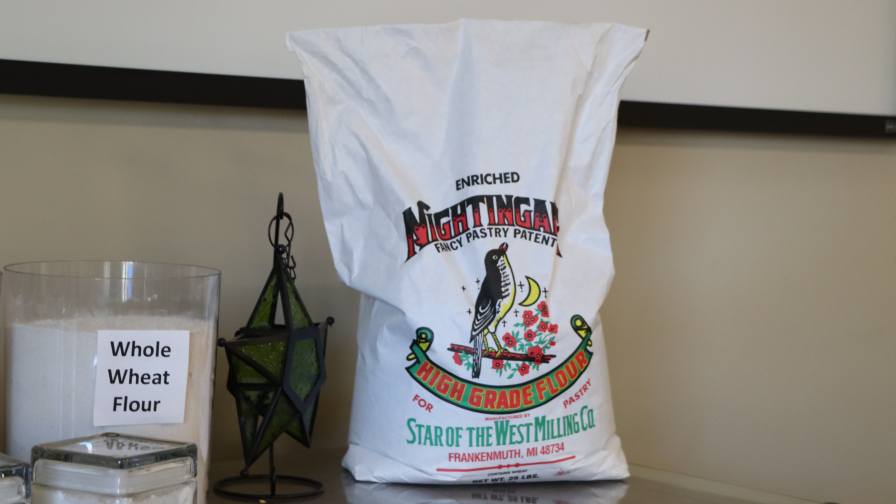
The company has one additional tie to the Civil War — naming its flour brand after Florence Nightingale, the nurse known for her compassion.
Longevity
Remarkably, for a company that measures its history in centuries, Star of the West has only had five leaders, including Howe, who began his career as an intern in 1981 while attending Michigan State University. Howe was preceded by Jacob Rummel, who spent 65 years with the company. His son Otto spent a “mere” 25 years with the company. Richard Kraft Jr. (who hired Howe) was with Star of the West for 67 years and was followed by Art Loeffler who led the company for 21 of his 37 years there. He retired as an employee in 2018 but still serves as chairman of the board.
“I’m a bit of an anomaly,” Howe says. “I’ve been with the same company for 45 years. No name changes, no change in ownership, and only on my second boss. My goal was to work here a couple years, and return to the family farm, I still have the (family) farm, but it’s been a wonderful opportunity to grow up in this organization.”
Certainly, the company has gone through changes, both large and small in its 150-plus years. In days gone by, the company had a Coke machine that was filled with a more adult beverage. Put in 40 cents and you could enjoy a Black Label beer with your lunch. While the beer is no longer part of the daily routine, Howe embraces and is beholden to the company’s legacy in other ways.
Howe doesn’t take that responsibility lightly. A company that’s traversed more than 150 years makes decisions that improve the short term but also have an eye scanning the future.
“I have to coach some of our younger management,” Howe says. “If you want to grow, you’ve got to be able to pass what you have learned to others as well.
While Howe might be on the far end of the longevity-at-the-company scale, he is by no means the only long-term employee. And while the years since he started the average age and duration have dropped that’s not unexpected for a growing company.
“When I took over, the demographics showed our employees’ (average age) was 57.3 years of age and had 20.5 years of service. Today, we’re a much younger (company) 44.8 years of age and 10.2 years of service.”
Of course, when people lose long-time employees, so too goes their institutional knowledge. Recognizing an opportunity to diminish the loss of decades of knowhow, a couple times a year, Howe invites those employees to a retirees’ breakfast or as he jokingly calls it “the Quitters Club.”
The Company Makeup
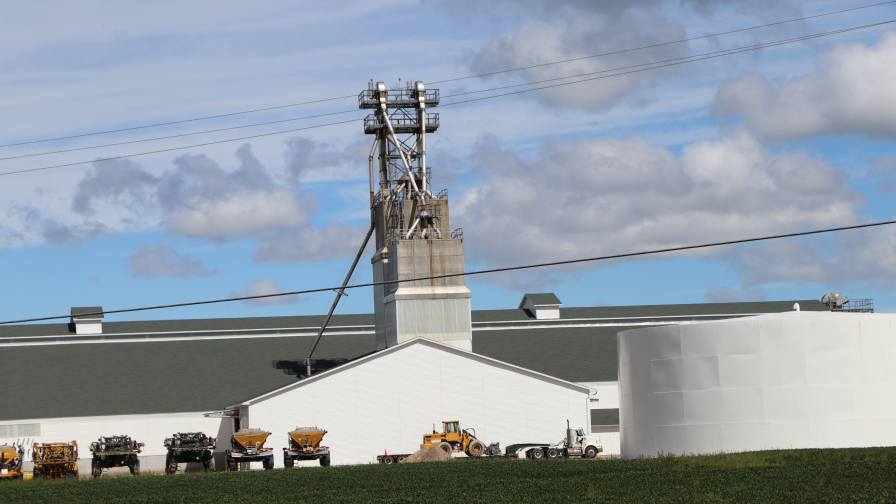
Today the company’s sales are divided into five products: 47% flour, 11% corn, 16% soybeans, 13% grain, and 13% plant food. The flagship flour mill built in 1910 is in Frankenmuth, less than ¼ mile from the original 1870 mill. In 1980 the company added a plant in Quincy, MI. A third plant in Ligonier, IN, joined the Star of the West family in 1987. This is the site of the company’s newest and largest mill that came online in August of 2025, followed by one in Churchville, NY, in 2000 and another in Willard, OH, in 2016. There are an additional 25 grain elevators and agronomy centers throughout Michigan as well as bean operations in North Dakota and Minnesota.
No matter what community Star of the West employees operate, they know they must be available to assist their grower-customers.
“I know there’s one grower, he’s passed now, but when I was in the agronomy group, he literally wouldn’t do anything on his farm without conversing with me first, to the point where it’s almost kind of a pain in the backside,” said Keith Martus, the company’s Vice President of Agronomy.
While some customers might present challenges, Martus certainly appreciates the trust. “It’s pretty special that he entrusted somebody to help him make his day-to-day decisions,” he says.
Star of the West continually explores ways to enhance their offerings to grower-customers.
“When you receive commercial corn and soybeans, there’s not a lot of value you can provide to it other than sometimes it has to be commercially dried,” Martus says. “We’re looking more at that niche market of how we can take the crop that a grower grows, processing further, and then selling it more often kind of into a specialty market type.”
Finding new ways to help customers includes keeping up with technology, which is not only a challenge for growers; retailers also need to adopt and adapt to new solutions.
“It’s constant evaluation,” Martus says. “How can you take today’s technology and put it into an effective use for specific operations? A comment has been voiced a few times to me, and I’ve seen demonstrations with them in some of the spray technology. ‘Is that going to be effective? Does it fit? How does it work?’”
While the company might be described as venerable, Star of the West is accepting of any solution that improves performance. In his time with the company, Howe has seen and operated just about every new piece of technology.
“We’re going to stick with the things we know about,” Howe says. “But if it’s a technology thing, and if it fits within our wheelhouse, we’re for all of that. We were pioneers in GPS technology and applications, doing variable rate applications in the early 1990’s. We’re not going to stay static.”
Technology might be the element that draws younger folks back to the farm.
Howe considers it his responsibility to future generations, to share, explore, and invest in technology that advances the company’s operations.
Whether it’s satellites, computers or some other technology, Star of the West has embraced these tools. Howe acknowledges technology changes quickly (mentioning that the watch on his wrist has more computing power than those early computers).
“So, what does our world look like five, 10 years from now? It looks different, but we’re ready to meet that challenge,” Howe says.
Howe and his team are exploring the latest tech darling — artificial intelligence.
“It seems to be the buzz, now,” Howe continues. “And certainly, people are still trying to figure out how to use (it). We’ve (not) really utilized operationally any AI type stuff, but we keep looking at that; we realize that it’s going to be the way of the world. The guys in the office are using AI tools, occasionally. But as far as in the field today, probably not yet, but certainly it’s going to happen.”
Whether it’s advancing technology, delivering new services, or ensuring Star of the West’s customers have what they need requires both short-term action and long-term planning.
“It could very well be that we might see some cut back in our fall applications this year, as commodity prices are down, yet fertilizer prices are firm to higher,” Howe says. “So, it gets a little bit dicey knowing how much to buy.”
“It’s the Goldilocks theory,” Howe continues. “You don’t want to have too much. You don’t want to have too little. You want to have just right here. It’s kind of a constant battle of ‘how do we make sure we have (the right amount) on hand?’ We don’t want to have any left over for next spring in case the price softens again.”
Every year, there are plenty of challenges that Star of the West (and other companies) must adapt to. The key for this organization is the people.
“My dad who farmed right up to his last breath at 85 asked me: ‘What do you like about your job?’ I said, ‘the people.’ I have had the opportunity to work with a lot of very dedicated, hardworking individuals, who care about taking care of the customer on both the grower side and the end-user food companies, domestic and abroad. These individuals take great pride in providing great products and services to both ends of the spectrum. That’s in our culture and part of our corporate DNA. To some this is passe; to us, it defines us.”
Subscribe Today For