
Corn leafhoppers aren’t just sap-sucking insects, they’re an entry point for diseases like corn stunt and maize bushy stunt. Once the insect acquires the pathogen, it can transmit it to healthy corn throughout the growing season. By the time symptoms like stunted plants, chlorotic leaves, or “loose tooth” ears become visible, the damage is already done and yield losses can be as much as 70%.
Although corn stunt disease is unlikely to take hold in the northern Corn Belt due to colder winters and the lack of year-round green corn, leafhoppers — and the pathogens they carry — are on the move.
In 2024, leafhoppers were confirmed as far north as Wisconsin, aided by storms like Hurricane Beryl. Some fields in Oklahoma, Kansas, Missouri, Illinois and Iowa also showed symptoms consistent with late-season infection. While leafhopper populations are lower in Mexico and Texas this year than they were in 2024, corn stunt can still be found in many fields — typically at relatively low incidences — demonstrating that even a small number of infected pests can carry and spread the disease.
Additionally, leafhoppers appear to be more resilient than originally thought, requiring extreme cold spells to prevent overwintering.
Corn leafhoppers were found in Oklahoma on June 23. Despite this, the season is still shaping up to be similar to last year. While this threat may not yet be a top-tier focus for Midwest growers, it’s one to keep on the radar, especially in southern fringe areas, late-planted fields or any regions reporting leafhopper activity.
It’s All About the Vector
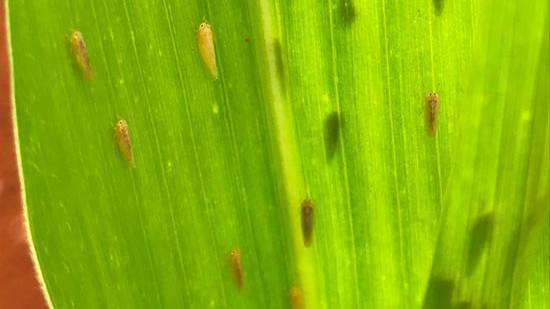
Scouting early and often is one of the most effective ways to manage corn leafhoppers. They are tan in color and can be identified by the distinctive dark spots between their eyes. However, identifying them can be difficult if you are not a trained pathologist. It is recommended that samples be submitted for further identification and diagnosis.
If leafhoppers are present, it’s important to act quickly. Research indicates that even low populations — just one insect per plant feeding for a single day — can be enough to reduce yield. When active populations are found, foliar insecticide applications may be necessary to limit potential crop damage.
Finally, prioritize early planting when possible. Later-planted or double-crop corn tends to face a higher risk, likely due to the buildup of leafhopper populations as the season progresses. Getting corn past the most vulnerable vegetative stages earlier in the season may help reduce the chances of infection or major yield impact.
Pioneer has partnered with several academic institutions, including Kansas State, Texas A&M and Oklahoma State, to continue monitoring and researching corn stunt and leafhoppers. All collected samples are being analyzed in the Corteva Agriscience Plant Diagnostic Services laboratory. One more season of studying leafhoppers, the diseases they carry and the effect of tropical storms on migration should tell us more about whether 2024 was an anomaly or the new norm.