Fertilizer Mixing and Blending: Demand for Greater Precision and Efficiency Highlight Advancements in Today’s Systems

Mixing and blending systems are important for growers. But they’re critical tools for retailers looking to maximize the company’s success.
“The ag retail community is easily the largest user of mixing and blending systems in the marketplace,” says Nate Wittmaack, President and Chief Operating Officer, Ranco Fertiservice, Inc. “Ag retail drives 75% to 90% of demand in this segment.”
According to Fred Dorman, Senior Director, AGI Yargus, blending systems have evolved from small batch blending systems to large-scale, continuous-blending systems reaching more than 300 tph. It’s all about getting the most out of these tools.
“This shift has occurred while agriscience has focused on soil sampling and detailed agronomy analysis to tailor custom prescription fertilizer blends to optimize growing conditions maximizing crop yield,” he says. “The demand for the speed at which prescription blends are required has driven the industry to focus on high-throughput blending systems to load trucks/tenders faster to get the right blend to the field as quickly as possible.”
CropLife® magazine spoke with a number of manufacturers to learn how these systems have changed over the years both the systems themselves and how they’re incorporated into retailer operations.
Changes
“Many areas of the industry have seen advancements over the years,” says Nate Reznechek, Sales Director, Commercial Grain & Fertilizer for GSI. “These changes have been driven by the need for greater efficiency, precision, sustainability, and adaptability. One area of significant change is the need for improved blending mechanisms. In the past, orbital or drum blenders were standard, often resulting in less-than-desirable mixing. Modern systems use high-efficiency designs such as vertical or more recently, horizontal twin-shaft mixers. These systems are designed for uniform mixing, reduced segregation, and faster throughput.”
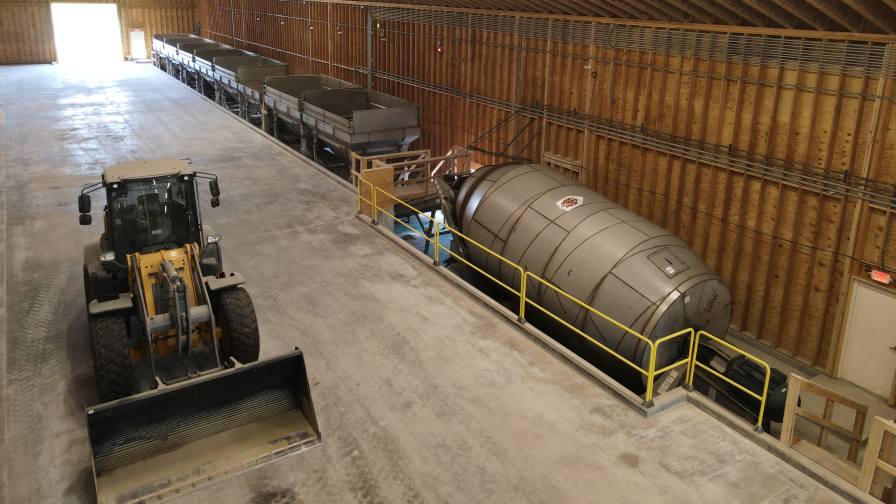
Doyle’s mixing and blending systems are fully customizable to meet each customer’s needs.
Updated systems are designed to deliver speed and accuracy says Casch Doyle, Vice President of Marketing & Technology, Doyle Manufacturing.
“Mixing and blending systems have become faster and more automated, regardless of their size,” Doyle says. “What once relied on manual processes has evolved into highly automated systems that integrate with software like accounting platforms to manage operations in real time. Automation has significantly increased efficiency, enabling blend operations to deliver more product to customers quickly. Whether it’s a small batch system with a single blender and hopper or a large-scale dual rotary AUTOBATCH system with 12 or more hoppers, automation can be seamlessly integrated. In an industry where downtime is not an option, saving time for operators is invaluable.”
Importance
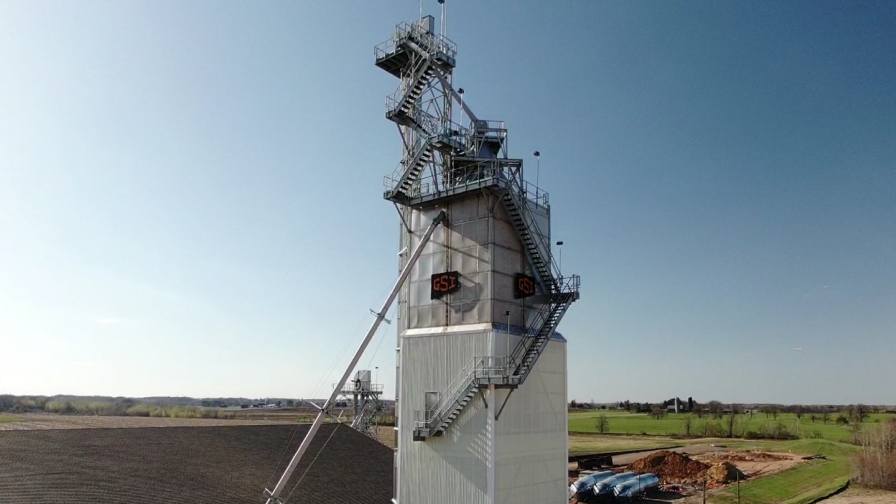
GSI Blender Tower. Photo: GSI
“Considerations are shaped by specific needs, production goals and evolving demands of modern agriculture,” says GSI’s Reznechek. “A topic that I often see discussed is operational efficiency, specifically capacity needs, speed, and throughput, along with downtime and maintenance. Their system needs to handle the volume of blending required, particularly during peak output times. Performance needs to be consistent, not just for short spurts. The faster blending systems with high output rates are essential for meeting tight timelines.
“Lastly, new systems need to perform with minimal downtime and easy maintenance requirements. For example, blend towers utilize gravity to perform their operation,” Reznechek says. “While equipment can unexpectedly fail, I’ve yet to witness gravity fail in its performance.”
These tools are evolving, which allows retailers to deliver quickly and effectively.
“Continued advancement in automation controls and integration with blend facility ERP systems will be the driving technology trends for the next five years.” AGI Yargus’ Dorman says. “The ability to seamlessly import agronomy data for prescription fertilizer blends, dispatch blended fertilizer batches to customer purchase orders, and provide visibility of real-time input commodity inventory locally and on regional, national, and global levels will be the feature sets of the future blending systems.”
Drivers
“Safety, efficiency, and modularity are the key factors,” Doyle says. “At Doyle, we live by the motto ‘Safety First, Quality Always.’ We prioritize keeping our employees safe while producing high-quality equipment that enhances our customers’ operations. Our systems are designed for efficiency, maximizing up-time while ensuring operator safety. Additionally, our modular designs allow customers to expand their systems as their operations grow, offering long-term flexibility and value.”
On several levels the ag industry continues to experience consolidation. That trend makes mixing and blending systems even more important.
“Consolidation tends to provide opportunities for investment in infrastructure for the retailer,” says Ranco’s Wittmaack. “Also, we have seen interest in bringing dormant facilities back online.”
AGI Yargus’ Dorman agrees.
“The fertilizer blending market continues to see consolidation with larger multinational entities continuing to acquire smaller regional independent blending facilities building conglomerate fertilizer blending entities,” Dorman says. “Co-ops continue to leverage their strength of geographic coverage to support local farms while leverage the benefits of the co-op buying power on raw fertilizer commodities. Outside of North America, in developing countries, an increasing trend of leased fertilizer systems has begun to emerge where financing is difficult to obtain for a new blending.”
One of the keys to success is ensuring these tools work with a retailer’s business software.
“This is not a new trend, but a trend that continues to expand,” says Ranco’s Wittmaack. “Ag retailers are also looking for ways to reduce the dependence on skilled labor. Hiring is a problem for most industries, and ag is no exception. If equipment and systems can be put in place to allow more production with less labor, it is a good thing for both the ag retailer and their grower-customers. This trend applies to updating/upgrading existing facilities, as well as consolidating services areas with multiple smaller sheds into larger sheds to cover the same ground. Again, this tactic is not new but continues to be seen.”
Mixing and blending systems are rather expensive. It’s a factor retailers need to pay attention to.
“Blending systems, particularly advanced automated or precision systems, require significant upfront investment. Wholesalers/retailers may face difficulty justifying the expense relative to their scale of operation. Equipment costs will likely continue their upward march in the coming decades, so it’s important to consider their lifecycle costs and the overall longevity of the equipment being purchased. The longer the longevity of the equipment, the better the ROI.”
2025 and Beyond
Looking ahead there are a number of factors that might impact the market negatively.
“2025 will continue to be a tough year for key agricultural commodities,” AGI Yargus’ Dorman says. “Lower unit values for key commodities like soybeans, corn, and beef are reducing the overall value of U.S. exports, even as volumes remain steady or increase. China will continue strengthen its ability to be self-sufficient relying less on imported crops. Strong competition from countries like Brazil, particularly in the soybean and corn markets, will adversely impact U.S. export growth. I would expect 2025 to be a challenging year for investment in fertilizer blending systems in the U.S. because of low commodity prices. Large multinational clients will focus on fertilizer blending system investments in Brazil and other emerging markets such in EMEA and APAC.”
Not all providers agree with that sentiment.
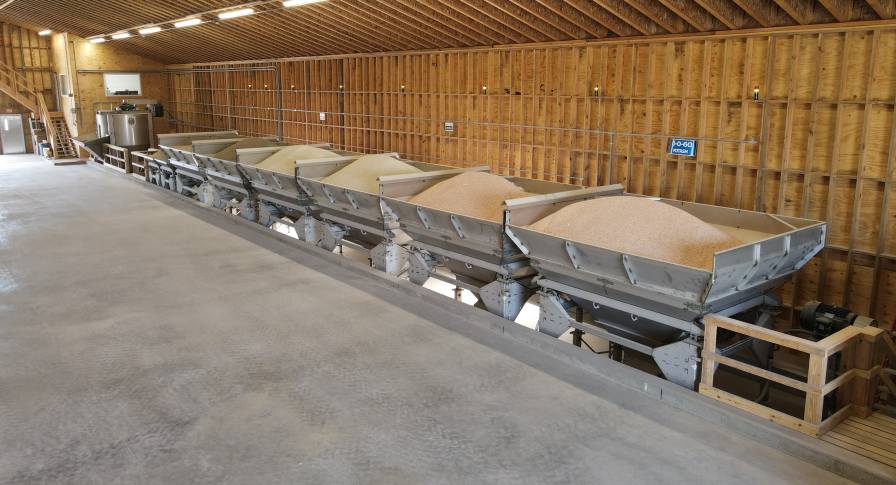
Doyle: Fiberglass reinforced plastic (FRP) provides stiffer, corrosion-resistant floor grating.
“We anticipate another year of innovation and growth,” Doyle says. “Our team at Doyle is committed to working closely with new and existing customers to develop solutions tailored to their unique operations. We look forward to continuing to push the boundaries of efficiency and technology.”
Ranco agrees that the domestic market will continue to grow.
“We continue to see strong demand heading into 2025,” says Wittmaack. “That said, since 2021, grower sentiment has trended down. Generally, once we see three or four years of consistently trending sentiment, we see a similar effect on demand for new blending systems. But, the most recent data point could point to rebounding sentiment, likely influenced by the most recent Federal election results. The hope is that we have weathered the storm and will continue to see strong demand into 2025 and beyond.”
Subscribe Today For
