Kudzu: Where The Wild Things Are
 March 5, 2009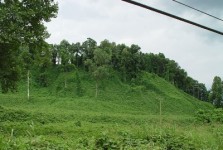
Snakes. Hidden gullies. Washing machines. Animals, dead and alive. These are some of the things Extension plant pathologists encounter while scouting for soybean rust in the South.
Go ahead, admit it, you just thought someone walks into a soybean field and collects a few leaves for confirmation. In the South, it can be a walk on the wild side any time of year.
Why? One word: kudzu.
Kudzu, for the uninitiated, is a vine plant that quickly spreads over, under, and through anything that sits awhile. Brought into this country for erosion control, it’s another favorite host for soybean rust besides soybeans and is found primarily in the South. Much of it dies back in the winter, but pockets of protected kudzu, if infected with rust, can threaten the next soybean crop.
The ‘Fun’ Is In The Finding
Kudzu can grow up to 6 feet tall. Tom Allen of Mississippi State University says he and his scouting team have found themselves shoulder-deep in kudzu patches. “You can look out across the area we’re in and not see anything but heads on a regular basis,” he says.
Snakes are one of the most common things underfoot. Ed Sikora of Auburn University came across a 2- to 3-foot water moccasin while checking a kudzu patch with a grower’s wife. Because it was near where her children play, he beheaded the snake. “I was holding him without his head and she was taking the picture — and the thing was still wrapping around my wrist,” he recalls.
Rabbits and other small animals run under the dense cover of kudzu. Clayton Hollier of Louisiana State University recalls when an animal — possibly just a dog or something as dangerous as a small black bear on all fours — was running alongside the state’s primary rust scout, Patricia Bollich, but finally moved into another direction. “You never know what the animal really is until it gets to you or you get to it,” he adds.
Bob Kemerait of the University of Georgia says his scouts have even stepped into raging nests of hornets, yet “every one of us has been bitten by the hunt for soybean rust on kudzu.”
Not everything found in kudzu is alive, especially in urban settings. As Tom Isakeit of Texas A&M University puts it, “where kudzu grows, that’s where people tend to throw their trash.” While Sikora has discovered graffiti on kudzu-covered buildings, Isakeit gets kidded about finding not just rust, but also pornographic materials, in kudzu under bridges.
OK, Drop ’Em!
As kudzu layers accumulate, gullies, and other uneven patches are easily hidden. “A lot of times when we go into these wood patches, there are gullies that this stuff covers to make it look like just a flat bed of kudzu,” says Scott Monfort of the University of Arkansas. “Then you step in it and you may fall 2 feet. You take a stick with you to kind of poke and prod to make sure you don’t lose your footing.”
Billy Moore, plant pathologist emeritus from Mississippi State, noticed the ground felt uneven in one kudzu patch. Upon closer inspection, he discovered he’d been walking on top of a junkyard full of cars.
Subscribe Today For
