NAVIGATING THE ESA HERBICIDE STRATEGY: What Growers and Retailers Need to Know
The Environmental Protection Agency’s (EPA) implementation of the Endangered Species Act (ESA) on crop protection product labels is reshaping how growers and retailers approach herbicide use. While the ESA has existed since the 1970s, its integration into product labeling is a recent development, triggered by legal action that pushed the EPA to enforce species protection more directly through agricultural regulation.
As Dr. Eric Spandl, senior manager of product development at WinField United, explains, “The ESA language is now being added to labels as products are newly registered or re-registered. Herbicides and insecticides already have approved final strategies, and fungicides are expected next year.”
This shift means growers and commercial applicators must pay closer attention to label language and understand the compliance requirements. “There are really two tracks,” Spandl says. “One is runoff mitigation. The other is drift-specific label requirements. It’s going to require knowledge, maybe a little more paperwork, and possibly some equipment adjustments.”
Retailers play a critical role in helping growers stay ahead of these changes. The rollout isn’t happening all at once. Only a few products currently carry ESA language, with more expected over the next few seasons.
Spandl emphasizes the importance of early planning. “You’ve got up to six months before spraying to do the paperwork. Don’t wait until spring. Use winter planning to check if the products you’re going to use have ESA language.”
Retail agronomists can assist growers in assessing their fields for runoff mitigation. This includes evaluating slope, soil type, and management practices like no-till. The EPA provides a website to guide users through this process. For drift mitigation, adjustments may be needed to sprayer settings, such as boom height and spray quality. Additional tools like drift reduction adjuvants (DRAs) and shielded sprayers can also help.
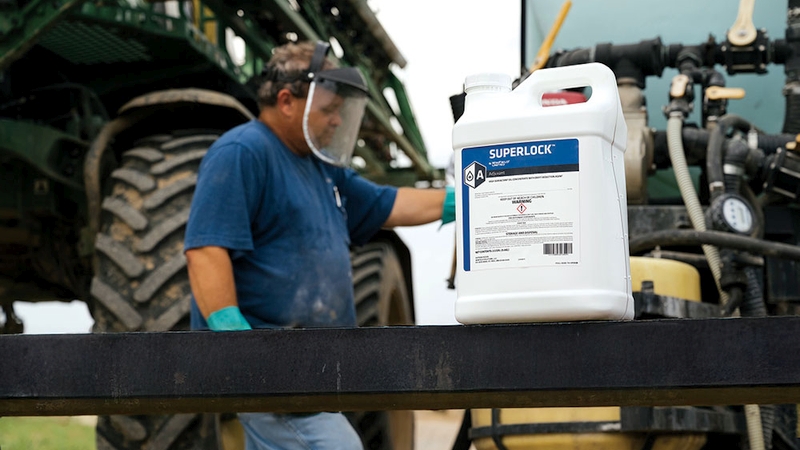
One standout option for drift mitigation is SuperLock™ adjuvant. WinField United has a long history of developing solutions for growers, including DRAs. SuperLock builds on that foundation, leveraging advanced analytical tools and experts deeply versed in drift and spray droplet behavior. The result is a single formulation that combines a high surfactant crop oil concentrate with proprietary drift reduction technology; one of the only products on the market with this concentration.
Spandl notes, “SuperLock is a great example of how WinField United is combining technical expertise with practical tools. It gives growers a reliable option for drift mitigation under the ESA strategy without overcomplicating the tank mix.”
Understanding managed areas is also key. If a field is downwind of the field being sprayed, buffer zones may not apply. “It gets a little complex,” Spandl admits, “but once you’ve done a few, you can follow a simple decision tree. Look at the label. Do buffers and ESA mitigations apply? If so, go to the EPA website to see if you’re in a pesticide use limitation area (PULA) with endangered species. Then, address mitigations for runoff and drift.”
To simplify the process, the EPA has launched the Pesticide App for Label Mitigations (PALM) tool. It walks users through a series of questions to determine which mitigations are required and whether buffer zones apply.
“There are good resources out there,” Spandl says. “CPDA, ASA, CLA, and WSSA have all put out training materials. There’s a decision tree and other tools available. We just need to start building awareness over winter before sprayers hit the field.”
Retailers should act now. Review product labels, use tools like TELUS’s in-field app to flag ESA language, and guide growers through field evaluations and equipment adjustments. The goal isn’t just compliance. It’s protecting endangered species while maintaining effective crop protection.
The ESA herbicide strategy isn’t optional. It’s here, and it’s evolving. Retailers and growers who prepare now will avoid last-minute surprises and ensure they’re operating within the law while protecting vulnerable ecosystems.
© 2025 WinField United. SuperLock and WinField are registered trademarks of WinField United.