
Protect High-Value Hybrids From Yield-Robbing Diseases

THE RIGHT STUFF: Recommending not just any product, but the right fungicide with the right adjuvant, can make all the difference in disease control.
In 2025, moisture was extremely prevalent in some areas, and with it, disease pressure. Across the lower corn belt from St. Louis to central Ohio, heavy rains in the early season impacted planting timing, while the central upper Midwest received excessive moisture mid-season. These conditions, paired with high summer temperatures, set the stage for problematic diseases such as southern rust to creep in later in the season.
WinField® United agronomist Darrin Holder cautions that the same thing could happen again: “When all the disease triangle components are in place — the inoculum (disease spores), the host (the plant) and the right environment — disease will likely manifest.”
When the chances for disease increase, he adds, it’s critical for growers to apply fungicides. As input costs rise, some growers will decide against fungicide applications, but Holder argues this could hurt their bottom lines more than help. “When growers manage their fungicide applications efficiently, they’ll have a better chance to curb disease and protect ROI potential.”
Make Mid- to High-RTF Hybrids a Priority
“Late planting will cause corn plants to grow quickly,” Holder says. “Any action taken to keep them healthy and optimize biomass during the period of grand growth up through grain fill is a plus.” He recommends leveraging response-to fungicide (RTF) scores to help growers make the right management decisions. This data, measured in randomized, replicated research trials through WinField United’s Answer Plot® system, makes it possible to determine how a hybrid responds to a fungicide application.
According to Holder, “Hybrids with high RTF scores respond greatly to a fungicide application, so you may suggest growers prioritize those acres with their available fungicide dollars to achieve the greatest ROI potential.” This makes it easier for growers to decide which acres they should treat first with fungicide (regardless of disease pressure) and which acres they likely won’t treat.
Which Fungicide Is the Right Fungicide?
When making recommendations, go to growers with a fungicide that will fit both their budget and their disease protection needs. There are many fungicide modes of action, but Holder explains the levels of protection and price essentially fall into three categories:
- Base protection: These are predominantly curative with a bit of prevention in them.
- Additional protection: These fungicides contain a triazole and a strobilurin, offering both good protection and good control.
- Superior protection: These are fungicide products that contain an SDHI component along with a triazole and a strobilurin.
Help Growers Time Fungicide Applications
Even in the absence of disease, Holder encourages growers to consider spraying a fungicide on mid- to high-RTF hybrids. “Doing so can pay off in all yield environments, maximizing their overall ROI potential,” he says. Timing is also key: “The sweet spot for spraying a fungicide on corn is VT to R1. However, if a grower doesn’t have access to an airplane or helicopter, they may not be able to get a ground rig through the field. In this case, suggest an application with a ground rig when corn is in V10–V14 stages.”
Maximize Impact With the Right Adjuvant
With every fungicide application, Holder advises adding a drift-reducing adjuvant to the tank. He recommends MasterLock® adjuvant, which works to deliver fungicides where they need to go by increasing canopy penetration and enhancing spray coverage (which works in both ground and aerial applications).
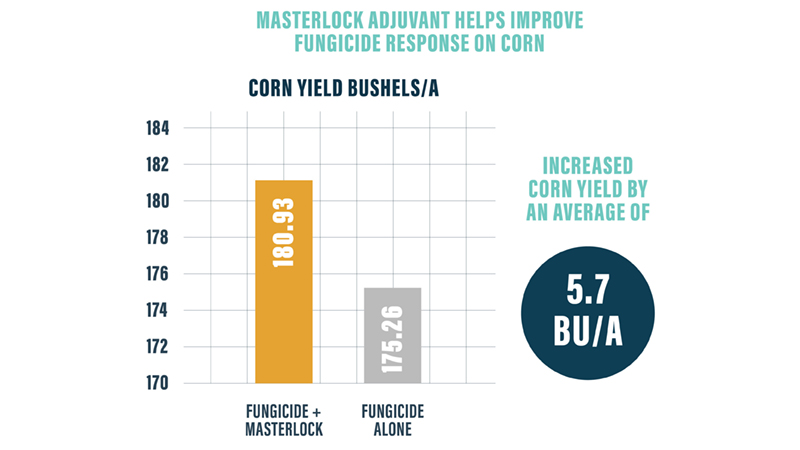
Data from Answer Plot trials showed hybrids sprayed with fungicide and MasterLock adjuvant yielded an average additional 5.7 bu/A, compared to those sprayed with fungicide alone.1
Contrary to what some may think, adding the right adjuvant to the tank mix can pay off in the long run. As Holder states, “With heavy disease pressures and high product costs, losing fungicide due to drift or evaporation is like throwing away valuable crop protection dollars.”
1WinField United. 14 studies, eight states, all fungicides. 2012-2017.