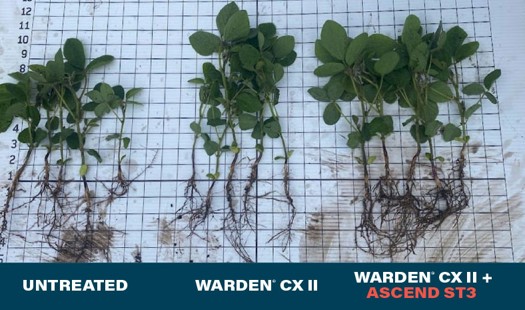
As you build agronomic plans with your growers for the next season, consider how each input works together to address field-specific challenges, support crop performance and optimize ROI potential. Biologicals are not a stand-alone strategy, but they can add another layer to broader seed, fertility and crop protection programs, particularly during the critical early-season window.
Before diving headfirst into a biologicals plan for the next growing season, ask a few intentional questions to help shape the right strategy: What agronomic challenge are you trying to address? Are you looking to fill a gap or complement an existing mode of action? Now is an opportune time to determine whether a biological seed treatment aligns with grower needs and fits within their broader crop management program.
Biological Seed Treatments Bring Benefits to the Planter
At the start of the growing season, especially if conditions are cool and wet, consider a biological seed treatment to help mitigate the risk of early-season stressors and to protect seed investments.
For soybeans, Ascend® ST3™ plant growth regulator (PGR) is optimized for use as a seed treatment and has demonstrated larger root systems, stronger early-season growth and more consistent plant size compared with untreated soybeans in field testing. Its low use rate also allows for simpler seed drying and handling.
Look for Data, Not Just Claims
Once you understand how a biological product could fit into your growers’ agronomic plans, look closely at the data behind it. Trust remains a barrier to biological adoption, especially as the market becomes more crowded and product claims are hard to compare. A single strip trial or standout yield result does not provide the full picture. Instead, look for replicated research across multiple years, locations and growing environments, along with local results that reflect conditions similar to your area. Yield response matters, but so do consistency, practicality and the product’s potential to deliver a positive ROI.
Ascend ST3 is backed by data demonstrating the potential value. In plots showing a positive response over three years, Ascend ST3 PGR provided a 2.7 bu./A yield advantage while helping protect the seed investment from early-season stress.1
Build Agronomic Plans
Biological seed treatments can make a difference when they address a defined agronomic need and complement a complete seed treatment strategy. Starting with a clear objective and a data-backed plan can help you recommend biologicals confidently and maximize the potential return on investment for your growers.