Rethinking Nitrogen Strategy as Pressure Mounts
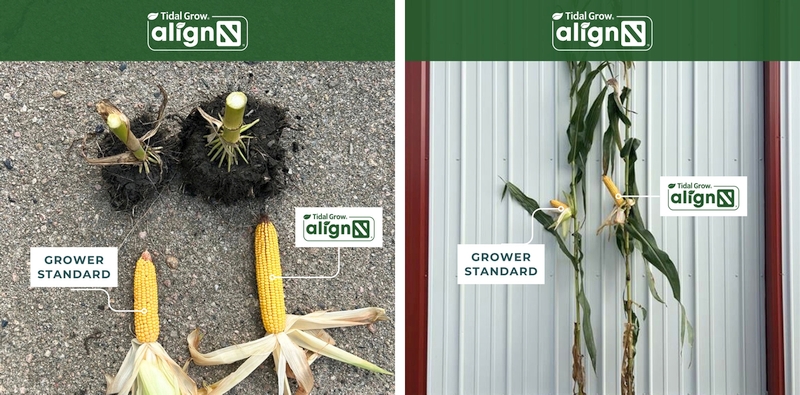
Retailers and growers are entering a season defined by tight margins and tough decisions. Fertilizer prices remain high while commodity prices slide, and the squeeze is pushing many operations to reconsider how and when they invest in nitrogen. According to Trey Cutts, vice president of commercial ag science at Tidal Grow AgriScience, the current environment is accelerating a shift that agronomists have advocated for years.
There are strong economic incentives for the 4Rs (right source, right rate, right time, and right place) right now,” Cutts says. “With fertilizer and commodity prices where they are, one of the best decisions you can make is to avoid applying all your nitrogen upfront.” He adds that geopolitical volatility continues to impact prices, giving growers another reason to push some nitrogen investments to in-season when crops need it most.
Why More Nitrogen Is Moving in Season
The agronomic case is simple. Nitrogen use efficiency improves when the nutrient is applied at a point where plants can immediately absorb it. “It is all about reducing loss and ensuring the nitrogen is available when the plant needs it,” Cutts explains. Stabilizers and inhibitors help, but timing still plays the main role in performance. Crop demand increases through reproductive stages, long after most equipment can safely pass through a field.
That timing gap has left many growers with few effective late-season options. Traditional foliar products often burn leaves or fail to penetrate them. Volatilization inhibitors reduce loss but do not improve uptake into plant cells. This leaves nitrogen stranded on the surface instead of being converted into amino acids and proteins that drive yield.
A New Tool for Late-Season Delivery
Cutts explains that challenge is what motivated Tidal Grow to develop alignN®, their encapsulated urea technology designed for direct leaf penetration. “We created a urea molecule that is highly effective at leaf absorption,” he says. “It gets nitrogen where the plant needs it, and it allows growers the option to apply later in the season, even with a fungicide pass.”
What makes alignN different, Cutts says, is that it can serve as a meaningful part of a core nitrogen plan instead of just a small supplement. That change allows growers to adjust early nitrogen applications and reallocate it to the timeframe when crops can use it most effectively. Compatibility also matters. “It is an easy tool that can go in the tank with herbicides, fungicides, and other inputs,” he says.
Guidance for This Season
Cutts emphasizes that growers should assess new nitrogen tools using real data. Since field conditions vary widely, results from just a few locations aren’t sufficient. “Look for large data sets,” he advises. Tidal Grow conducted trials on more than 10,000 acres with alignN in 2025 across different conditions, timings, and nitrogen programs. The aim was to build farmers’ confidence in how the product performs in various management scenarios and growing environments.
He encourages retailers to help growers reassess their nitrogen budgets and consider how newer technologies can support split applications without adding complexity or requiring new equipment. Many operations can adjust their programs by shifting some of the early nitrogen to a later application that aligns with crop demand.
Cutts sums it up simply. “Growers know in-season nitrogen is a good practice. They just need tools that make it practical.”