
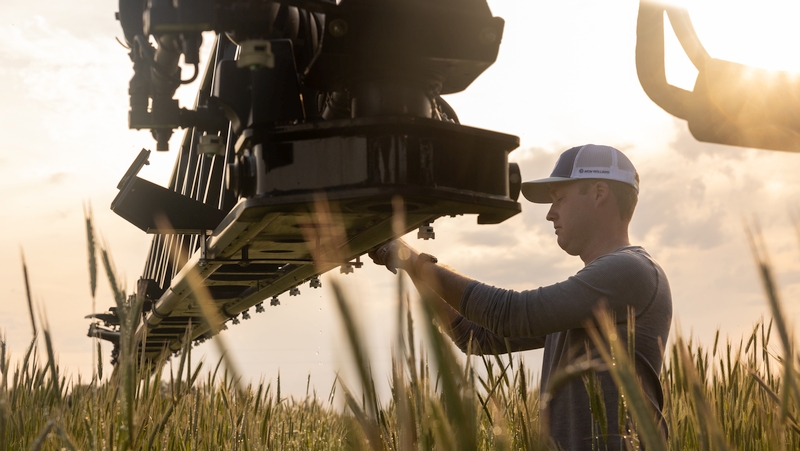
For many growers and custom applicators, the pressure to modernize creates a false choice: either invest in precision technology or replace equipment that still runs well. According to Andrew Newsum, a regional precision manager at Raven Industries, a Brand of CNH, that framing misses the point.
“The biggest misconception people have is cost,” Newsum says. “Not just the cost of equipment, but the cost of not having precision technology.”
That cost shows up in wasted inputs, uneven applications, missed yield, and inefficiencies that compound quickly when margins tighten. Flat-rate applications might be familiar, but it no longer reflects how farms operate today. Precision retrofits offer a way to close that gap without the need to purchase new iron.
“You don’t need a brand-new, three-quarter-of-a-million-dollar sprayer to do site-specific ag,” Newsum explains. “You can use older iron and upgrade it to be as close as possible to a new machine.”
Why Retrofitting Works
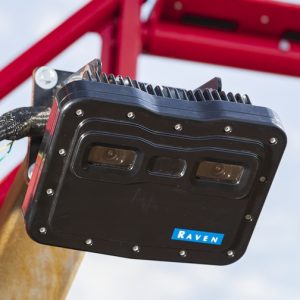 Modern precision systems can be layered onto legacy sprayers in phases. Guidance, rate control, section control, variable-rate application (VRA), and pulse-width modulation (PWM) can be added over time, spreading investment across seasons while delivering returns along the way.
“You don’t have to do one massive upgrade,” Newsum says. “You can buy a field computer GPS and steering the first year, add variable rate the next year, then PWM and Raven’s VSN® Visual Guidance after that.”
Steering is often the logical starting point. Eliminating skips and overlaps has an immediate impact on accuracy and yield potential. “It’s really hard to grow corn if you skip a row,” Newsum notes.
From there, section control reduces overapplication on headlands and irregular field edges. PWM systems take this a step further by allowing individual nozzle control, like Raven’s Hawkeye®2 system.
“With PWM, every single nozzle on your sprayer is a section,” Newsum says. “If one nozzle is hanging over a ditch, it can shut off without affecting the rest of the boom.”
That level of control improves more than coverage. It also limits drift, maintains consistent droplet size across speed changes, and provides turn compensation that traditional systems cannot match.
“The chemical is doing more for you and actually doing its job,” Newsum says.
Farming Every Acre
Precision upgrades shift how decisions get made in the field. Rather than treating a field as one uniform unit, site-specific application allows growers to respond to variability within each pass.
“We’re going to farm every acre, not just every field,” Newsum emphasizes.
Variable rate technology enables prescriptions based on soil data, yield history, or scouting insights. When that information flows seamlessly between machines and agronomic partners, its value increases.
“Data is huge,” Newsum says. “I don’t care if you’re a Fortune 500 company or a 500-acre farmer. Every decision you make should be data driven.”
Connectivity platforms, like Raven Slingshot® allow application data to move from the machine to the cloud, where agronomists can analyze performance and push updated recommendations back to the sprayer.
“A lot of farmers don’t realize how much of a gold mine they already have,” Newsum says. “That data is sitting on the tractor, and a lot of times it just gets deleted.”
Consistency Across Mixed Fleets
For retailers and custom applicators, retrofitting legacy equipment solves another problem: consistency across a mixed fleet. Different machines, brands, and model years can create uneven application quality and increase operator training demands.
“If you’re using different levels of technology, you can’t ensure a consistent application across your fleet,” Newsum says.
Aftermarket precision systems help standardize performance inside the cab, even when the machines themselves differ.
“As long as the technology is the same, the operator can jump into a different sprayer and still deliver the application they’re known for,” Newsum says. “It flattens the playing field.”
That consistency builds customer confidence and reduces reliance on operator experience alone, without eliminating the need for skill.
Beyond the Sprayer
Precision retrofits are not limited to liquid application. Many of the same technologies apply across the operation.
“We can optimize planters, spreaders, side dress rigs, and anhydrous applications, basically every piece of equipment on your farm” Newsum notes. “Manual valve control is a thing of the past. Today, it’s automated and variable rate.”
The takeaway is simple. Modern precision technology does not require starting over. For growers and retailers willing to upgrade strategically, legacy equipment still has a long runway of performance left.
“The money people think they’re saving by not upgrading. That’s often the money they’re leaving on the table,” Newsum concludes.