Biostimulants Move from Add-On to Essential Tool
Biological products have surged in adoption as growers look for tools that improve crop performance without adding complexity or risk to their programs. But the term biological covers a wide range of solutions, and not all of them operate in the same way. Biostimulants, in particular, are carving out a long-term role because of how they interact with the soil microbiome and supportother inputs already on the farm.
Chad Bush, vice president of commercial for PhycoTerra® explains, “Growers are using many tools to protect yield potential. What they often need is a way to unlock more of that potential from the resources they already have.” That idea has fueled renewed interest in biostimulants, especially those that focus on feeding the microbial workforce already present in the field.
What Sets Biostimulants Apart
While biopesticides target pests and biofertilizers supply nutrients, biostimulants strengthen the plant’s ability to use what is already in the soil. They support resilience under stress and improve the efficiency with which a crop interacts with its environment.
PhycoTerra is built on that principle. It is a microbial food source, not a live organism. It works by feeding native and applied microbes so they can function at higher levels. Bush notes, “If you want biology to work, you have to feed it. Many growers are adding microbial products but skipping the step that drives real performance.”
By activating bacteria and fungi early, growers set the stage for more reliable nutrient cycling, stronger roots, and more balanced soil function. That activity is what helps unlock yield potential across systems, soil types, and management styles.
Why Biostimulants Are Seen as Foundational
More retailers view biostimulants as a base layer because they improve the efficiency of everything else in the program. Fertility, crop protection, and biologicals all benefit when the soil biology is active and abundant.
Adding biology without feeding it often leads to inconsistent or underwhelming results. “It is like parking a new tractor in the field with no fuel,” Bush says. “The technology might be impressive, but you are not getting performance.”
PhycoTerra supports microbes across key zones of influence, including the seed, root zone, foliage, and residue. This broad reach reduces friction across the season and gives every pass a better chance to deliver value.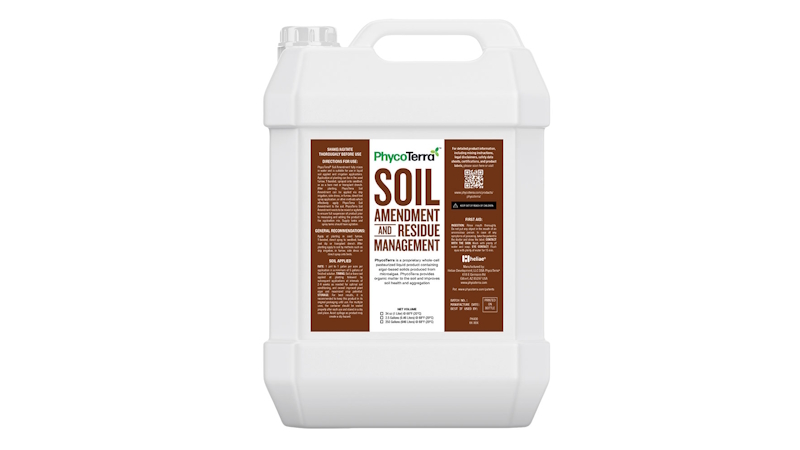
Solving the Consistency Question
Biological consistency remains a concern for many growers. Temperature, moisture, organic matter, management history, and soil texture all influence microbial activity. That variability makes it hard to trust products that rely solely on adding new organisms.
A biostimulant approach is different. Feeding native biology means supporting organisms already adapted to local conditions. PhycoTerra was designed around this idea. It activates both native and introduced microbes, which helps new biological products perform more reliably.
“It is critical for us to set clear expectations,” Bush says. “PhycoTerra is not a silver bullet, however, it is a tool that increases the activity of biology. As a result, crops can reach more of their potential in real field conditions.” Retailers and growers often respond well to that message because it sidesteps overpromises and focuses on repeatable value.
 “Growers are using many tools to protect yield potential. What they often need is a way to unlock more of that potential from the resources they already have.”
– CHAD BUSH, PHYCOTERRA
What Retailers Should Look For
Retailers evaluating biostimulants should prioritize performance data, compatibility, and ease of use. Products need to integrate cleanly into existing programs with low operational friction. They should also show consistent results across years, locations, and environments, not just in isolated standout trials.
Support matters too. Retail teams need confidence in how to position each product. “Your reputation is tied to the recommendations you make. A good partner makes sure you have the knowledge and support to stand behind those decisions,” Bush adds.
As biological programs mature, retailers are assembling systems rather than individual product lines. The strongest biostimulants prove they can fit, perform, and scale year after year. PhycoTerra aims to help build that foundation by feeding the biology that drives healthier, more efficient, more resilient crops.