Albaugh Accelerates Its Insecticide Expansion
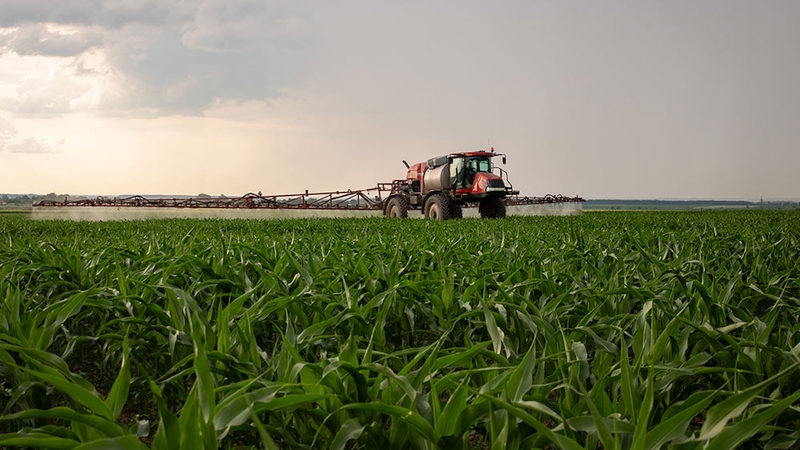
Albaugh built its reputation on herbicides, but the company’s insecticide, miticide, and fungicide portfolio has surged over the past six years. According to Andy Bogue, director of sales, U.S. Crop Protection at Albaugh LLC, the growth reflects founder, and Iowa farmer, Dennis Albaugh’s original intent to build a broad, reliable generic crop protection company.
“You have to go back to the visionary part of Dennis Albaugh,” Bogue explains. “In 1979, he started selling 2,4-D with the aim of providing a quality generic herbicide for farmers like himself. But he had a vision that went beyond just 2,4-D.” That mindset shaped the company’s long-term direction, including the decision to expand production with the purchase of a facility in St. Joseph, Missouri, in 1991. The larger site created space, capacity and technical depth that Albaugh would later leverage for insecticides.
For years, insecticides accounted for a small share of the overall portfolio. That changed quickly. “When I came here in 2019, we had two insecticides,” Bogue says. “Hexythiazox and imidacloprid. That was our entire offering.” By the end of 2025, the company had grown that list to 11 active ingredients, including lambda cyhalothrin, oxamyl, methomyl, bifenthrin, abamectin, bifenazate, and the newest additions, chlorantraniliprole (Exceliprole® 400SC and Eventex™ 400SC), methoxyfenozide (Invicar™ 2SC), and indoxacarb (Indolex™ 1.25 EC). “We went from two in 2019 to eleven in six years,” Bogue notes. “It is an execution of the owner’s vision and where our senior management is focused.”
Strategic Drivers Behind the Growth
Albaugh’s expansion into insecticides builds on a broader diversification strategy that began years earlier. In 2003, the company entered the copper business in Mexico, which opened new markets in U.S. tree nuts and other specialty crops. That move demonstrated Albaugh’s ability to support categories with more variable demand patterns and more complex logistics than broadacre herbicides.
A major catalyst in recent years was the Rotam acquisition. “Rotam was a strategic initiative,” Bogue says. “When we completed the acquisition here in the United States, it made a big difference  for us with the addition of methomyl, oxamyl and abamectin.” Rotam also strengthened Albaugh’s sulfonylurea herbicide portfolio and expanded its global reach, giving the company more flexibility in sourcing, registration and technical support.
Along with a growing portfolio, Albaugh is also well-positioned for the future with its North American manufacturing home in St. Joseph, Missouri. “We have a 75-acre footprint with more than 600,000 square feet under roof, including manufacturing, state-of-the-art lab facilities, synthesis and esterification capabilities, and insecticide and fungicide formulation,” Bogue says. “Dennis was very strategic in choosing this location. It is right in the heart of the Midwest and gives us a lot of operational and logistical advantages to efficiently serve customers across the country. And we have room to grow.”
The Urgency Behind Insect Control
The demand pattern for insecticides differs significantly from that of herbicides, and retailers feel that difference sharply. Bogue speaks from experience. “I farmed in the eighties,” he says. “One thing you can count on is that weeds are going to show up. All you need is a rain and the weeds will come.”
Insects, by comparison, are unpredictable. Some seasons bring intense pressure. Others bring almost none. “Your pest is not always going to show up,” Bogue notes. “For insecticide manufacturers like Albaugh, you have to be willing to carry inventory.”
This unpredictability creates urgency, especially when damage becomes visible. “With insects, it is not hard to find a chewing insect in cotton or soybeans,” Bogue says. “The damage is very visual. Anytime you can see plant damage due to insects, it becomes a highly emotional moment.”
To support retailers during those high-pressure spikes, Albaugh stages inventory in key regions, including the West Coast, Texas, Georgia, Florida and along the East Coast. “You have to have it where they want it when they want it,” Bogue says. “That is the only way to support the channel.”

Investments in Production, Logistics and Sourcing
Albaugh’s insecticide expansion depends on more than new active ingredients. The company has been strengthening its supply chain to match retail expectations for reliability. As a family-owned business headquartered in Ankeny, Iowa, Albaugh makes sourcing decisions through a compact leadership group that remains closely tied to the needs of their retailer customers, through their distribution partners. “We have a really good ear to the ground,” Bogue notes. “Our relationships help us determine which direction to go.”
Dual sourcing is a central piece of the strategy. Albaugh aims to be at least dual-sourced for every active ingredient, whether herbicide, insecticide or fungicide. “Being single-sourced and from one supply country can really limit your flexibility,” Bogue says. Tariffs have made it even more important to maintain alternatives.
Albaugh also invests heavily in logistics. One trucking partner places a full-time employee onsite in St. Joseph to manage freight and container flow. “Everything is very well planned out,” Bogue says. “It helps us maintain service levels when demand shifts quickly.”
A Portfolio Built for Practical Needs
As Albaugh expands its insecticide and miticide footprint, the company remains focused on fundamentals. It is securing raw material flexibility and keeping inventory close to the regions that depend on it. It is also staying aligned with Dennis Albaugh’s founding mission of delivering high-quality generic alternatives that retailers and growers can rely on, even in volatile seasons.
“We want to provide quality generic alternatives to a channel that needs them,” Bogue concludes.