
When it comes to maximizing yield potential in corn and soybeans, few things are more important than maintaining proper nutrient balance throughout the growing season. According to Isaac Schroeder, market development agronomist with WinField® United, even with a solid pre-season fertility plan, environmental factors, crop stress and soil conditions can lead to in-season nutrient deficiencies that may limit yield potential.
Fortunately, there are diagnostic tools to help identify deficiencies in-season, and with timely action, you may be able to help mitigate them.
Identifying Nutrient Deficiencies In-Season
The most reliable way to detect nutrient deficiencies is through tissue sampling. Ideally, tissue samples should be pulled about 7–10 days before any planned trip across the field to maximize the application efficiency of in-season nutrients.
“In corn, I recommend starting tissue sampling at the V4–V5 growth stage and continuing every two weeks in intensively managed fields to track trends. Starting early allows growers more flexibility to include foliar nutrients with planned herbicide and fungicide passes,” Schroder explains.
“For soybeans, begin sampling at V3–V4 to gauge nutrient status. Pulling another sample at R1–R2 before a planned fungicide pass provides an opportunity to supplement nutrients ahead of pod fill, if necessary.”
If you can’t conduct tissue sampling, visual scouting can also help identify a nutrient deficiency – but it’s not always straightforward. Many deficiencies have similar visual symptoms, making it hard to diagnose accurately without a tissue analysis. Visual signs can serve as a red flag, indicating the need for deeper investigation.
Nutrient Deficiencies in Corn and Soybeans
Schroder has analyzed thousands of tissue samples in the areas he covers in southwest Indiana, southern Illinois and southeast Missouri. Through his analysis, some nutrient deficiency trends have become apparent in corn and soybeans. “Corn, for example, tends to be highly responsive to or deficient in zinc, boron, manganese and nitrogen (N).” Schroder says.
In his experience, even with solid pre-season applications, many fields fall short on critical nutrients in-season. Schroder notes, “Nutrient deficiencies aren’t always about insufficient fertilizer. Environmental and soil conditions can limit nutrient availability, including:
- Compaction or insect damage that inhibits root growth.
- High or low soil pH (ideal pH is around 6.5).
- Nutrient imbalance (an excess of one nutrient can tie up another).
- Low organic matter or overall fertility degradation.
- Cool soil temperatures, which can slow nutrient uptake.
Addressing these foundational issues helps reduce the risk of in-season nutrient deficiencies but doesn’t eliminate them entirely.”
Finding Effective In-Season Solutions
So how can you respond in-season when a deficiency is identified? Depending on which nutrients are deficient, you might need different courses of action.
Macronutrients (N, P, K) are best addressed before the season via soil fertility planning, but N can be managed in-season with a sidedress or topdress application.
Pre-season nutrients like K can be supplemented in-season if conditions inhibit uptake. Secondary nutrients, including calcium and magnesium, generally are applied in larger amounts and managed before planting. However, sulfur is an exception. It can be co-applied with nitrogen to support uptake throughout the season.
Plants need micronutrients, including zinc, manganese and boron, in smaller quantities, making them ideal candidates for an in-season foliar application. These micronutrients can be efficiently applied with herbicide or fungicide passes, helping minimize additional application costs.
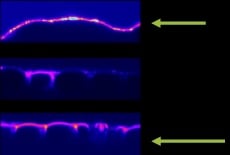
MAX-IN® Ultra ZMB® Plus micronutrient addresses three of the most common deficiencies (zinc, manganese and boron) in corn and soybeans with one simple application. It is formulated with CornSorb® technology, which increases humectancy so the product stays wet on the leaf longer, allowing for a longer window of absorption and greater nutrient uptake. It’s designed to integrate seamlessly with crop protection passes, making it easy to correct deficiencies without additional trips across the field.
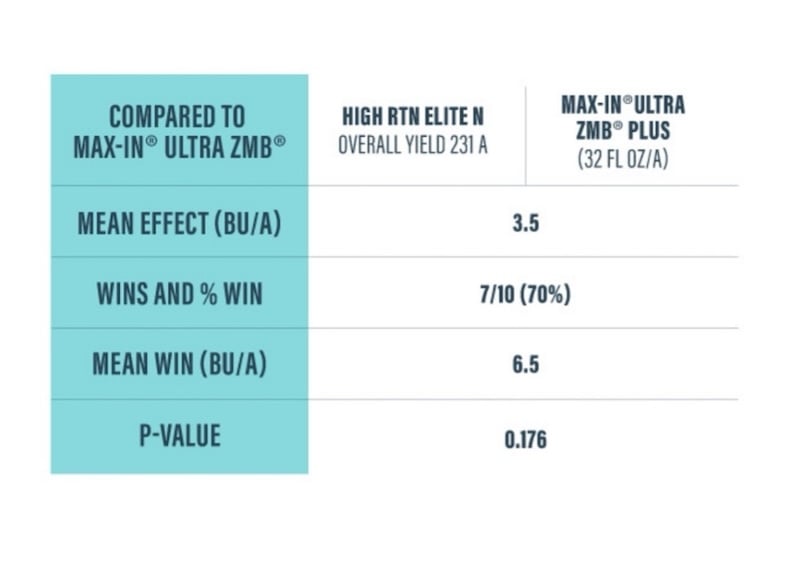
Schroder emphasizes, “In plots showing a positive response, MAX-IN Ultra ZMB Plus micronutrient can help improve corn yield potential by up to 6.9 bu/A.1”
Foliar Nutrient Application Timing
One of the most responsive times for nutrient uptake in corn is between V8 and tasseling. Schroder notes, “This is when the plant is rapidly building biomass, and nutrient demands are at their highest. Applying foliar nutrients at this time helps ensure the plant has the nutrition it needs to maximize yield potential.”
In soybeans, the reproductive stages are a great time to consider foliar nutrient applications along with a fungicide application.
Support Your Crops with the Right Tools
Schroder says the key message to share with customers is simple: “Don’t let your plants have a bad day.” A single period of stress caused by nutrient deficiency can knock yield potential off course for the entire season.
By tissue sampling and identifying in-season needs, you can take a proactive, data-driven approach to crop nutrition. Coupled with products from the MAX-IN foliar nutrient lineup, you can have a practical, ROI-focused path to healthier crops and stronger yields for growers.
1 Based on 8 trials across Answer Plot locations, 2024.
All photos are either the property of WinField United or used with permission.
© 2026 WinField United. Important: Before use always read and follow label instructions. Crop performance is dependent on several factors many of which are beyond the control of WinField United, including without limitation, soil type, pest pressures, agronomic practices and weather conditions. Growers are encouraged to consider data from multiple locations, over multiple years and to be mindful of how such agronomic conditions could impact results. WinField, MAX-IN, ZMB and CornSorb are trademarks of WinField United. All other trademarks are the property of their respective owners.