How Advances in Micronutrient Technology Are Helping Meet Increased Demand

It is of little surprise that technology and understanding surrounding micronutrients has led to increased usage.
“We continue to get better in delivering products capable of providing optimal nutrition to support increasing yields,” says Ben Hilgers, Marketing Manager, WinField United. “Taking that systems approach and anchoring recommendations in agronomy has helped us and our retailer partners educate and grow the category with growers.”
CropLife® magazine asked a number of manufacturers about their expectations for these inputs and what’s led to growth of the segment.
The Past Year
“I didn’t know what to expect in 2024; I was watching for the ‘stickiness’ of micronutrient usage on the backside of a very profitable period for agriculture,” says Galynn Beer, National Strategy & Product Management Lead, AgroLiquid. “It’s easy for growers to see the value of micros in $7 corn, but would that stick at sub-$5 corn? The practice of using micronutrients did indeed stick which was good news. There is better awareness of the benefits of using micros, which is limiting the swings in volume we used to see.
“As the industry continues to push yields higher, there has been recognition that a good balance of nutrients that includes micronutrients lessens the impact of stresses such as dry conditions,” Beer continues. “The addition of micronutrients in a crop nutrition plan can help buffer against adverse growing conditions. I don’t think that dry periods are as catastrophic as they used to be. Balanced fertility helps buy time for moisture.”
For more than seven decades, BRANDT has provided growers with a variety of crop inputs.
“In 2024, we anticipated a growing demand for micronutrients, particularly among farmers aiming to achieve higher yields,” says Marcos Loman, Technical Agronomist. “As crop yields increase, the demand for micronutrients rises accordingly, given their vital role in sustaining plant health and optimizing productivity. Recently, there has been increased focus on these inputs — not only for their yield-boosting properties but also for their ability to mitigate plant stresses such as drought and heat. With these stressors becoming more frequent, micronutrients have proven indispensable in helping crops endure and recover from such challenges. As the year progressed, these factors collectively drove significant interest in and reliance on micronutrients, aligning well with my initial expectations.”
Indispensable is a fine way to describe how micronutrients are used.

Fred Nichols, Huma.
“Every farmer in America is looking to optimize nutrient use efficiency, especially for this upcoming year,” says Fred Nichols, Chief Sales and Marketing Officer, Huma. “And it all comes back to the 4Rs. How and when a crop input is applied is just as important as what is applied. Same goes for micronutrients. As growers continue to fine-tune their programs, opportunities will continue to emerge for micronutrients.”
The team at The Andersons were pleasantly surprised with the expectations heading into last year.
“In 2024, we anticipated that the demand for micronutrients would be lower, primarily due to the decline in crop prices and a downturn ag cycle,” Chuck Anderson, Vice President and General Manager, Nutrient and Industrial. “However, much to our surprise, the market for micronutrients remained robust. The strong demand for micronutrients in the 2024 season suggests that farmers recognize the importance of micronutrients in enhancing crop health and yield, even in a challenging economic environment.”
Following the changes COVID produced during the past few years, manufacturers are hoping for more traditional routines.
“In my expectations for 2024, I was looking forward to more of a return to normalcy,” says Jake Socherman, General Manager, Micronutrients, Verdesian Life Sciences. “2022 was a ‘buy it if you can get it’ mind-set, and that seems like a lifetime ago. 2023 was a bit of a reset year, where many were right sizing their inventory levels and cost of goods. As we entered 2024, it seemed like things were getting back on track and now at the end of 2024, it seems that almost everyone has corrected their inventories and are now buying on a much more conservative, just-in-time basis.”
That sentiment applied to retailers as well.
“As a cooperative, WinField United measures success by the success of both us and our retail owners,” says Hilgers. “We anticipated pressure on the category given the commodity market trend. Our system, including retail had robust performance delivering quality agronomic solutions as well as new innovation to their growers.”
Improving Science
“Improvements are incremental, but over time have been significant. One problem with micronutrients has been compatibility,” AgroLiquid’s Beer says. “Great strides have been made to make combinations of micronutrients possible without causing filter plugging issues that would slow down applications.”
As the understanding of the benefits expands, the attitude toward them has evolved.
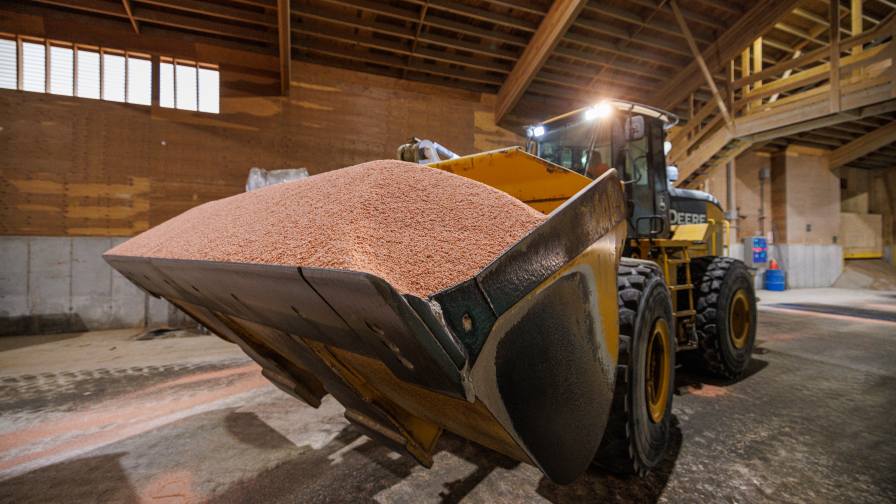
Koch WOLF TRAX DDP micronutrients uniformly coat the entire surface of dry fertilizer granules. The product’s innovative formulation delivers nutrients in closer proximity to growing roots, allowing crops to consistently access the right rate throughout the growth cycle.
“As the industry has grown, the role of micronutrients has changed from, ‘this is nice to have,’ from ‘this is necessary for the health of my crop and my bottom line,’” says TJ Bingham, Technical Agronomist, Koch Agronomic Services. “More growers have come to realize micronutrients are critical to improved plant health, increased yields and sustainable crop production. The changing role — from add on to key component — has led to greater focus on research to understand micronutrient deficiencies, development of efficient application methods, and incorporation of micro-nutrient-rich varieties through plant breeding.”
BRANDT’s Loman agrees.
“The science and technology behind micronutrients have advanced significantly in recent years, particularly in nutrient delivery systems,” Loman says. “These advancements have revolutionized the way micronutrients are applied, improving both the efficiency and effectiveness of applications. The integration of enzymes with micronutrients has further boosted their performance, helping to break down organic materials in the soil and enhance nutrient availability for crops. This versatility allows for multiple application methods, including planter box treatments, soil or in-furrow applications, and foliar sprays, all of which can be tailored to specific farming practices and crop needs, providing farmers with more flexible and effective options for boosting crop health and productivity.”
Part of the growth surrounding micronutrients is due to the increased crop yields.
In the past few years, micronutrients have “more universal appeal over a greater range of crops,” says Huma’s Nichols. “Not too long ago, adding micronutrients to soybeans was almost unheard of. Guided by tissue sampling, more soybean fields are now spoon-fed throughout the season. The growers breaking yield barriers are doing so with time-sensitive, balanced nutritional programs, where micronutrients play a big part.
“Delivering nutrients through the leaves has traditionally been a challenge for many growers,” Nichols continues. “That’s where carbon-based products can play a key role. Our Micro Carbon Technology, developed from humates, penetrates leaves quickly and delivers micronutrients to the crop in less than one hour. This not only aids with timing and optimizes nutrient investment, but it provides rain-fast assurance.”
Driving The Marketplace
“The three areas of influence we consider are agronomics, economics, and externalities, such as weather,” says WinField’s Hilgers. “Some areas of the country were harder hit with a wet spring this past year that negatively impacted crops and the micronutrient segment. Economics will also drive some considerations of investments into crops and how much dollars will be invested in plant nutrition.
“We’re seeing more combination and crossovers between biostimulants and micronutrients,” Hilgers continues. “This can be a really good thing where both products drive value. We can say that this can be difficult to navigate and know which products out of the thousands of solutions actually work. To help, WinField United launched the BioVerified designation this past year with the intent of providing a focused list of products that our retailers know were tested to meet our rigorous for both growers and retailers.”
For micronutrients those growers and retailers demand positive expectations. Delivering on those expectations has been key to driving market growth.
“As the micronutrients market has continued to grow, and more growers recognize the importance of micronutrients in growing a healthy crop, we’ve also seen increased interest and adoption of the 4R nutrient stewardship practices — Right Source, Right Rate, Right Time, Right Place,” Koch’s Bingham says. “This goes hand-in-hand with the demand for more sustainable and profitable farming solutions.”
According to The Andersons, the 2024’s micronutrient segment was influenced by several key factors.
“Wet weather in the Midwest led many growers to shift their focus toward fungicide applications, which may have influenced growers to include micronutrients in their foliar passes,” Anderson says. “Overall, input costs were reduced this year, making the pricing of micronutrients more palatable for growers. This reduction in costs allowed some flexibility in budgets, enabling the continued use of these essential inputs despite other pressures.”
Growers expect micronutrients (along with every other crop input to deliver a return on investment.
“I expect that 2025 planting season to be ‘fast and furious,’” says Verdesian’s Socherman. “With a lot of fields yet to be spread, this will make for a compressed spring season. We will see a lot of early work in the spring and a lot of long days as we get ready for 2025. Nothing new for our farmer and retailer friends in agriculture!”
BRANDT shares that concept.
“For the 2025 season, we anticipate continued growth in demand for targeted and effective micronutrient products as growers increasingly focus on improving efficiency and maximizing yields,” says BRANDT’s Loman. “The micronutrients marketplace is currently being driven by the increased adoption of precision agriculture and the growing demand for solutions tailored to specific crop requirements at various growth stages. These trends enable farmers to optimize input efficiency, enhance yields, and address the unique needs of their crops.”
When it comes to micronutrients’ growth, Huma’s Nichols asks an important question.
“Given today’s economic landscape, is ROI enough?” he asks. “Farming is both a capital intensive and cash-flow challenging business. Products are now competing for a share of (growers’) wallets. In many cases, if a new product is allowed on the farm, an existing product must be removed or reduced. Farmers are taking an enterprise approach when evaluating what products they’ll purchase. Versatility will play an even greater role. Micronutrients are no exception. For example, if you can offer a micronutrient package that delivers a biostimulant effect on crops, you can provide greater utility by delivering an additional yield bump. That’s what our humate-based micronutrient products offer.”
Like many aspects of ag, the more end users understand about the products they use the more likely they are to use them. In other words, education is key to micronutrient growth.
“A better understanding of the role of micronutrients, along with the availability of micronutrient products that allow applications to be incorporated seamlessly into regular operations, such as planting, side-dress, or fungicide applications, are expanding market opportunity,” says AgroLiquid’s Beer.
“Ease of application is key to getting growers to utilize micronutrients. Fertilizer innovation is difficult in that you need to balance a new and exciting micronutrient creation with the cost to the grower,” Beer continues. “It’s possible to make a product that will consistently result in a yield gain, but at lower grain prices sometimes the yield gain doesn’t result in additional profit. It isn’t about producing more revenue; it’s about producing more profit for growers. At AgroLiquid, our threshold is to produce more profits a very high percentage of the time. We must meet our own internal thresholds for us to make additions to our micronutrient portfolio.”
Final Thoughts
AgroLiquid: “Information is your friend; there isn’t anything that works the same for everyone,” Beer says. “Consult with multiple people and evaluate your situation when developing a plan for micronutrients. Informed decisions will be key to surviving the low grain prices. At AgroLiquid, we try to have a checks-and-balances approach to fertilizer programs, and I hope growers will reach out and test our ability to help navigate fertilizer decisions for 2025.”
BRANDT: “Although required in small quantities, micronutrients are vital for maximizing crop performance,” says BRANDT’S Loman. “However, their highly reactive nature makes it challenging to ensure proper uptake by plants, even in small amounts.”
Huma: “Micronutrients are not a one-size-fits all approach. Programs for micros can be customized just like any other crop input,” Nichols says. “For example, foliar sprays are often viewed as the preferred application method of micros, and for good reason. However, at-planting applications should also be considered. In our testing this year, we’ve observed an excellent crop stand, outstanding emergence and germination percentages, and a stronger vigor by using micronutrients at planting.”
Koch: “I encourage readers to consider additional ways to supply micronutrients to their crops,” Bingham says. “For example, micronutrient deficiency is most common with early season risk factors driven by variable weather patterns, cool soil temperatures, and wet planting conditions. A seed-applied nutritional with both macro and micronutrients can help combat these factors to reduce the risk of early nutrient deficiencies and the impact that may have on crop performance.
Verdesian: As farmers decide what they are going to plant, and they begin to formulate their nutritional budget for the 2025 planting season, they need to keep their eyes on their crop yield goals,” Reynolds says. “From there, they can build a nutritional program that delivers at least what their crop target is expected to remove from the soil in that next season. A soil-applied, micronutrient product that performs season-long is the best way to address the potential hidden hunger that absent micronutrients can present.
The Andersons: “Micronutrients are a crucial component of a season-long approach to crop nutrition, providing essential elements that support plant health and maximize yields,” Anderson says. “It’s important to emphasize that micronutrients are not simply trendy; their benefits are well-documented through extensive research and development, offering real-world ROI for growers. At The Andersons, we pride ourselves on being a technology partner of choice, so in 2025 we are making significant investments in our Port Neal, Iowa facility to better serve our customers within the western corn belt and beyond. Our commitment to innovation and collaboration ensures that we provide effective and reliable micronutrient solutions.
Winfield United: “The micronutrient market is dynamic, and each year brings new challenges for what growers need or where deficiencies reside,” says Hilgers.
“If you don’t already, make sure you have the agronomic support to provide the best recommendations to your growers,” Hilgers continues. “Between tissue sampling, understanding how weather will impact each nutrient, field trends, and more, ensure you’re providing the right value-added product at the right time for maximum impact.”
Subscribe Today For
