Fertilizer Management in a Drought: ISU Research Suggests Reducing Fall Fertilizer Applications
The Clean Water in Iowa Starts Here tour reported live from the WHO studio today to share important messages regarding fall nitrogen (N) management. Dr. Michael Castellano, Professor of Agronomy, and William T. Frankenberger, Professor of Soil Science, Iowa State University, spoke about research their lab has done over the last 30 years concerning nitrogen following a drought. Based on prior years soil nitrate levels and precipitation, research shows there is currently higher-than-normal N levels in Iowa soils due to the ongoing drought.
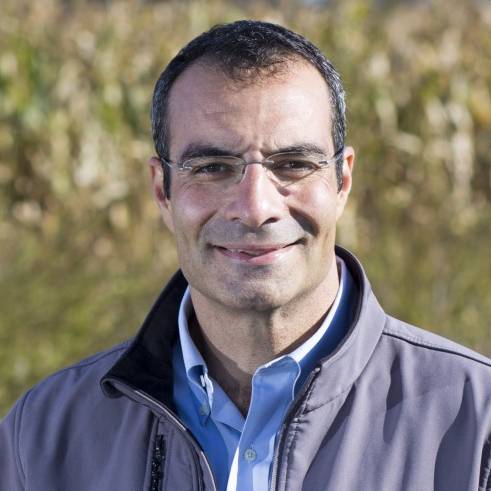
Michael Castellano
“Based on Iowa State University research, we know that during a drought year, the soil retains more nitrogen for a number of reasons,” said Castellano. “Not only does the crop utilize less nitrogen, but there is also a major reduction in the amount of nitrogen lost to leaching and denitrification.”
“As a result, we encourage farmers to have their soil tested before making fall application decisions that not only impact the environment, but also their profitability,” he adds.
Shawn Richmond, Environmental Services Director at the Agribusiness Association of Iowa, encouraged farmers to work with their ag retail partners to consider soil testing for N, reduce rates of fall fertilizer application and consider split rate of spring applications instead.
“Fertility decisions are always important, but especially so following drought conditions. Taking steps this fall like soil tests for nitrates to inform fertility decisions can help with meeting goals for next year’s crop needs,” said Richmond.
Secretary of Agriculture Mike Naig also joined the show to stress the importance of fertilizer management in a drought year. In addition to making smart nutrient management decisions, he encouraged Iowa farmers to utilize cover crop cost share programs.
“Cover crops can help scavenge and hold onto excess nitrogen in the soil so it’s available for the following crop instead of being lost through runoff or leaching,” said Paige Frautschy, Iowa Agriculture Program Director at The Nature Conservancy. “Farmers and their advisors can learn more about conservation practices, like cover crops, that can make their operations more efficient and resilient by visiting 4RPlus.org.
In addition to the important water quality and conservation implications of fall N decisions this year, high fertilizer prices make a compelling economic case as well. “Increasing nutrient use efficiency through improved fertilizer management is a smart thing for farmers to do every year, but in drought years like 2021, it’s imperative,” says Sean McMahon, Executive Director of the Iowa Agriculture Water Alliance. “Farmers have a great opportunity this year to save money by reducing fall fertilizer applications considering the already higher than normal nitrogen levels in our soils due to the ongoing drought. That’s a win-win for farmers’ profitability and improving our water quality.”
Subscribe Today For
