Many ag retailers are working with dry fertilizer facilities that have been in service for decades. Demand continues to evolve, products are becoming more specialized, and customers expect greater flexibility and faster turnaround. Yet building a brand-new plant is not always the most practical answer.
According to Nate Wittmaack, president and COO of Ranco Fertiservice, Inc., the first step is not evaluating equipment. It is understanding what the retailer is trying to achieve.
“The biggest thing, I think, is not even necessarily what we’re seeing when we walk in. It’s really a conversation with the team that’s trying to operate out of that facility and get an understanding of what they want to try to accomplish,” Wittmaack explains.
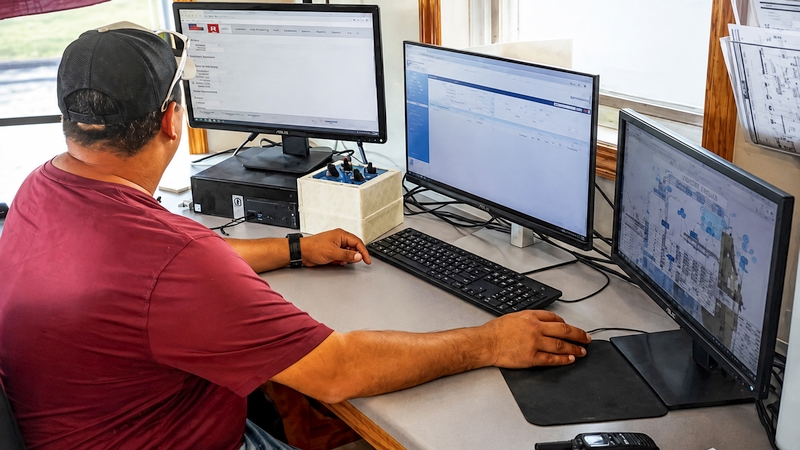
Once those goals are clear, whether the focus is improving throughput, loading efficiency, blend quality, or product flexibility, the facility can be evaluated through a different lens. Ultimately, each improvement should help retailers serve growers faster during peak demand. Ranco’s team often spends hours measuring and modeling existing facilities to identify opportunities that may not be obvious to the people working there every day.
“Sometimes it’s just asking questions that maybe they haven’t asked before,” Wittmaack says. “You get a different set of eyes on the same facility.”
Why Retrofit Projects Often Win
When retailers weigh a facility upgrade against a greenfield project, economics typically favor modernization.
“Almost always, looking at it from a retrofit standpoint is going to be more economical than a whole facility,” Wittmaack notes.
That does not mean every aging facility can meet future goals without significant changes. Instead, Wittmaack describes a spectrum of options. At one end are improvements made entirely within the existing footprint. Next come targeted building modifications that unlock additional capacity. In some cases, a hybrid approach provides the best return.
“There doesn’t have to be a this or that,” he says. “There’s a continuum of building modifications. What can we do inside of this existing facility to optimize its capabilities?”
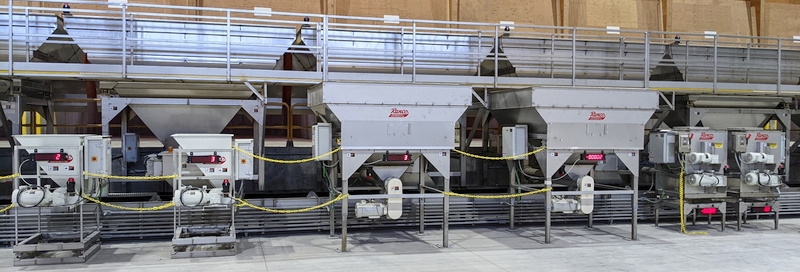
For a longtime customer in Hertford, North Carolina, that hybrid strategy made sense. Rather than investing in a completely new plant, the retailer is upgrading from a legacy blending system to Ranco’s Declining Weigh technology. The project includes adding a concrete pit within the existing structure, allowing larger bins and greater production capacity. The equipment is also selected with future relocation in mind, preserving value if a new facility is built later.
Unlocking Capacity in Existing Facilities
Another example comes from United Co-op in Selmer, Tennessee.
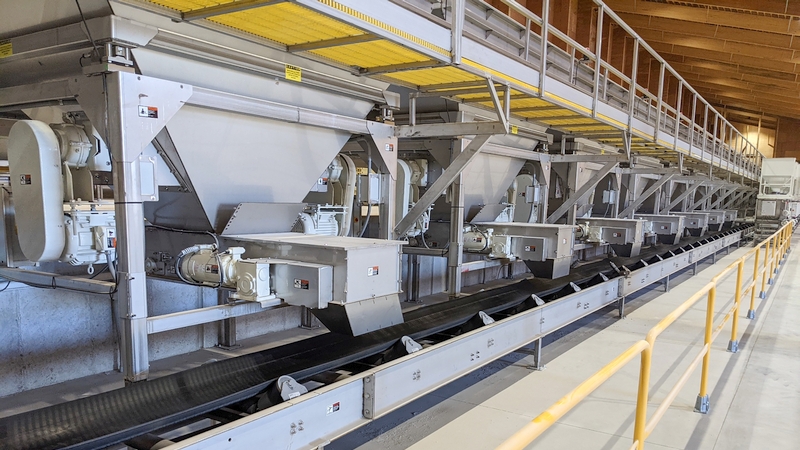
The facility occupied a well-positioned site but relied on two batch mixers that could no longer keep pace with demand. Working within the existing structure, Ranco implemented a modernization project that included targeted building modifications and a new system design.
The result was a substantial increase in output.
According to Wittmaack, the upgraded facility now has the potential to process an estimated 500 to 800 tons per day, compared with less than half that volume previously. Projects like this demonstrate that capacity constraints are not always tied to facility age or location. In many cases, the limiting factor is how efficiently the existing space is being used.
Designing for Flexibility
As fertilizer programs become more customized, flexibility is becoming a core requirement.
Wittmaack says retailers increasingly need systems that can accommodate a wider range of products, including liquids, micronutrients, additives, and emerging specialty offerings.
One approach is incorporating swing bins that can be assigned to different products as demand changes. Another is designing systems that make it easy to add liquid or additive capabilities without major disruption.
Even when retrofit projects are constrained by available space, Ranco looks for ways to create future expansion opportunities. The goal is to give retailers room to adapt as customer needs evolve.
Building for Today’s Needs and Tomorrow’s Opportunities
Future-proofing extends beyond capacity and product flexibility. It also includes making equipment easier to relocate if a retailer eventually decides to construct a new facility.
Ranco’s newer systems use pre-wired MeshDCS technology, reducing field wiring requirements and simplifying installation. That approach can also make future relocation far more practical.
“The ability to pick up and move is way better than it used to be,” Wittmaack emphasizes.
For retailers facing growing demand but are hesitant to commit to a greenfield investment, that portability creates another path forward. Strategic upgrades can improve performance today while preserving options for tomorrow.
The opportunity for many retailers lies in getting more life, more capacity, and better customer service out of the facility they already own.