Drones Shift from Novelty to Trusted Field Tools for Growers
(Can’t see the video? To view it, please accept cookies by clicking
the icon in the bottom-right corner of the screen, or click here.)
In this CropLife Smart Tech video, Luke Ziegler of Central UAS Technologies discusses why growers are moving beyond experimentation and adopting drones for their speed, precision, and ability to operate in conditions where conventional equipment can’t.

From Curiosity to Core Equipment, Drones Earn Their Place in Ag
Drone adoption in agriculture has shifted from experimental trials to practical, day-to-day use. According to Luke Ziegler, national sales development manager at Central UAS Technologies, growers no longer see drones as gadgets. They see them as equipment that must earn its place on the farm.
“Drones are no longer really being referred to as cool technology,” Ziegler says. “They’re becoming operational tools, and the mindset’s changing to them being necessary equipment on the farm.” That shift is driving growers to demand real returns instead of occasional imagery or side projects that never connect to daily decisions.
The operations scaling the fastest treat drones as part of their established spray programs and scouting routines. Ziegler explains that successful users think in terms of acres covered, not flights flown. They use drones to reinforce or replace labor where it matters most. Poor adoption, he adds, usually stems from unclear use cases and insufficient training. “They’re still stuck in the mindset of treating drones as technology as opposed to tools,” he says.
Where Drones Deliver Measurable Value
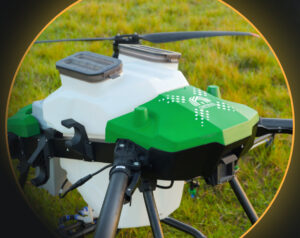 The clearest benefits relate to speed and precision. “The biggest value is the timeliness. It’s getting in the field exactly when it matters,” Ziegler emphasizes. Drones shine when traditional equipment can’t enter a field due to mud, narrow spray windows, steep terrain, or late-season crop development. These situations create real yield risk, and drones allow growers to respond immediately.
Late-season fungicide work remains the most common application. Insecticide treatments, targeted spot spraying, replant assistance, and cover crop work are also growing quickly. Autonomy continues to improve, though Ziegler cautions that it is not hands-off. “This isn’t just a push-the-button-and-walk-away solution yet. There’s always going to be the human factor.” Even so, drones fill gaps that traditional equipment can’t.
What the Industry Still Misses
Ziegler has worked across multiple drone platforms and sees a divide between tech developers and actual farm needs. “There are a lot of companies that build drones and a lot that provide ag technology, but very few that understand the farmer,” he says. Many systems originate from a Silicon Valley mindset instead of the realities of production agriculture.
“Farmers don’t always need more features. They need reliability, they need support,” he explains. If a tool doesn’t save time or improve profitability, “it really doesn’t matter.” Central UAS Technologies focuses on field-proven solutions and practical workflows rather than chasing feature lists. “We start with the farmer’s problem, not the technology,” he notes.
Integration That Matters
As drones connect more tightly with software platforms, it can be hard for growers to distinguish value from noise. Ziegler emphasizes that meaningful integration simplifies decisions instead of complicating them. “Growers don’t necessarily need more data. They need better decision-making,” he says.
Useful integrations include straightforward spray planning, compatibility with existing farm systems, and data that is easy to interpret. Overengineered dashboards and a stack of separate apps create friction. “Features don’t always save time,” he says. “Seamless workflows are going to beat the flashy feature every single time.”
What Growers Should Look For
Ziegler advises buyers to evaluate the company behind the drone as carefully as the hardware. “Buy the solution and support, not just the drone itself,” he emphasizes. Training, onboarding, service, and parts access determine long-term success. Downtime has the highest cost, and cheap equipment often becomes expensive when support falls short.
He points to regulatory guidance, proven field performance, and the long-term cost per acre as the true factors that separate the best partners from the rest. “They’re just another tool, so service and parts availability are absolutely huge going forward,” he concludes.