Drones Move from Trend to Tool on the Farm
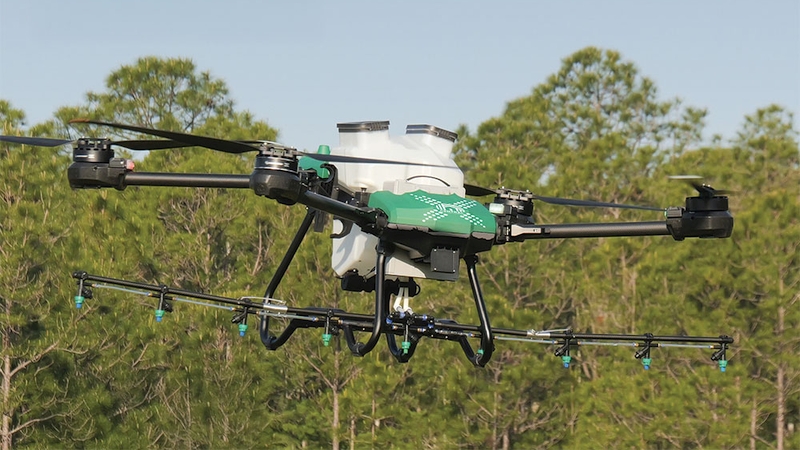
When spray windows tighten and fields stay wet, delays cost yield. That is when drones stop feeling experimental and start solving real problems. “If you’re starting to feel pressure around timing or access, that’s the signal,” says Luke Ziegler, national sales manager at Central UAS Technologies. “Wet fields, tall crops, and tight spray windows make drones a viable tool.”
Scheduling issues push growers in the same direction. Custom applicators cannot always match a farm’s timing, and small-acre jobs slip through the cracks. “It may not be cost-effective for a custom applicator to treat a small patch,” Ziegler notes. “That is where drones take off.” He sees the most serious adopters focusing on return per acre rather than simple cost per acre. “When you start to break down ROI per acre instead of a blanket cost, drones can have a real impact.”
How to Evaluate Your First Drone
The challenge is not a lack of information. It is determining which information is usable. Ziegler stresses starting with regulations. FAA Part 107, state pesticide licensing, and local rules each carry weight and should be addressed before any hardware shows up.
Training comes next. Online videos help operators grasp the basics, but they do not prepare them to adjust droplet size, change flow rates, or manage drift under real-world conditions. “Nothing beats hands-on training,” Ziegler says. He also advises buyers to confirm in-season support before committing. “Every second your drone isn’t in the air is a second you’re not making money.” Without responsive support, even good training will not carry anyone through midsummer downtime.
The Path from First Interest to First Flight
Most drone purchases begin with curiosity. A grower sees a flight demo or watches a neighbor operate one. That interest evolves into ROI modeling. “ROI analysis is the biggest step,” Ziegler says. Comparing drones, application costs, ground rig limitations, and a typical season’s workload helps operators decide whether it makes sense.
Licensing and training should be handled early. Ziegler has seen growers buy equipment only to discover they are not legally cleared to fly it. “The worst thing you can do is spend a lot of money and have it grounded because you don’t have your licensing.”
Once credentials are in place, growers need a comprehensive system plan. The drone is only part of the investment. Batteries, charging infrastructure, and a transport setup determine how many acres can be covered in a day. “What does battery management look like? What does your trailer setup look like?” Ziegler asks. For financing, he recommends presenting a full package rather than piecemeal numbers. That approach removes surprises later.
The first season should begin with a single, targeted use case. Early herbicide passes during wet stretches are a common entry point. Tall-crop fungicide applications are another. The goal is not to spray every acre but to deploy the drone precisely where it offers the greatest advantage. “We’re not going to spray every acre,” Ziegler says. “Find where it works best.”
Early hurdles follow predictable patterns. Operators must understand how aerial droplets differ from ground rigs, how to manage drift, and how to build a battery workflow that keeps aircraft in the air instead of waiting on chargers. Integrating the drone into an existing spray program ensures that it becomes part of the operation instead of an occasional novelty.
How Drones Will Reshape the Next Few Seasons
Ziegler expects tighter spray windows to continue driving adoption. Weather variability increases the need for speed. “On-demand application reduces the need to wait on a plane or risk running down fields with a ground rig,” he says. The ability to respond quickly protects yield when disease or pests surge.
Labor shortages make the case stronger. “Drones reduce dependence on large crews and heavy equipment,” Ziegler says. A small team can cover more acres than expected. Even growers who plan to maintain relationships with service providers
gain flexibility.
Precision data integration is the next step. “Prescription maps, disease models, real-time scouting. That lets you move away from blanket applications,” Ziegler says. Rising input costs make targeted applications more valuable. Better placement means greater efficiency and fewer wasted gallons.
Practical Takeaways
- Complete regulatory requirements before purchasing.
- Choose hands-on training and confirm fast, responsive support.
- Build a full system budget including batteries, charging, and transport.
- Identify a specific first use case and measure results.
- Establish a battery rotation plan that keeps the drone flying.
- Integrate drone flights with scouting and prescription maps.
“Everything is a step-by-step process,” Ziegler concludes. “Each decision plays off the next.”